Senators put Sakaja on the spot over Sh11 billion in unpaid bills, water losses
Governor attributes losses to inherited infrastructure problems, telling senators his government has allocated Sh9.2 billion in the 2024/25 budget for urgent repairs

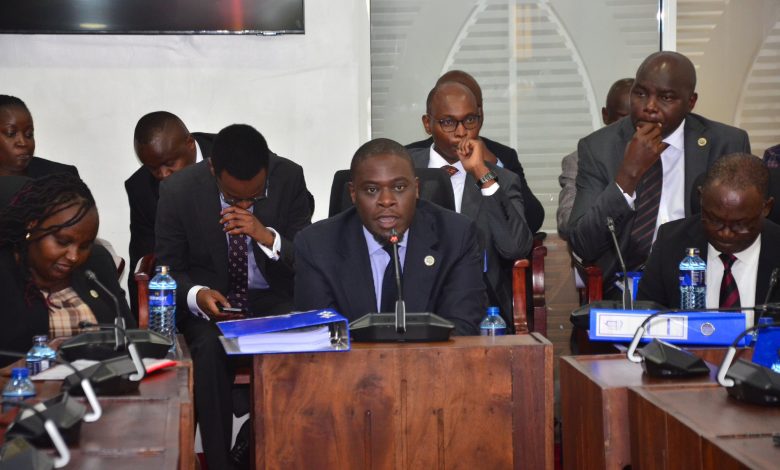
Nairobi Governor Johnson Sakaja defended the city county’s water management record before senators as the lawmakers grilled him over Sh11 billion in outstanding receivables and massive water losses plaguing the capital’s supply system.
Appearing before the Senate County Public Investments and Special Funds Committee, Chaired by Vihiga Senator Godfrey Osotsi, Sakaja has been confronted as audit findings indicate 51 per cent of water produced valued at Sh8.6 billion disappeared through the distribution network without being billed to customers.
“Governor, auditors say 51 percent of water produced worth Sh8.6 billion simply vanished. How do we explain this to rate-payers?” Osotsi demanded.
Sakaja attributed the losses to inherited infrastructure problems, telling senators his government has allocated Sh9.2 billion in the 2024/25 budget for urgent repairs.
“We inherited antiquated pipes and deferred capital works. We have now ring-fenced Sh9.2 billion in the 2024/25 budget for meter sealing, leak detection and pipeline rehabilitation, plus AFD and FD projects already underway,” Sakaja claimed.
City Senator Edwin Sifuna pressed the governor on debt recovery efforts, noting that Sh11 billion in receivables has remained outstanding for over 480 days.
“Sh11 billion sits in receivables over 480 days. Demand letters alone won’t cut it. Where is the recovery plan?” Sifuna asked.
In her report, Gathungu declared the Nairobi Water and Sewarage Company (NWSC) as technically insolvent and over the verge of collapse as it reels under Sh6 billion debt against assets worth Sh4.3 billion.
Its negative working capital has been on the rise from Sh2.78 billion in the financial year ending June 30, 2023 to Sh3.49 billion in the financial year ending June 30, 2024.
“The company is technically insolvent and may not be able to meet its current obligations as and when they fall due,” the audit report concludes.
Sakaja responded that two new revenue regions and a GIS-billing platform were launched in February with all debts above Sh1 million now handled by legal teams. He added that 1,938 previously unbilled active accounts have since been invoiced.
This is even as staff costs emerged as another concern, with Migori Senator Eddy Oketch highlighting that salaries consume 65 percent of revenue, nearly double the permitted 35 per cent threshold.
“Staff salaries consume 65 percent of revenue—double the allowed 35 per cent. What austerity measures are in force?” Oketch questioned.
Sakaja outlined cost-cutting measures including a hiring freeze for non-critical positions, decentralised services to reduce overtime, and a cost-recovery tariff submitted to Water Services Regulatory Board (WASREB) that should reduce the wage ratio to 45 per cent within 12 months.