Fuel price shock: Is EPRA serving consumers or political interests?
Those supplying goods under fixed-price contracts risk losses when diesel costs rise unexpectedly. Investors also struggle to plan in an environment where energy costs fluctuate without sufficiently clear explanations of the relationship between international benchmarks and domestic pump prices.

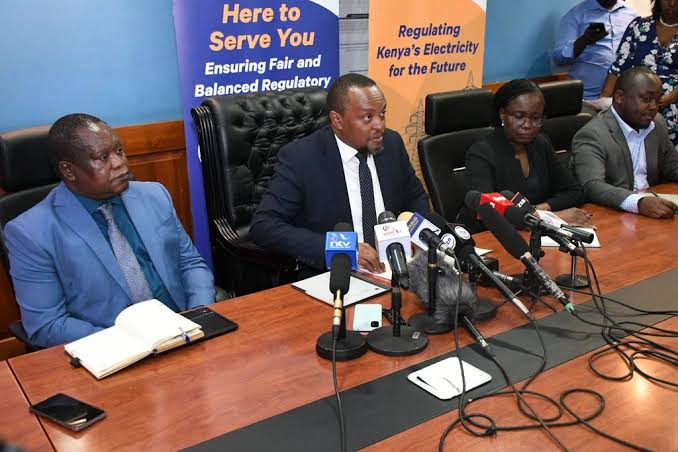
Kenya’s latest fuel price increases have reignited a fundamental question about the independence of the Energy and Petroleum Regulatory Authority (EPRA) on whether the regulator is protecting consumers through transparent, evidence-based pricing, or has petroleum pricing become vulnerable to political interference and questionable policy decisions.
The question is no longer academic. With petrol rising by Sh12.93 per litre, diesel by Sh9.90 and kerosene by Sh28.49 in the latest review covering October 15 to November 14, 2026, millions of Kenyans face another assault on their already stretched household budgets. In Nairobi, petrol now retails at Sh226.96 per litre, diesel at Sh227.76 and kerosene at Sh219.87.
These are not merely numbers on a monthly pricing schedule. They represent higher transport fares, more expensive food, increased production costs and shrinking disposable incomes. For low-income households relying on kerosene for cooking and lighting, the steep increase is particularly punishing.
EPRA attributes the adjustments to international petroleum market developments, including heightened tensions in the Middle East, alongside the government’s decision to discontinue the fuel subsidy.
Yet consumers deserve more than general explanations. They deserve a transparent account of how international prices, exchange rates, freight, insurance, taxes, levies and distribution margins translate into the amounts charged at the pump.
The Motorists Association of Kenya (MAK) has raised precisely these concerns, demanding an independent audit of petroleum pricing and the controversial government-to-government (G-to-G) fuel import arrangement.
Its questions warrant serious scrutiny.
According to MAK, landed costs increased by 11.81 per cent for petrol, 11.32 per cent for diesel and 9.41 per cent for kerosene, while pump prices rose by 6.04 per cent, 4.54 per cent and 14.89 per cent, respectively.
The figures do not, by themselves, establish wrongdoing, because pump prices incorporate several additional components. However, the disproportionate increase in kerosene prices demands a convincing, publicly verifiable explanation.
The regulator should publish detailed product-by-product pricing worksheets, allowing consumers to understand the calculations behind every adjustment. Transparency is not a favour to motorists; it is a fundamental requirement of credible economic regulation.
The independence question
EPRA occupies a position of considerable public importance. Its decisions influence virtually every sector of the economy, from agriculture and manufacturing to transport, retail and electricity generation. Such authority demands independence, technical competence and freedom from improper political influence.
When fuel prices change sharply, consumers must be able to trust that the decisions reflect verifiable market fundamentals rather than political expediency, fiscal convenience or the interests of powerful commercial players.
Opposition leader and former Deputy President Rigathi Gachagua has alleged that President William Ruto ordered increases of Sh12 per litre for petrol and Sh9 for diesel to finance political mobilisation and bribery ahead of the August 10, 2027 General Election. He has also implicated Gulf Energy in his allegations.
These are serious claims that remain unsubstantiated. They should not be treated as established facts, and neither the company nor the government should be condemned without evidence.
Nevertheless, the allegations underscore the urgency of independently verifying the pricing process and establishing whether the regulator operates without political direction.
EPRA must demonstrate its independence through evidence, not merely institutional declarations. If its calculations are sound, publishing them should strengthen public confidence. If errors or improper influences are identified, they must be corrected and those responsible held accountable.
Audit the G-to-G oil deal
Introduced in 2023, Kenya’s G-to-G petroleum import arrangement was presented as a solution to foreign-exchange pressures, supply uncertainty and volatile pump prices. The government argued that credit facilities and arrangements with selected international suppliers would ease demand for dollars and improve supply stability.
Three years later, Kenyans are entitled to ask whether these promised benefits have materialised and whether consumers are receiving value for money.
The arrangement has faced persistent criticism over transparency, procurement competitiveness and the role of selected local oil marketing companies.
The government has defended it, citing supply stability and arrangements for freight and insurance costs. Both the claims of success and allegations of irregularity should be tested against independently verified evidence.
Parliament, the Auditor-General and the Competition Authority of Kenya should support a comprehensive, independent audit examining supplier premiums, financing costs, freight, insurance, foreign-exchange exposure, contractual obligations and the competitiveness of procurement.
The audit should compare the arrangement’s actual costs and benefits with a credible alternative procurement model. It should also examine the Petroleum Development Levy Fund’s receipts, disbursements and stabilisation balances.
The objective should not be to condemn the G-to-G model in advance, but to establish whether it delivers measurable benefits and whether any savings reach consumers.
A painful burden on households and businesses
Fuel is a critical input across the economy. When prices rise, transporters face higher operating costs, farmers pay more to move produce, manufacturers spend more on production and traders pass additional expenses to consumers.
Small businesses operating on thin margins cannot easily absorb unpredictable cost increases. Those supplying goods under fixed-price contracts risk losses when diesel costs rise unexpectedly. Investors also struggle to plan in an environment where energy costs fluctuate without sufficiently clear explanations of the relationship between international benchmarks and domestic pump prices.
For ordinary Kenyans, the consequences are immediate: higher fares, expensive food and fewer resources for rent, education and healthcare.
The government cannot control every international market movement. However, it can ensure that domestic pricing is transparent, competition is protected, subsidies and levies are administered accountably, and regulatory decisions are insulated from political manipulation.
Restore public confidence
Kenya needs a petroleum pricing system that is predictable, independently regulated and open to public scrutiny. EPRA should explain the latest increases in detail, while the government should facilitate an independent audit of the G-to-G arrangement.
Gachagua’s allegations must be investigated on evidence, not political rhetoric. Equally, the government should not dismiss legitimate demands for accountability simply because they emerge from the opposition.
Ultimately, Kenyans are not demanding artificially cheap fuel. They are demanding fairness, transparency and credible regulation.
When fuel prices become unpredictable, businesses suffer, households sink deeper into hardship and public confidence in institutions deteriorates. The government and EPRA must therefore demonstrate that every shilling charged at the pump is justified.
The price of failure is paid daily by millions of citizens who can least afford it.