Don’t miss a beat: How the pacemaker transformed heart care

Every healthy heart has a natural pacemaker: a group of specialised cells that generates electrical signals, typically triggering 60 to 100 heartbeats per minute at rest.
These signals coordinate the heart’s chambers, allowing blood to circulate throughout the body. When this electrical system fails, however, the consequences can range from fatigue and dizziness to fainting and, in severe cases, death.
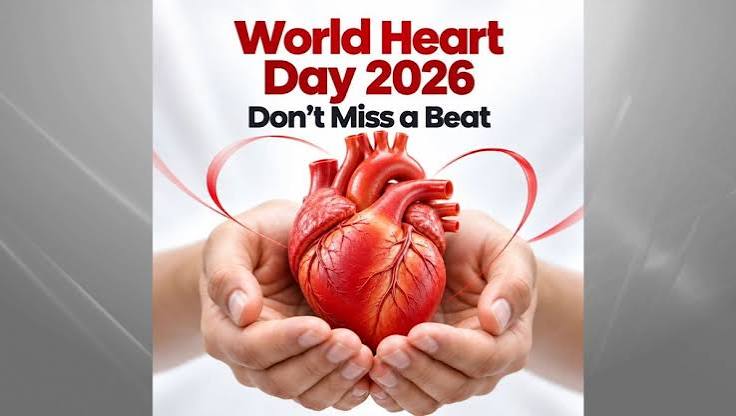
This year’s World Heart Day message celebrated on September 29, 2026 under the theme “Don’t Miss a Beat,” highlights the importance of preventing and treating cardiovascular disease.
For patients whose hearts beat too slowly or whose electrical signals fail to reach the lower chambers, the message has a literal meaning. An artificial pacemaker can restore the rhythm needed to sustain life.
A pacemaker monitors the heartbeat and delivers small electrical impulses when necessary to stimulate contraction.
Modern devices can adjust the heart rate during exercise, coordinate different chambers, record rhythm information and support remote monitoring.
The technology has evolved dramatically since the 1950s, when early electrical pacemakers were bulky external machines dependent on mains electricity. In 1957, American engineer Earl Bakken developed one of the first battery-powered wearable pacemakers, allowing patients greater mobility.
A landmark breakthrough followed on October 8, 1958, when Swedish surgeon Åke Senning implanted a pacemaker designed by engineer Rune Elmqvist into 43-year-old Arne Larsson.
The operation required opening the chest, attaching electrodes directly to the heart and placing the device in the abdominal wall. Although the first pacemaker lasted only hours, Larsson lived for another four decades, receiving replacement devices as the technology advanced.
Subsequent innovations made implantation less invasive. Doctors developed thin insulated wires, known as leads, that could be passed through veins into the heart.
The conventional pacemaker gradually emerged, with a small generator implanted beneath the skin, usually below the collarbone, and one or more leads delivering electrical impulses to the heart chambers.
Improvements in batteries, electronics and device design made pacemakers smaller, more reliable and capable of functioning for many years.
Their role also expanded beyond preventing dangerously slow heartbeats. Cardiac resynchronisation therapy (CRT) was developed for selected patients with heart failure whose ventricles contract out of sequence.
By coordinating contractions, specialised pacemakers can improve the heart’s pumping efficiency, relieve symptoms, reduce hospital admissions and, in appropriate patients, improve survival.
Despite these advances, conventional pacemakers retain a generator beneath the skin and leads connecting it to the heart.
Although generally reliable, leads can sometimes fracture, become infected or contribute to vein obstruction. The surgical pocket can also develop infections.
These challenges prompted the development of leadless pacemakers. Delivered through a vein in the leg using a catheter, these miniature devices contain their own battery, electronics, sensing system and electrode.
They sit entirely inside the heart, eliminating the chest generator, surgical pocket and traditional leads.
Earlier this year, specialists at Aga Khan University Hospital in Nairobi implanted Kenya’s first leadless pacemaker, marking progress in expanding access to advanced cardiac technologies locally.
Newer leadless systems have also advanced beyond single-chamber pacing, with some capable of coordinating the upper and lower chambers.
From bulky machines connected to electrical outlets to miniature devices implanted entirely within the heart, pacemakers represent more than seven decades of medical and engineering innovation.
Their greatest achievement, however, remains deeply personal. They help patients overcome fainting, regain mobility and resume everyday activities that a dangerously slow heartbeat had made difficult.
Not every slow pulse requires a pacemaker, and the device does not cure every form of heart disease. Proper medical assessment is essential. But when the heart’s electrical system fails, pacing can provide a reliable, potentially lifesaving solution.
This World Heart Day, “Don’t Miss a Beat” is a reminder to recognise cardiovascular disease early and seek appropriate care. For millions who have benefited from pacemaker technology, it is also a testament to an extraordinary medical achievement: ensuring that when the heart cannot produce its next beat, technology can help it continue.

The author is Dr Mohamed Jeilan, Director, Cardiac Services and Consultant Interventional Cardiologist at Aga Khan University Hospital Nairobi