Ruto orders overhaul of DCI’s ANU unit to bolster fight against narcotics

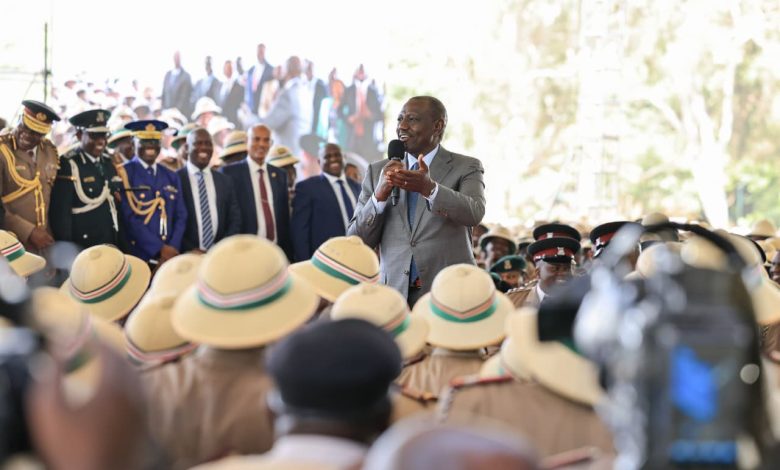
President William Ruto has directed Inspector General of Police, Douglas Kanja, to overhaul the country’s Anti-Narcotics Unit, a specialised formation domiciled at the Directorate of Criminal Investigations (DCI) by tripling its personnel and expanding its national footprint as part of an intensified campaign against drug abuse.
Speaking at State House, Nairobi, during the launch of the Jukwaa La Usalama Report and a meeting with chiefs and assistant chiefs from across the country, President Ruto said the unit will be transformed into a fully formed police department.
The report flagged drugs and substance as among the key national security threats currently facing the country.
Kenya has also been flagged as a key transit point for contraband goods including narcotics that constitute transnational crimes.
In the new directive, ANU’s personnel and staffing is expected to rise from the current 160 officers to 500, and its presence will be extended from a single office to 34 offices nationwide to ensure decentralized, rapid, and more effective enforcement.
“I have agreed with the IG Dougla Kanja that the Anti-Narcotics police unit- that department which fights illegal drugs, narcotics, and all those other things, we should make that department a formed-up unit,” Ruto said.
The President said the measures respond directly to public concerns gathered during nationwide security forums.
He noted that drug abuse, gender-based violence, organized crime, and banditry emerged as some of the most urgent threats to public safety.
“I followed the discussions at the Jukwaa La Usalama forum closely, and I commend Kenyans for speaking openly and without fear. Illegal drugs, gender-based violence, and violent criminals—including bandits and terrorists—remain significant challenges. The recommendations you gave will be acted upon,” he said.
The president described drug abuse as a national crisis, warning that many young people are “losing their lives and futures” to addiction.
He stressed that the restructured anti-narcotics unit will undergo enhanced training and assume a broader operational role to counter trafficking networks and local drug markets.
Ruto also announced that the national government will work with county administrations to overhaul alcohol licensing systems amid concerns that some towns now have more bars than retail shops.
He said a unified licensing framework is necessary to curb uncontrolled alcohol sales.
In addition, the President directed that every county establishes a rehabilitation facility to support people recovering from alcoholism and drug dependency.
“We will agree with governors that each county must build at least one rehabilitation center so that those we rescue from drugs and alcohol can receive proper care,” he said.
To improve efficiency and accountability in security operations, the government will digitize all police and administrative records.
Chiefs across the country will be equipped with tablets to enable real-time digital incident reporting within six months.
The Jukwaa La Usalama Report outlines a broader plan to intensify intelligence-led, multi-agency security operations targeting bandits, extremist groups, narcotics traffickers, and organized criminal gangs.
It also calls for deeper collaboration between security agencies and community policing structures. Local community groups will be formally integrated into national security systems to strengthen information flow and public participation in law enforcement.