Beginning of the end of broad-based regime? Raila faces dilemma as Gen Zs take over Saba Saba spirit
Former premier proposes an inclusive intergenerational national conclave to hear Kenyans across all divides and come up with an irreducible reforms and changes necessary to take the country forward

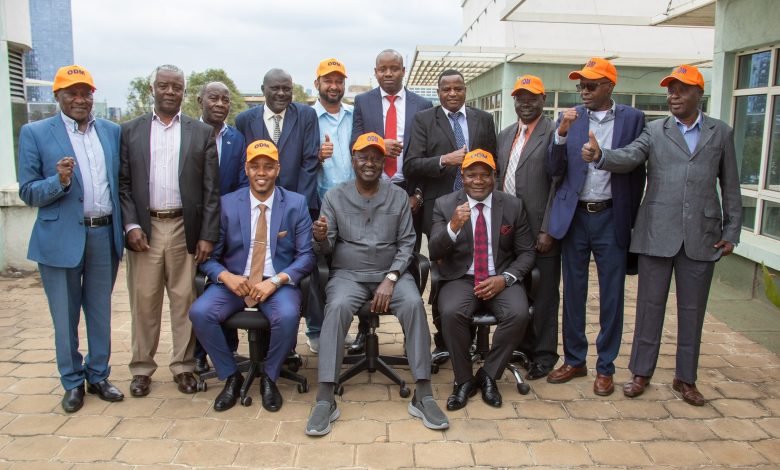
In a span of two days, ODM leader Raila Odinga has raised doubts over whether the broad-based government arrangement that saved President William Ruto’s administration after last year’s Gen Z revolt would last until the 2027 elections.
Stuck between a surging youth revolution and accusations that he has abandoned values he has stood for in the fight for constitutional democracy in Kenya, on one hand, and sticking his neck out for President Ruto, on the other hand, Raila on Monday called for a national dialogue and referendum to address the issues being raised by Gen Zs, who have turned their protests against perceived punitive taxes in the Finance Bill 2024, which was shelved, into a fight against bad governance ad a demand for Ruto’s ouster.
“I propose an inclusive intergenerational national conclave to hear our people across all divides and come up with an irreducible reforms and changes necessary to take the country forward. I propose that the country urgently returns to the agenda of comprehensive police reforms, focusing on enhancing accountability, transparency and improving police to people relations.
I propose that the conclave envisage comes up with better and sustainable ways for addressing transparency, accountability, and impunity especially with regard to corruption and ensuring that leaders are held accountable for their actions,” Raila told a press conference at Serena Hotel on Monday after his plan to attend a Saba Saba rally at Kamukunji grounds was thwarted after police imposed a lockdown in the capital.
“I propose that the forum comes up with a comprehensive and sustainable strategy for addressing youth unemployment and expansion of opportunities for youth in the formal and informal sectors. Such a national conclave must have clear terms of reference and be populated and helmed by the most serious and sober minds in our nation. The proceeds of the national dialogue be subjected to a referendum,” he added.
A day earlier, he had asked Gen Zs not to surrender even as police fire teargas at them, pointing out that he has suffered a similar fate in the past.
“They told me ‘Baba sit at home you have done enough’. I am at home but I am behind you. Gen Z, you eat tear gas, we also ate teargas. Continue to eat teargas and tell them to add more. Tell them you will not surrender,” the for prime minister said during a church service.
In its memorandum with President Ruto’s United Democratic Alliance (UDA), ODM struck a deal to grant amnesty to those charged while exercising their rights to peaceful assembly during last June’s protests against the Finance Bill and other governance issues as well as compensation for families of those killed during last year’s protests.
However, extrajudicial killings and abductions have persisted unabated both during protests and after with police accountability continuing to remain underwhelming.
Raila has been facing discontent within his Luo Nyanza backyard following the murders of Kasipul MP Charles Ong’ondo Were and teacher-cum-blogger Albert Omondi Ojwang, among others, with ODM National Chairperson Gladys Wanga stating that they might revisit their pact with UDA since they did not sign up to assassinations.
Raila agreed to join forces with Ruto after Gen Z protestors shook the ship of state by breaching tight security and invading the precincts of Parliament after MPs passed the controversial bill and followed it with nationwide demonstrations demanding his exit.
The move saw five ODM officials join Cabinet while several others have since been appointed as Principal Secretaries and advisors, among others.
During his press conference, Raila noted that Saba Saba is the day on which Kenya’s struggle for multiparty democracy took the most decisive turn, is iconic and historical.
“It is a day rivalled only by the present day Mashujaa Day, previously Kenyatta Day that celebrates the arrest and detention of the freedom fighters jointly called the Kapenguria Six .It is regrettable that the recognition and remembrance of Saba Saba has not been consistent in its short 35-year history. One moment it is important. The next moment it is not. On this 35th anniversary of Saba Saba, we decided to remember and to set the record straight on its significance, what it was and is, and what we ought to do with the foundation it laid for the country.”
“Before that day, some patriotic Kenyans had demanded the repeal of Section 2A of the constitution. A number of people including Kenneth Matiba, Raila Odinga, Mohammed Ibrahim, Gitobu Imanyara and Charles Rubia, among others were arrested and detained. It is quite unfortunate that some of the people we were fighting then and who sanctioned those arrests are trying to hide behind Saba to advance their political fortunes.On the fateful day – July 7, 1990 – thousands of Kenyans tried to gather at the historic Kamkunji grounds to take stock of the past, the state of the nation, and chart a path of freedom forward. We decided that Saba would be a march for political freedom and liberty, freedom of association, freedom of movement, freedom of expression and a new democratic constitution founded on multipartism,” he added.
He noted that Kenyans wanted a fulfillment of the Kenyan dream which was the eradication of poverty, ignorance and disease.That clarity of mission is what made Saba Saba different from all other confrontations with the Moi-Kanu one-party state.
“Saba Saba therefore was, and still is, about the sacred and historic grounds of Kamukunji. It was not and is not just another routine street protest in Nairobi or any other town. Saba Saba had a singular purpose – to repeal of Section 2A of the Constitution and allow multiparty democracy in Kenya. Saba Saba had clear and known national conveners – Kenneth Matiba, Charles Rubia, and Raila Odinga. It was what gave birth to a bigger and powerful Forum for the Restoration of Democracy (FORD).FORD had a known nationally inclusive leadership – Jaramogi Oginga Odinga, Phillip Gachoka, Ahmed Bamahariz, Salim Ndamwe, Masinde Muliro, George Nthenge, Kenneth Matiba, Charles Rubia, among others. Saba Saba was inclusive, democratic and intergenerational: the old, the young, people in and out of government, professionals, academics, trade unionists, civil society, women’s groups, and religious groups. All of them found their voice in what it stood for – a people’s struggle for good governance, freedom and equal opportunity for all.”
“It was not one group against the entire nation. It was not community against that community or this age group against that. The movement stood for a peaceful and constitutional change of guard. That is the reason it focused singularly on amendment and later the overhaul of the constitution. These features are what made Saba Saba succeed. A year after the march, On December 2, 1991, President Moi capitulated. Section 2 (a) of the constitution was removed; multipartism was reinstated. We achieved our core aim, which was to return Kenya to multipartism. Today, we have more parties than one could imagine then.That singular amendment paved the way for the complete overhaul of the constitution and the birth in 2010 of a new constitution that came with provisions for fundamental freedoms and liberties that our citizens enjoy today. It is clear that many of the ideals espoused by the dreamers behind Saba Saba have become part of the national aspiration. We are a better nation because Saba Saba happened.”
“We have a duty and a responsibility to honor the men and women who dared to dream and to turn out at a time of great peril to themselves and their families. Thirty five years later, the country is grappling with a new wave of unrest and political activism. The question we have to ask ourselves is; where do We Go from Here? Do we embrace chaos or a coming together of minds and country? As a living architect of the events leading to Saba Saba, I choose a coming together of minds and country in the interest of the country I long fought for its progress, stability and prosperity. The most important struggle taking shape in our country today is the struggle for good governance, economic opportunity and equality,” Raila said.
“The biggest challenge facing Kenya today and into the foreseeable future is how to expand economic opportunity and lift particularly young Kenyans out of poverty, exclusion, and unemployment. Kenyans are yearning for programs and leaders that prioritize economic inclusivity, social justice, and political freedom. There is no doubt that the country is yearning for legislation that makes our institutions more responsive, programs that ensure adequate funding for services that touch wananchi, changes that make our Judiciary free, efficient and progressive, measures that make the Executive more accountable and efficient. We must end impunity and corruption within our three arms of government. Our leaders must become modest, ethical, humble, and accountable.”