G7 pledges global Ebola response as Amnesty welcomes suspension of US-linked Nanyuki quarantine facility
“Respect for court orders is fundamental to constitutional governance. Compliance is not optional,” Amnesty said, citing Article 10 of the constitution.

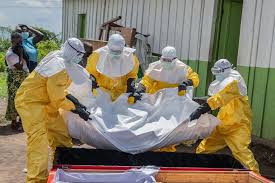
Leaders of the G7 nations have committed to a coordinated international response to contain the Ebola outbreak in the Democratic Republic of Congo (DRC) and Uganda, while also pledging to intensify efforts to combat the growing global burden of cancer.
The commitments were announced during the G7 Summit in Evian, France, attended by leaders from Canada, France, Germany, Italy, Japan, the United Kingdom and the United States, alongside partner countries including Kenya, Brazil, Egypt, India and South Korea.
In a joint declaration, the leaders described the re-emerging Ebola outbreak in the DRC and Uganda as a significant global health security threat requiring urgent international cooperation.
Meanwhile, in Kenya, Amnesty International welcomed the government’s decision to suspend construction of a proposed US-funded Ebola quarantine facility in Nanyuki following a court order halting the project pending determination of a legal challenge.
The rights group said adherence to court orders was essential to upholding the rule of law and constitutional governance.
“Respect for court orders is fundamental to constitutional governance. Compliance is not optional,” Amnesty said, citing Article 10 of the constitution.
Health Cabinet Secretary Aden Duale confirmed that the project had been suspended in compliance with the court ruling.
However, Amnesty expressed concern over reports that police used excessive force against residents protesting the facility, resulting in the deaths of three people, including a 17-year-old student.
“A government cannot claim to be establishing a facility intended to save lives while lives are being lost through unlawful police action,” said Amnesty International Kenya Director George Morara. “Every death must be accounted for, and all those responsible directly or through command responsibility must be held accountable.”
The organisation called on the Independent Policing Oversight Authority to conduct swift and transparent investigations into the deaths and injuries and urged authorities to release individuals arrested during the demonstrations.
Amnesty also called for meaningful engagement with residents of Nanyuki and Laikipia County, stressing that public concerns over the project should be addressed through dialogue and public participation rather than force.
They expressed concern over the loss of lives and the impact on affected communities, noting that response efforts have been complicated by the outbreak’s location in a remote and conflict-affected region of eastern DRC.
“The G7 affirms its support for the humanitarian reset led by the UN Office for the Coordination of Humanitarian Affairs and its plan to reach 87 million people with lifesaving aid in 2026,” the declaration stated.
The leaders committed to mobilising resources for the development and distribution of vaccines, diagnostics and treatments, while strengthening contact tracing, laboratory testing, quarantine measures, border surveillance and community engagement to contain the virus.
“We are resolved to providing and mobilizing support for a coordinated global response to facilitate the development and effective delivery of dedicated vaccines, diagnostics and treatments to fight this outbreak over the next months,” the declaration added.
The summit also called for improved coordination among humanitarian and health response actors and urged parties in eastern DRC to honour peace commitments under the Washington Accords for Peace and Prosperity and the Doha Framework to facilitate effective disease control efforts.
Further, the G7 leaders reaffirmed their commitment to accelerating the global fight against cancer, which claims nearly 10 million lives annually.
They warned that cancer cases could increase by 80 per cent by 2050 due to ageing populations and environmental and behavioural risk factors.
The leaders pledged to strengthen international cancer research, expand screening programmes, improve early diagnosis and promote the responsible use of artificial intelligence and digital technologies in cancer care.