You can now google in Luo and Kikuyu as tech giant expands African language support

By Suleiman Mbatiah
Google has made it possible for millions of Kenyans to use voice technology in Kikuyu and Dholuo, bringing the search giant’s artificial intelligence tools closer to local users.
Yesterday, February 2, 2026, the tech company launched an expanded version of its WAXAL speech dataset in Nairobi, adding the two Kenyan languages alongside Luganda from Uganda.
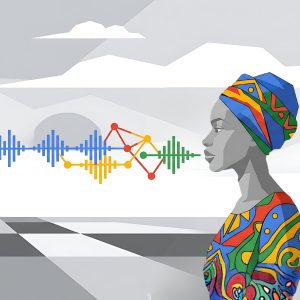
WAXAL, which means “to speak” in Wolof, is designed to help developers build voice assistants, speech-to-text systems and other AI-powered tools that understand African languages.
The dataset now covers 21 Sub-Saharan African languages and contains more than 11,000 hours of speech data from nearly two million recordings.
“The ultimate impact of WAXAL is the empowerment of people in Africa,” said Aisha Walcott-Bryant, Head of Google Research Africa.
“This dataset provides the critical foundation for students, researchers and entrepreneurs to build technology on their own terms, in their own languages, finally reaching over 100 million people.”
For years, voice technology has been accessible mainly to English speakers, leaving out millions who are more comfortable in their mother tongues.
The new dataset addresses this gap by providing the raw material developers need to create apps and services that work in local languages.
This could transform access to digital services in education, healthcare, agriculture and government, where language barriers have limited uptake.
The three-year project was led by African universities and community organisations, including Makerere University in Uganda, the University of Ghana and Digital Umuganda in Rwanda.
Unlike many global tech initiatives, the partner institutions retain full ownership of the data they collected.
“For AI to have a real impact in Africa, it must speak our languages and understand our contexts,” said Joyce Nakatumba-Nabende, a senior lecturer at Makerere University.
“The WAXAL dataset gives our researchers the high-quality data they need to build speech technologies that reflect our unique communities.”
The collection includes 1,250 hours of transcribed natural speech for building conversational AI and over 20 hours of studio-quality recordings for creating synthetic voices.
Beyond Kikuyu, Dholuo and Luganda, the dataset covers languages from across the continent, including Hausa, Yoruba and Igbo from West Africa, and Swahili, which is widely spoken in East Africa.
Other languages include Acholi, Akan, Dagaare, Dagbani, Ewe, Fante, Fulani, Ikposo, Lingala, Malagasy, Masaaba, Nyankole, Rukiga, Shona and Soga.
The dataset is published under an open licence and is available on the Hugging Face platform, allowing anyone to use it freely.
The initiative comes as African governments and startups increasingly invest in language technology.
In September last year, Nigeria launched N-ATLAS, an open-source model that recognises Yoruba, Hausa, Igbo and Nigerian-accented English.
South African startup Lelapa AI has also built Vulavula, which offers speech recognition and translation for African languages.
Google’s entry into this space provides crucial infrastructure that could accelerate these efforts.
For Kenya, where limited English proficiency remains a barrier to technology adoption, tools that work in Kikuyu and Dholuo could unlock new opportunities for millions of users.
At the University of Ghana, over 7,000 volunteers contributed their voices to the project.
Professor Isaac Wiafe, an associate professor at the university, said the effort is helping drive innovation in health, education and agriculture.
He added that the launch signals a broader shift towards making technology more inclusive across Africa, where linguistic diversity has long been overlooked by global tech companies.