Sugar factory strike suspended after Kilimo House talks

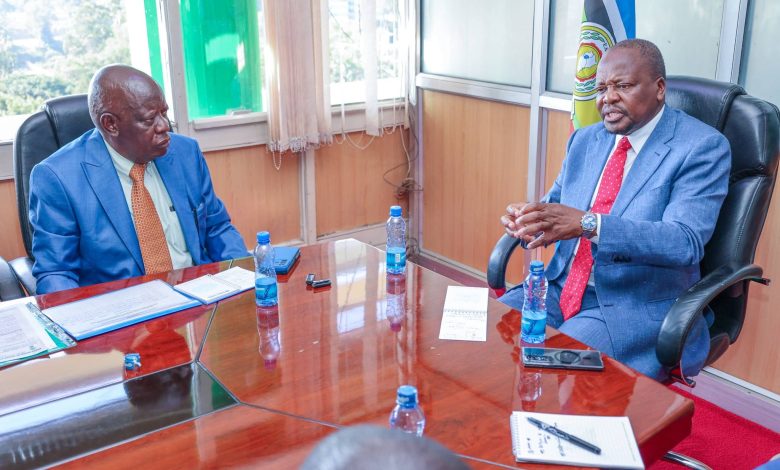
The nationwide strike by sugar factory workers was today suspended following high-level crisis talks between the government and the Kenya Union of Sugar Plantation and Allied Workers (KUSPAW), easing pressure on an industry already strained by controversy over the leasing of state-owned sugar factories to private investors.
The meeting, held at Kilimo House in Nairobi, was chaired by Agriculture and Livestock Development Cabinet Secretary Mutahi Kagwe and brought together senior officials, including Agriculture Principal Secretary Dr. Kipronoh Ronoh, Kenya Sugar Board (KSB) CEO Jude Chesire, Sugar Transition Committee Chair Harun Khator, and KUSPAW leaders led by Secretary General Francis Wangara.
The industrial action, which began on January 29, 2026, had paralysed operations at Muhoroni, Nzoia, Sony and Chemelil sugar factories.
Workers were protesting unpaid salary arrears and terminal benefits totalling Sh10.8 billion owed to both current and former employees liabilities that arose during the transition of the sugar sector from public to private management.
Following extensive deliberations, the parties agreed to suspend the strike with immediate effect, allowing workers to resume duties as the Government finalises payment arrangements.
The Government committed to release Sh1 billion within the next two weeks to ease immediate hardship, with the remaining arrears to be settled in phases through the Supplementary Budget and subsequent national budgets, subject to parliamentary approval.
CS Kagwe acknowledged the prolonged suffering of workers and apologised for delays in honouring earlier commitments, citing fiscal constraints.
He stressed that the arrears are obligations of the Government of Kenya arising from the sugar sector transition and are not liabilities of the private millers currently leasing and operating the factories.
The talks took place against the backdrop of growing public anger over the sale and leasing of state-owned sugar factories to private entities, a process critics argue has sidelined workers and failed to address historical debts.
Kagwe warned that industrial action directed at private investors whom he described as third parties not involved in the legacy agreements only deepens worker suffering, disrupts operations and undermines efforts to revive the sector.
KUSPAW welcomed the renewed Government commitment but warned that patience among workers is wearing thin.
Wangara said many former employees are facing severe hardship, including lack of housing, medical cover and basic livelihoods, and insisted that the payment roadmap must now be implemented without further delays.
The union also raised concerns over delayed remittance of union deductions, exploitative employment terms in some factories, alleged non-compliance with transition agreements, and intimidation of union officials. These issues were flagged for urgent follow-up.
The Ministry of Agriculture, KSB, National Treasury and KUSPAW agreed to maintain close coordination to monitor disbursements, labour compliance and the reinstatement of affected workers, as pressure mounts on Parliament to unlock funds and resolve the crisis conclusively.