Indolent party? Oburu’s remarks expose ODM’s strategic drift in UDA talks

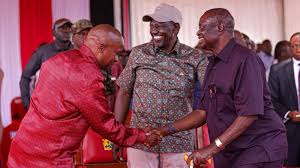
The Orange Democratic Movement (ODM), once Kenya’s most formidable opposition machine, is at a crossroads barely four months after the death of its long-time leader Raila Odinga.
Recent remarks by interim party leader and Siaya Senator Oburu Odinga have reignited debate about the party’s future direction, raising uncomfortable questions about ambition, leverage and relevance within Kenya’s shifting political order.
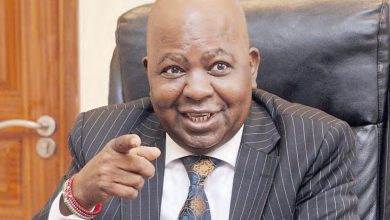
Speaking in Kisumu during the launch of the National Youth Opportunities Towards Advancement (NYOTA) business support programme, Oburu categorically stated that ODM is not interested in the Deputy President’s post as it negotiates a political merger or cooperation framework with President William Ruto’s United Democratic Alliance (UDA). His remarks were meant to allay fears within government ranks, but instead triggered unease within ODM’s own structures.
“Mr Deputy President, do not think we want your seat and chase you,” Oburu said, addressing Deputy President Kithure Kindiki. “You are our friend, but as we negotiate, we will do so according to what our people and party deserve.”
While framed as pragmatism, party insiders and critics interpreted the statement as a signal of diminished bargaining appetite.
At a time when ODM is internally fractured and searching for a post-Raila identity, Oburu’s declaration has been described by some within the party as evidence of an “indolent and unambitious” leadership content with crumbs rather than power.
ODM’s dilemma is structural and generational. Raila Odinga’s death left behind not only a leadership vacuum but also a strategic one. For decades, ODM derived its strength from Raila’s populist charisma and oppositional posture. Without him, the party must now redefine its relevance either as a reformist opposition force or as a stakeholder within the state.
Oburu has firmly positioned himself in the latter camp. He argues that cooperation with the Ruto administration offers ODM continuity, leverage and access to state resources ahead of the 2027 General Election. According to him, engagement with government is not capitulation but a tactical move to secure a “fair share of the national cake.”
“Our party is not a Luo party; it is a party for the whole of Kenya,” Oburu said, stressing that ODM will negotiate fairly and reject ethnic exclusivity. “We are only going to make sure that everybody gets a fair share.”
However, this narrative has failed to persuade a growing faction of younger ODM leaders and grassroots activists who fear that the party risks losing its ideological soul. They argue that ODM’s historical identity as a reformist opposition movement is being eroded by elite bargains that prioritise short-term access over long-term political clarity.
To these critics, ruling out the Deputy President’s position before negotiations even begin weakens ODM’s leverage and reinforces perceptions that the party has already accepted a subordinate role within a UDA-dominated coalition.
They question what ODM brings to the table beyond votes, and whether those votes can still be mobilised without a compelling oppositional message.
ODM chairperson Gladys Wanga has sought to strike a middle ground, insisting that any engagement with UDA must result in equitable sharing of resources and political influence ahead of 2027. Yet even this framing underscores ODM’s transition from a movement politics mindset to a transactional one.
President Ruto, for his part, has been explicit about the electoral calculus. He has publicly stated that a coalition with ODM could secure him a decisive re-election victory by a margin of two to three million votes in 2027. In that equation, ODM is valuable but largely as a vote-delivery machine rather than a power-sharing equal.