Sifuna revolt rocks ODM as 2027 battlelines form

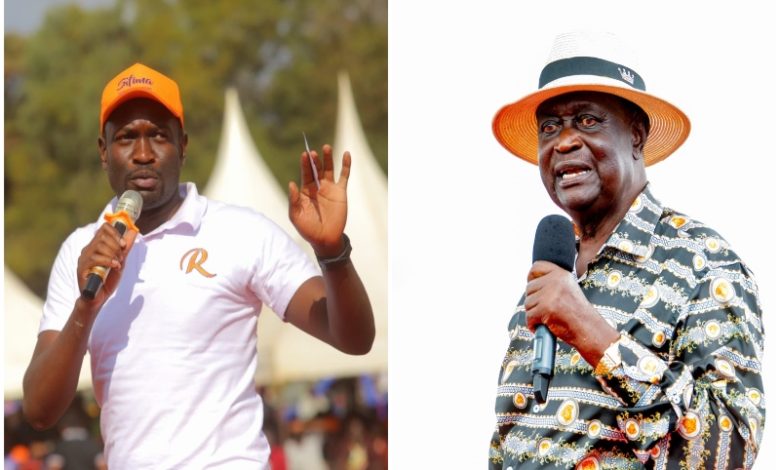
A growing political rift within Orange Democratic Movement (ODM) is placing Nairobi Senator Edwin Sifuna at the centre of a storm that could reshape opposition politics ahead of the 2027 General Election.
At the heart of the unfolding drama is Sifuna’s “Linda Mwananchi” movement, a populist campaign that analysts say is steadily gaining traction, particularly among young voters, and could influence not just parliamentary races but the presidential contest as well.
The campaign, amplified by the Gen Z-driven “Tuko Kadi” voter mobilisation push, comes at a critical time when the Independent Electoral and Boundaries Commission is rolling out a 30-day Enhanced Continuous Voter Registration exercise targeting 2.5 million new voters.
Political observers argue that whichever camp successfully captures this new voter base could gain a decisive edge in 2027.
However, Sifuna’s rising influence has triggered a backlash within ODM.
In a show-cause letter dated April 2, 2026, party chairperson Gladys Wanga accuses him of gross misconduct, including publicly contradicting party positions and engaging in unauthorised political activities.
The disciplinary action follows a dramatic split within the party during parallel National Delegates Conference (NDC) meetings.
While one faction aligned to party leader Oburu Oginga convened at Jamhuri Grounds, Sifuna’s camp gathered at Ufangamano House, a venue historically associated with political dissent, where he openly rejected alignment with forces backing President William Ruto’s anticipated re-election bid.
This defiance underscores deeper ideological tensions within ODM, particularly over its perceived cooperation with the ruling establishment.
Sifuna has been openly critical of the ODM-UDA “broad-based” arrangement, at one point declaring it “dead” during media appearances—remarks the party now cites as evidence of insubordination.
At the same time, Senior Counsel Paul Mwangi, a close ally of the late ODM boss Raila Odinga, has claimed that the faction led by Sifuna was part of a calculated strategy to facilitate Odinga’s exit from the broad-based government arrangement with President William Ruto.
Mwangi’s remarks suggest that the ongoing rift within ODM may not be entirely spontaneous, but rather a deliberate political manoeuvre designed to create distance between Odinga and the cooperation framework with Ruto.
According to Mwangi, the Sifuna-led wing—now championing the “Linda Mwananchi” movement—provided a platform through which dissenting voices within ODM could challenge the party’s alignment with the Kenya Kwanza administration without directly implicating Odinga.
The party further accuses him of skipping key internal meetings and undermining collective decision-making structures, actions it says violate its constitution and weaken internal cohesion.
Yet beyond the disciplinary process lies a broader political question: whether Sifuna’s movement signals the emergence of a new opposition force or merely a factional rebellion within ODM.
Analysts suggest that Sifuna’s messaging—anchored on governance accountability and citizen-focused politics—resonates with a younger, increasingly disillusioned electorate.
His alliance with figures such as Embakasi East MP Babu Owino points to a potential youth-driven political bloc that could disrupt traditional party hierarchies.
There is also speculation that if Sifuna aligns with other reform-oriented leaders, including Kiharu MP Ndindi Nyoro, the movement could evolve into a formidable electoral force capable of challenging established coalitions.
Still, questions remain about the movement’s long-term viability. Unlike past opposition formations associated with ODM founder Raila Odinga—such as ODM itself or the National Development Alliance—Sifuna’s “Linda Mwananchi” lacks a clear organisational structure or electoral vehicle.
At the same time, the broader opposition continues to grapple with unity challenges. While leaders have pledged to front a single presidential candidate against Ruto in 2027, past elections have shown how fragmentation can undermine such ambitions.
Sifuna has been ordered to respond to the allegations by April 8 and appear before a disciplinary panel on April 10, failing which the case will proceed in his absence.