Uhuru-Gachagua unity spells trouble for Ruto’s 2027 bid
Political observers say such an alliance, if realised, could significantly erode Ruto’s support base, particularly in the Mt Kenya region, a vote-rich bloc that delivered him about 2.3 million votes in the 2022 General Election

A growing show of unity amongst the rich vote Mount Kenya region coalescing around retired President Uhuru Kenyatta among them former Deputy President Rigathi Gachagua, Martha Karua and Justin Muturi among other influential leaders is reshaping Kenya’s political landscape, posing a fresh challenge to President William Ruto’s grip on power and re-election bid in 2027.
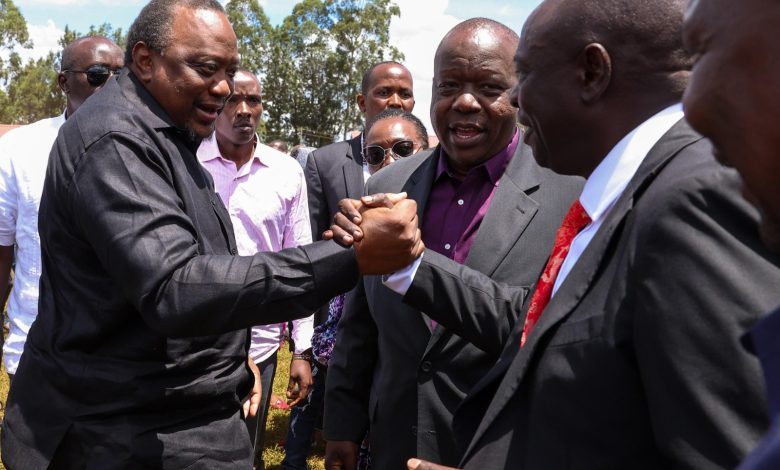
The recent display of embrace between Uhuru and Gachagua who were seen interacting warmly during the burial of former Kirinyaga Senator Daniel Karaba is a moment that has intensified speculation about behind-the-scenes negotiations aimed at forming a formidable opposition alliance.
Political observers say such an alliance, if realised, could significantly erode Ruto’s support base, particularly in the Mt Kenya region, a vote-rich bloc that delivered him about 2.3 million votes in the 2022 General Election.
Uhuru, who has remained politically active since leaving office, is widely regarded as a key power broker with deep networks across the country and enjoys unparalleled international appeal.
His renewed engagement comes amid growing public discontent over the high cost of living, increased taxation, and youth unemployment—issues that critics say could weaken Ruto’s grip on power.
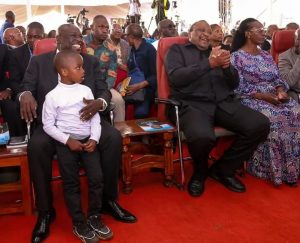
As part of efforts to consolidate the opposition, Uhuru has backed former Interior Cabinet Secretary Fred Matiang’i as a potential presidential contender under the United Opposition banner, now code-named Alternative Government Alliance (AGA).
At the same time, he has revived the Azimio la Umoja One Kenya Coalition Party, where he serves as chairman, and supported Kalonzo Musyoka as party leader—moves seen as creating multiple pathways to challenge Ruto.
Gachagua’s possible alignment with Uhuru marks a significant shift in political dynamics.
Once a staunch critic of the former president and a key figure in Ruto’s “hustler versus dynasty” campaign, Gachagua now appears to be recalibrating his political position following his impeachment battle in 2024.
Analysts argue that a united front between Uhuru and Gachagua could consolidate the Mt Kenya vote against Ruto, undermining one of the President’s strongest electoral pillars.
At the same time, uncertainty within the ruling coalition is adding to the complexity.
The prospect of a pre-election pact between Ruto’s United Democratic Alliance and the Orange Democratic Movement has sparked debate over the choice of a running mate, with Mining Cabinet Secretary Hassan Joho emerging as a possible candidate.
This scenario has raised concerns within UDA ranks, particularly as Deputy President Kithure Kindiki recently indicated that the position is not guaranteed, potentially weakening Ruto’s bargaining power in key regions such as Embu, Meru, and Tharaka Nithi.
Meanwhile, the opposition is reportedly considering a presidential ticket featuring Kalonzo Musyoka, with either Fred Matiang’i or Martha Karua as running mate—a lineup that could draw support across multiple regions.
Uhuru’s influence is expected to play a critical role in unifying opposition factions and leveraging his nationwide political networks to mobilise support.
Addressing mourners during the former Kiringyaga Senator Karaba urial ceremony, Kenyatta urged residents of the mountain region to remain united and vigilant against political manipulation.
He cautioned against leaders who make attractive promises but fail to deliver, warning that persuasive rhetoric can easily mislead voters.
“It is good to listen to leaders… politicians have a sweet tongue,” Kenyatta said, likening political charm to deception that can sway critical decisions.
He encouraged voters to elect leaders who are honest, principled, and focused on development rather than personal ambition or ethnic division.
The retired president also took issue with some religious leaders, accusing them of playing a role in misleading the public.
Sensing the shifting political winds, Ruto has intensified his outreach in Mt Kenya, including Thursday, April 2, 2026 visit to Nyeri where he attended a church function and reaffirmed his ties to the region.
Speaking at the Africa Independent Pentecostal Church of Africa (AIPCA) Mahiga in Othaya Constituency, Nyeri, for the 2026 Holy Oil Consecration, Ruto staged a fight-back campaign in the vote-rich Mt. Kenya region, saying his track record in office will earn him a second term.
The president campaigned in Nyeri a day after his predecessor, Uhuru Kenyatta, asked residents to reject Ruto’s re-election bid, in what appeared to be a closing of ranks with Ruto’s former deputy, Rigathi Gachagua.
“Kwani mnadhani kuna mtu anaweza kunitisha? Ati anataka kunikosanisha na watu wa Nyeri. Hawa nitapambana na wao hapa mbele. Kwani kuna mtu anafikiria atapiga kelele kuniwachanisha na nyinyi, nyinyi mlinifanya rais? Kwani mimi ni wazimu?” Ruto posed.