Seven in custody as DCI unravels alleged plot behind Dr Victoria Mutiso killing
Who ordered the killing? Who financed or coordinated the alleged operation? What was the precise role of each suspect? Why was a police firearm allegedly connected to the murder weapon? And who are the other individuals investigators say may have been involved?

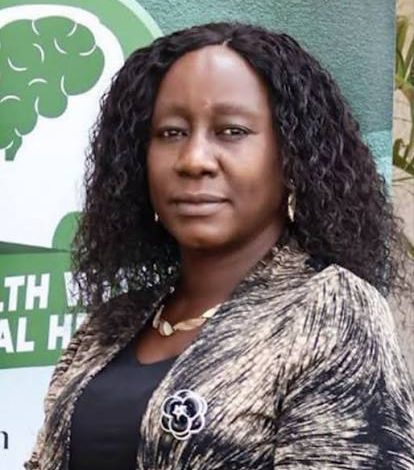
The murder investigation into psychiatrist Dr Victoria Nthunya Mutiso has widened into an intricate probe involving alleged surveillance, a suspected getaway vehicle, a police firearm and a trail that detectives say stretches from Nairobi to Uganda.
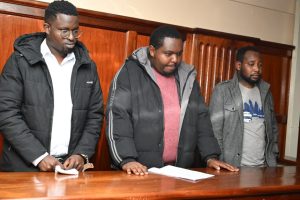
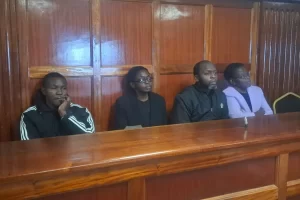
Three more suspects—Police Constable Collins Bett Kiplangat, Pius Muiru Mbugua alias Headboy and Samuel Karanja Gathoni alias Wakili—will spend the next 30 days in custody as investigators attempt to piece together what happened before the fatal shooting of Dr Mutiso on July 29.
Their detention brings to seven the number of suspects now in custody in connection with the killing, as detectives pursue what they describe as a still-active investigation involving several other people.
The Directorate of Criminal Investigations (DCI) told the Milimani Law Courts that the latest suspects allegedly played different roles in the killing, with some accused of helping plan the operation while another allegedly participated in tracking Dr Mutiso’s movements.
At the centre of the investigators’ claims is an alleged link between Kiplangat and Mbugua and senior police officer Kenneth Sang.
According to the DCI, the two suspects were involved in planning the murder and maintained constant communication with Sang, whose firearm investigators allege was used in the killing.
The allegation places a serving police officer and a civilian suspect at the centre of a probe that is increasingly pointing beyond the immediate circumstances of Dr Mutiso’s shooting.
Detectives are also examining the movements of a black Toyota Prado, registration number KDE 400W, allegedly driven by Gathoni.
Police claim the vehicle was used to trail Dr Mutiso before the Uber vehicle carrying her was intercepted.
Investigators allege that another Toyota Prado, registration number KDH 600A, then blocked the vehicle before Dr Mutiso was shot dead.
The DCI told the court that the suspects had been monitoring Dr Mutiso’s movements both before and on the day of the killing.
That claim could prove crucial to investigators seeking to establish whether the shooting was a spontaneous attack or the execution of a carefully coordinated operation.
The Uganda trail
The investigation took another dramatic turn when detectives traced the three suspects to Uganda.
Kiplangat, Mbugua and Gathoni were arrested on August 29 following an intelligence-led operation at Kyanja Heights Flats in Kampala’s Nakawa suburb.
They were presented before a Ugandan Chief Magistrate on August 31 before being deported to Kenya.
The suspects were subsequently escorted from Malaba Police Station to Nairobi on September 1 and placed in custody at police stations in Kilimani and Kileleshwa pending their appearance before the Kenyan court.
The prosecution has seized on their alleged movement to Uganda as evidence that they present a flight risk.
But the defence has challenged that narrative.
Gathoni opposed the application for prolonged detention, denying that he was a flight risk and arguing that his constitutional rights had already been violated.
His lawyer, Sgi Oriaro, told the court that his client should not continue being held without being afforded his constitutional protections.
“His rights as an arrested person, including to be admitted to bail and not be held within the precincts of the Constitution, as we speak, his rights have already been violated,” Oriaro said.
The prosecution nevertheless argued that continued detention was necessary to protect the integrity of the investigation.
It told the court that releasing the suspects could expose the investigation to the risk of witness interference, destruction or concealment of evidence and communication with other suspects who remain at large.
The prosecution also cited the public interest surrounding the murder and argued that the suspects’ safety could not be guaranteed outside custody.
Court gives detectives 30 days
Senior Principal Magistrate Teresia Nyangena granted the DCI’s request for 30 days to complete the outstanding investigations.
In her ruling, Nyangena relied on documentation from Uganda confirming that the three suspects had been deported to Kenya.
“I have relied on the deportation order from the Chief Magistrate, South of Buganda, Buganda Road, which confirms that the three persons before me were deported from Uganda. I therefore allow the application as prayed and grant the 30 days custodial order,” Nyangena said.
The suspects will be held at Ruaraka, Kileleshwa and Kilimani police stations.
The case will return to court on October 1, 2026, for further directions.
But the 30-day window gives investigators more than time to interrogate the three suspects. It also gives detectives an opportunity to establish the alleged links between them, the police officer whose firearm is said to have been used, the vehicles allegedly involved in tracking and intercepting Dr Mutiso, and other individuals who remain outside custody.
Seven suspects, one unresolved killing
The three latest suspects join four others already in custody—Rose Mbithe, her children Angela Mulwa and Chris Mulwa, and Police Constable Elijah Kibelion Kimoi.
The four were recently granted another 14 days in custody to allow them to undergo mental assessments before taking pleas in the murder case.
They are expected to appear before High Court Judge Alexander Muteti on September 23, 2026.
The expanding list of suspects has added new layers to a case that initially centred on a property dispute.
Investigators have linked the killing to a dispute involving Dr Mutiso’s family and Mbithe, who was previously married to Dr Mutiso’s husband, Professor David Musyimi Ndetei.
Dr Mutiso, a psychiatrist and former director of the African Institute of Mental and Brain Health, was shot dead on July 29 while travelling in a taxi in Nairobi’s Upper Hill area.
The circumstances surrounding her death have since triggered a widening criminal investigation, with detectives now pursuing an alleged chain stretching from the victim’s movements before the shooting to vehicles that allegedly tracked and intercepted her, a firearm linked to a senior police officer and suspects who allegedly fled to Uganda.
Yet significant questions remain unanswered.
Who ordered the killing? Who financed or coordinated the alleged operation? What was the precise role of each suspect? Why was a police firearm allegedly connected to the murder weapon? And who are the other individuals investigators say may have been involved?
The DCI says several leads remain outstanding.
Once the investigation is complete, the file will be forwarded to the Office of the Director of Public Prosecutions (ODPP), which will independently determine whether the suspects should be charged and whether their cases should be consolidated with those of the other suspects.
For now, the seven suspects remain in custody while detectives attempt to turn a growing web of alleged connections into a prosecutable case.
The ultimate test will be whether investigators can move from allegations of planning, surveillance, communication and movement across borders to evidence capable of establishing, beyond reasonable doubt, who orchestrated and executed the killing of Dr Mutiso.