Gachagua links alleged planned fuel price hike to Ruto’s 2027 campaign cash hunt
Ex-DP accuses the president of using pump-price increases to finance political mobilisation, reviving scrutiny of controversial government-to-government oil deal

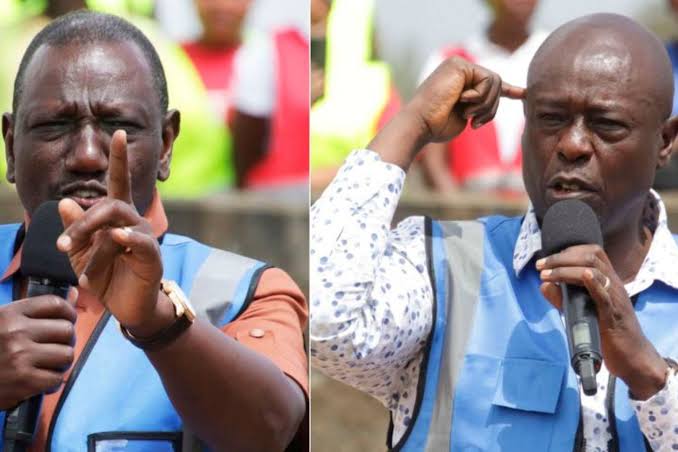
Former Deputy President and Democracy for Citizens Party (DCP) party boss Rigathi Gachagua has accused President William Ruto’s administration of exploiting fuel price increases to raise money for political mobilisation ahead of the August 10, 2027, General Election, intensifying the political battle over the cost of living and the government’s management of the petroleum sector.
The Energy and Petroleum Regulatory Authority (EPRA) announced on September 14 that maximum pump prices would remain unchanged from September 15 to October 14. In Nairobi, petrol was capped at Sh214.03 per litre and diesel at Sh217.86 during that period.

EPRA has not commented on the alleged Sh12 petrol and Sh9 diesel increases cited by Gachagua and if the claims will be reflected in the anticipated published pricing schedule.
Gachagua alleged that President Ruto had ordered increases of Sh12 per litre for petrol and Sh9 for diesel to finance political bribery, claims he linked to Gulf Energy.
He did not, however, provide evidence substantiating the alleged scheme or establishing the company’s involvement in political financing.
In a statement attacking the president’s economic record, Gachagua said the government was facing mounting public discontent over the rising cost of living, corruption, alleged abductions and extrajudicial killings, as well as what he described as poor policy decisions.
“Desperate to raise more cash, last evening, he ruthlessly ordered an increase in the price of diesel by Sh9 and petrol by Sh12, to be processed through Gulf Energy for political bribery,” Gachagua alleged.
The former Deputy President further claimed that Energy and Petroleum Cabinet Secretary Opiyo Wandayi had been instructed to defend the adjustment by citing international oil prices.
He dismissed that anticipated explanation as dishonest, insisting that the alleged increases were politically motivated.
The allegations place the petroleum pricing system and the government’s controversial government-to-government (G-to-G) fuel import arrangement back at the centre of the political contest, with questions over fuel costs, transparency and the impact of energy prices on households and businesses likely to feature prominently in the run-up to the election.
G-to-G fuel deal under renewed scrutiny
Kenya introduced the government-to-government fuel import arrangement in 2023, replacing the open tender system with supplies from Saudi Aramco, Abu Dhabi National Oil Company (ADNOC) and Emirates National Oil Company (ENOC).
The government defended the arrangement as a way to secure six-month credit facilities, ease pressure on foreign exchange reserves and stabilise petroleum supplies. Officials told Parliament that oil importers’ dollar requirements were putting significant pressure on the country’s foreign exchange market.
However, the arrangement has faced persistent criticism from opposition leaders, who have questioned its transparency, the competitiveness of fuel prices and the role of selected local oil marketing companies.
In November 2023, former Prime Minister Raila Odinga alleged that the deal was a major scam driving up pump prices and benefiting politically connected interests. The government rejected criticism of the arrangement, maintaining that it was designed to improve supply security and reduce foreign exchange pressures.
The controversy has persisted into 2026.
In May, Wandayi defended the agreements, saying they had stabilised supplies and enabled fixed freight and insurance costs despite fluctuations in international markets. The defence followed opposition calls to scrap the arrangement.
The Senate has also examined alleged irregularities in the petroleum products supply chain, with its Standing Committee on Energy publishing a report on the matter in July 2026.
Fuel prices and political battle
Gachagua’s latest accusations come amid heightened political competition ahead of the 2027 General Election, with the economy and household purchasing power emerging as major points of contention between the government and opposition.
He claimed Ruto was increasingly relying on cash handouts to win political support, alleging that demands for money had followed the President even in the Rift Valley, traditionally a strong political base for him.
The former Deputy President also accused the administration of failing to address public concerns over alleged state abuses, corruption and the rising cost of living, portraying the President as increasingly anxious about his re-election prospects.