Nairobi County in financial meltdown as Sh81.8billion bills pile up
The report also exposes the county's growing debt burden, with outstanding trade payables standing at Sh81.79 billion as of March 31, 2026. The County Executive accounted for Sh81.14 billion of the pending bills, while the County Assembly owed Sh650.6 million.

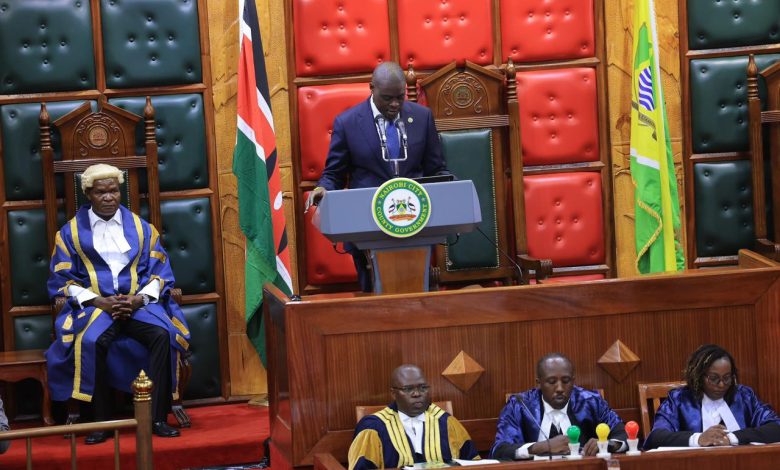
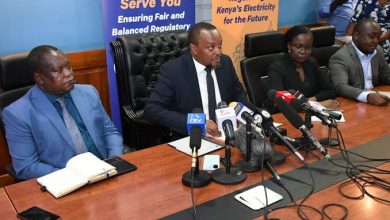
The Nairobi City County Government is facing mounting scrutiny over its financial management after the Controller of Budget (CoB), Margaret Nyakang’o, exposed widespread fiscal weaknesses ranging from delayed financial reporting and poor revenue collection to ballooning pending bills and sluggish implementation of development projects with outstanding trade payables standing at Sh81.79 billion as of March 31, 2026.
The findings, contained in the Controller of Budget’s report on the implementation of county budgets for the first nine months of the 2025/26 financial year, paint the picture of a county grappling with a worsening cash-flow crisis despite managing Kenya’s capital city.
Nyakang’o faulted the county for submitting its financial statements on April 30, well past the statutory deadline stipulated under Section 166 of the Public Finance Management (PFM) Act, 2012.
The report also exposes the county’s growing debt burden, with outstanding trade payables standing at Sh81.79 billion as of March 31, 2026.
The County Executive accounted for Sh81.14 billion of the pending bills, while the County Assembly owed Sh650.6 million.
The findings have now put Sakaja and his administration’s ability to manage public finances, honour contractual obligations and deliver critical services amid an escalating fiscal crisis.
She said the delay disrupted the timely preparation of the national budget implementation report and raised concerns over the county’s compliance with financial reporting laws.
“The delayed submission hampered the timely preparation of the national budget implementation report,” Nyakang’o noted.
The report also reveals that Nairobi County is struggling to finance its own budget after falling significantly short of its revenue targets.
Although the county projected to collect Sh21.58 billion in own-source revenue during the 2025/26 financial year, it had raised only Sh11 billion by the end of March—representing just 48 per cent of the annual target.
The revenue shortfall has left the county increasingly dependent on external financing while limiting its ability to fund planned programmes and essential services.
Development spending also remained well below expectations.
During the nine-month review period, the county spent Sh5.34 billion on development projects, translating to an absorption rate of only 40 per cent, raising questions over the implementation of key infrastructure and service delivery programmes.
The Controller of Budget further flagged financial irregularities after establishing that unspent funds from the 2024/25 financial year were not returned to the County Revenue Fund (CRF) as required by law.
As a result, actual expenditure in several departments exceeded the approved exchequer releases.
Although both arms of the county government had submitted payment plans aimed at clearing the pending obligations during the financial year, implementation fell far below the commitments made.
The County Executive had pledged to settle Sh8.84 billion but managed to pay only Sh4.98 billion—just over half of the target.
The County Assembly, despite committing to clear its entire Sh650.6 million debt, failed to pay a single shilling during the review period.
“During the reporting period, the County Executive settled trade payables amounting to Sh4.98 billion, comprising Sh4.43 billion (89 per cent) for recurrent programmes and Sh550.26 million (11 per cent) for development programmes. On the other hand, the County Assembly did not settle any trade payables,” Nyakang’o states in the report.
The Controller of Budget further disclosed that salary arrears and unpaid statutory deductions account for the largest share of the county’s outstanding obligations.
According to the report, the County Executive owes Sh41.37 billion in salary arrears and statutory deductions, while the County Assembly owes Sh27.58 million under the same category.
Together, the unpaid salaries and statutory deductions account for 51 per cent of Nairobi County’s total pending bills.
The report also highlights the age of the unpaid obligations, pointing to a long-standing accumulation of debt.
About 76 per cent of the County Executive’s pending bills have remained unpaid for more than three years, while 65 per cent of the County Assembly’s outstanding obligations are less than one year old.
Nyakang’o further faulted the County Treasury for failing to provide a detailed breakdown of the outstanding statutory deductions, making it difficult to independently verify the nature and composition of the liabilities.
“The County Executive and County Assembly did not adhere to their payment plan,” the report concludes.
To restore fiscal discipline, the Controller of Budget urged Nairobi County to comply with statutory financial reporting timelines, strengthen own-source revenue collection and align expenditure commitments with available resources to prevent the continued accumulation of pending bills.
She also called on the county to accelerate implementation of development projects, ensure fund administrators submit statutory reports within the timelines provided under the PFM Act, and strictly enforce compliance with the Trade Payables Action Plan.
“The county leadership should address the situation of trade payables to ensure that genuine bills are paid promptly in the remaining financial year. Further, compliance with the Trade Payables Action Plan should be enforced,” Nyakang’o recommended.