MPs push for urgent police reforms amid rising misconduct concerns

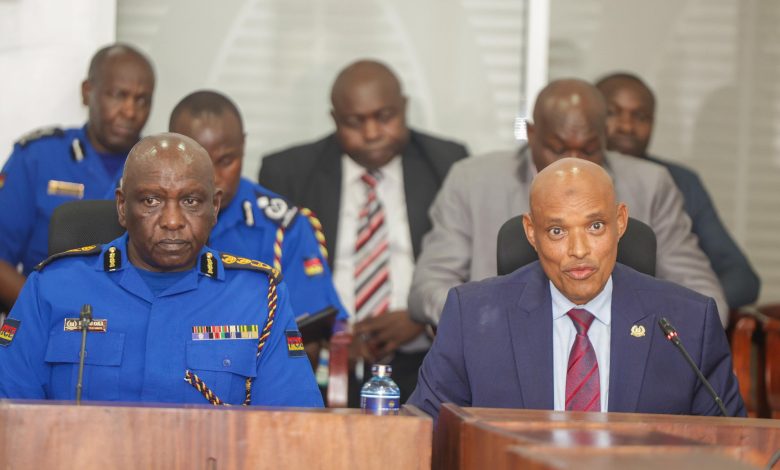
Members of Parliament have called for sweeping reforms in Kenya’s policing system, citing misconduct, weak supervision and outdated training as key factors eroding public trust in the National Police Service (NPS).
The concerns were raised during a meeting in Mombasa between the National Assembly Committee on Administration and Internal Security and officials from the Independent Policing Oversight Authority (IPOA), where legislators pressed for urgent policy and institutional changes to address long-standing challenges in the sector.
Committee chairperson and Narok West MP Gabriel Tongoyo said many of the issues affecting policing stem from administrative and policy gaps rather than deficiencies in the law.
“Listening to the issues raised, a majority are either policy or administrative. The issue of training, for instance, is not entirely legislative.
We need clarity on the specific legal gaps that must be addressed to enhance accountability, especially for senior officers,” he said.
Lari MP Mburu Kahangara cautioned against proposals to allow spontaneous demonstrations without prior police notification, warning that such provisions could be abused.
“Organisers may deliberately avoid informing police and later claim protests were spontaneous, worsening the situation,” he said.
Suna West MP Peter Masara questioned whether legal gaps alone explain police misconduct, pointing instead to deeper structural and cultural problems within the service.
“Is it only gaps in the law that make officers behave the way they do? Training systems remain outdated despite the shift to a police service. Some officers clearly should not be in service,” he said, citing cases of excessive force against unarmed civilians.
Committee vice chairperson and Saku MP Dido Raso raised concern over what he described as an entrenched “blue code of silence,” where officers shield colleagues from accountability. “Those who commit offences must have their day in court,” he said.
IPOA commissioner Kenwilliam Nyakomitah attributed many challenges to weak command structures, poor training and lack of accountability during operations. “Officers are often deployed without clear command structures, leading to confusion and lack of accountability,” he noted.
Fellow Commissioner Annette Mudola Mbogo said reforms must go beyond legal changes to include institutional and welfare improvements. She highlighted the need to integrate oversight into police training and address issues such as mental health and working conditions, noting that implementation of IPOA recommendations stands at 45.2 per cent.
IPOA Deputy Director of Legal Services Festus Kinoti acknowledged that internal secrecy within the police has undermined investigations, with instances of evidence tampering reported. He proposed introducing the principle of command responsibility to hold senior officers accountable for failing to act on misconduct.
Sotik MP Julius Sigei also criticised delays in adopting modern policing tools such as body cameras and CCTV systems, attributing the lag to internal resistance.
The committee further called for tighter oversight of auxiliary security units, stressing that comprehensive reforms are necessary to restore professionalism, accountability and respect for human rights within the police service.