Civil society pushes parliament to release IMF governance report

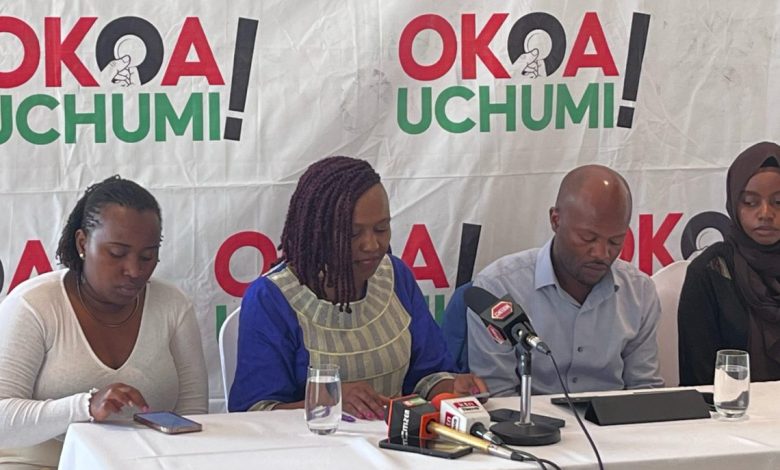
Civil society organisations led by the Kenya Human Rights Commission and the Okoa Uchumi campaign are now pressing Parliament to compel the government to make public a key governance report prepared by the International Monetary Fund (IMF).
In a formal petition submitted to the National Assembly, the groups are demanding that the government release the IMF Governance and Corruption Diagnostic Report for Kenya within 30 days. They argue the report—commissioned by the government and completed in 2025—contains crucial findings on systemic governance weaknesses, corruption risks and institutional gaps affecting public resource management.
The petition addressed to National Assembly Speaker Moses Wetang’ula and key parliamentary committee chairpersons calls for urgent intervention to ensure the document is tabled, scrutinised and made accessible to the public.
Parliament is expected to consider the petition in line with its standing orders, which provide for public submissions on matters within its mandate.
The organisations say the report is of significant public interest, particularly amid rising taxes, a high cost of living and mounting concerns over Kenya’s public debt.
“At a time when Kenyans are being required to bear increased taxation and other economic adjustment measures in the name of fiscal stability, it is both reasonable and just that citizens and their elected representatives have access to information on governance weaknesses and corruption risks,” the petitioners state.
They argue that disclosing the report would strengthen accountability, enhance public participation and help restore confidence in ongoing economic reforms.
According to the petition, the IMF conducted the diagnostic assessment in mid-2025, examining governance challenges across key sectors including public financial management, procurement, tax administration, state-owned enterprises and anti-corruption enforcement systems. The process involved consultations with government agencies, oversight bodies and civil society actors.
However, the groups express concern that the government may already be implementing some recommendations from the report without parliamentary scrutiny or public awareness.
“This selective engagement with the report… undermines the principles of transparency and public participation that should underpin governance reform,” the petition warns.
The petitioners further caution that key policy decisions tied to IMF-supported programmes—such as fiscal reforms, debt strategies and new financing mechanisms like the National Infrastructure Fund—could be influenced by findings that remain hidden from the public.
Among their demands, the groups want Parliament to table the full, unredacted report, require a formal government response outlining intended reforms, and facilitate public hearings on its contents.
They have also urged lawmakers to halt approval of any new IMF-supported lending programmes until the report is disclosed and debated.
The petition is backed by a coalition of civil society organisations, including Transparency International Kenya, Amnesty International Kenya and Oxfam Kenya.