Late Saitoti’s ‘son’ emerge 14 years after his death, launches court battle for vast fortune
According to Njage, the administrators failed to disclose his existence when seeking confirmation of the grant, amounting to the concealment of a material fact that significantly affected the distribution of the estate.

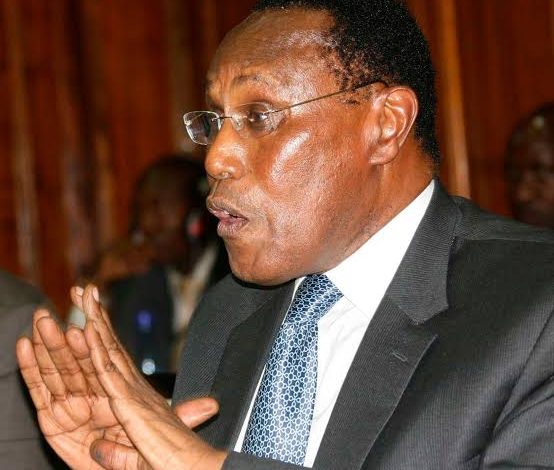
Fourteen years after the death of former Internal Security minister Prof. George Saitoti, a fresh succession dispute has emerged that could reopen the distribution of his multibillion-shilling estate and even lead to the exhumation of his remains for DNA testing.
James Njage has moved to the High Court in Nairobi claiming he is Saitoti’s biological son and was unlawfully excluded from succession proceedings that distributed the former Vice-President’s estate to his widow, Margaret Wanjiku Saitoti, and their son, Zachary Musengi.
The application, filed under a certificate of urgency, marks the first major legal challenge to the administration of Saitoti’s estate since the veteran politician died in a police helicopter crash on June 10, 2012.
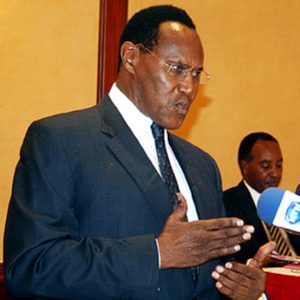
The High Court declined to certify the application as urgent but directed Njage to serve the estate administrators ahead of an inter-partes hearing scheduled for September 24, 2026
“That the notice of motion dated June 15, 2026 is not certified urgent. The same shall be served to be heard inter-parties on September 24, 2026,” the court ruled.
In his affidavit, Njage argues that he is a lawful beneficiary who never participated in the succession proceedings because he was a minor living outside Kenya when the grant of representation was confirmed.
“I have never been involved in any proceedings concerning the administration of my father’s estate, nor have I received any information, accounts or assets from his estate since his demise,” he states.
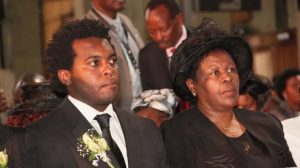
He further claims he was never notified that succession proceedings had been filed, was not served with any court documents and had no guardian or legal representative appointed to safeguard his interests while he was still a child.
According to Njage, the administrators failed to disclose his existence when seeking confirmation of the grant, amounting to the concealment of a material fact that significantly affected the distribution of the estate.
He is asking the court to revoke the confirmed grant, halt any further implementation of the estate distribution and compel the administrators to provide a full account of the estate. The accounting sought includes all income received, rental proceeds, investments, transfers, distributions, bank withdrawals, expenditures and liabilities from the date the grant was confirmed.
Njage says he fears the estate may have already been substantially distributed without his knowledge or participation.
At the centre of the dispute is an extraordinary request that could reopen one of Kenya’s most high-profile political tragedies.
Njage has indicated he will seek orders for the exhumation of Saitoti’s remains to enable DNA testing to establish whether he is the late politician’s biological son.
“The prayer for exhumation is necessary, proportionate and in the interests of justice, as it goes to the root of the objector/applicant’s status, standing and entitlement in the estate,” he says in the court papers.
If the court grants the request, he proposes that DNA samples be analysed by a Government Chemist pathologist alongside two independent private pathologists, one nominated by him and another by Saitoti’s widow, to ensure transparency in the process.
Through Murage Juma & Company Advocates, Njage maintains that his exclusion from the succession process was unlawful because he lacked the legal capacity to assert his rights at the time.
“At the time the grant was issued, confirmed and rectified, I was a minor and therefore lacked the legal capacity, means, knowledge and opportunity to object to or participate in the succession proceedings,” he states.
The application has the potential to reopen one of Kenya’s most significant succession cases if the court finds that a beneficiary was omitted during the administration of the estate. A successful challenge could require the court to revisit the distribution of assets already transferred to beneficiaries.
Saitoti, who served as Vice-President during the administration of President Daniel arap Moi before later becoming Internal Security minister, died alongside his assistant Orwa Ojode, two pilots and two bodyguards when their police helicopter crashed in the Kibiko area of Ngong Forest while en route to a Harambee fundraiser in Ndhiwa, Homa Bay County.
A commission of inquiry chaired by former Court of Appeal judge Kalpana Rawal concluded that the crash was most likely caused by a combination of pilot error, poor weather and the poor condition of the helicopter’s battery. Investigators also found that air traffic controllers at Wilson Airport lost contact with the aircraft just six minutes after take-off.
The High Court’s determination of Njage’s application could not only reignite a legal contest over Saitoti’s vast estate but also decide whether one of Kenya’s most prominent political figures will be exhumed more than a decade after his burial in a bid to resolve the contested paternity claim.