Community resilience remains Kenya’s security weapon in fighting terrorism
Kenya has anchored prevention component in policy as it scales its fight against violent extremism and terrorism. The Prevention of Terrorism Act (POTA) of 2012 and the National Strategy to Counter Violent Extremism considers community engagement and early warning as strong pillars in war on terror. The National Counter Terrorism Centre (NCTC) leads implementation of the National Strategy to Counter Violent Extremism, which ensures all stakeholders including communities play their role in fighting terrorism.

By Zadock Angira
States fighting terrorism often struggle until they find the missing piece of the jigsaw. There is near unanimity that counter terrorism efforts need to be multi-faceted to bear fruits.
Evidently, no amount of military sophistication can on its own, degrade the ever evolving and complex terrorism threat.

Kenya learned this the hard way from its initial counter terrorism approach, which focused on hard power. It took deliberate efforts to reconfigure strategies to fight terrorism to among other things, infuse soft power measures to be impactful.
Among the hard power measures Kenya implemented include investment in modern security equipment, conducting intelligence-led operations, establishment of special police units like Special Operations Group (SOG), enhancing multi-agency coordination for intelligence sharing and legal reforms to grant terrorists harsh penalties.
However, despite these robust counter terrorism measures, terrorist groups like Al-Shabaab continued to infiltrate some vulnerable Kenyans to advance their nefarious activities.
The government was forced to supplement the hard power strategies with soft ones like Nyumba Kumi Initiative and Community Policing to strengthen community resilience against violent extremism and terrorism.
This improved level of vigilance among Kenyans to detect signs of infiltration from terrorist groups like Al-Shabaab and ISIS. In exercise of civic duty, communities now collaborate with security agencies through sharing information on terrorism activities for action.
The resultant effect of this police-public partnership is reduced terror attacks and arrest of more terrorists. Community support was the missing piece of the jigsaw, which came in handy to crack the terrorism menace.
In counties traditionally affected by terrorism such as Mandera, Wajir, Garissa and Lamu, attempted infiltrations by Al-Shabaab continue to be thwarted with support of the local communities. There are no large-scale attacks in the regions, which were hard hit by terror threat in the past.
The pockets of probe attacks currently experienced are desperate attempts by Al-Shabaab to remain relevant and to sabotage ongoing massive government projects like roads construction. Local communities need to continue working with security agencies to aid intelligence-led operations to prevent planned attacks.
One area where communities can support war on terrorism is looking out for tell-tale signs of a potential terror attack such as increased radicalization, sighting of Al-Shabaab operatives, smuggling of weapons and possible reconnaissance missions by terror groups.
This is important because most of large-scale terror attacks conducted in the country in the past were largely due to the fact the populace was not security conscious.
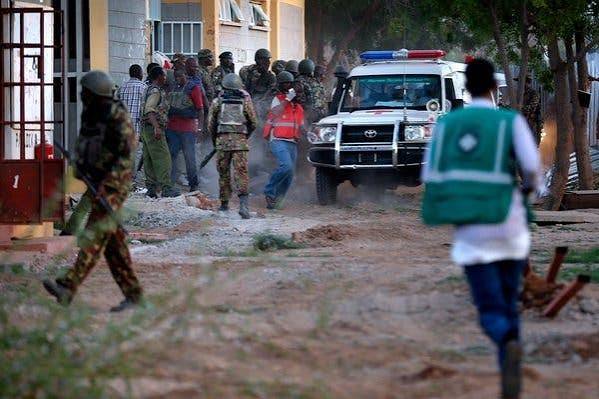
For instance, in the lead-up to the Westgate Mall attack, attackers operated in the country with minimal detection. It was the same case with Garissa University College where, attackers and planners pitched tent in the country for some time before carrying out the heinous act. These attacks show how infiltration, failure to detect and uncoordinated response can be costly to a country.
The sobering lessons from the attacks led to reconfiguration of counter terrorism measures for better results. There was improved coordination and response during Dusit D2 attack.
Security agencies were able to swiftly neutralize attackers, safe lives and subsequently secure convictions against perpetrators of the attack. Other planned attacks in Lamu, Mandera and Garissa have been disrupted with support of local communities.
Kenya has anchored prevention component in policy as it scales its fight against violent extremism and terrorism. The Prevention of Terrorism Act (POTA) of 2012 and the National Strategy to Counter Violent Extremism considers community engagement and early warning as strong pillars in war on terror.
The National Counter Terrorism Centre (NCTC) leads implementation of the National Strategy to Counter Violent Extremism, which ensures all stakeholders including communities play their role in fighting terrorism.
Through the County Action Plans (CAPs), each county have developed localized interventions for communities to support fight against violent extremism and terrorism.
There is need to strengthen such terrorism prevention framework and ensure they are put to practice. It is important to remember the enemy attacks when least expected hence let us not lower guard due to current lull in terror activities. Security starts with you, meaning any suspicious activities or persons within your neighborhood should trigger action including reporting to the police.
Security agencies also need to act on such information and protect identity of informers to maintain trust for enhanced collaboration. There is also need to leverage on technology to create tamper proof system to report crime anonymously even as we fight misinformation and disinformation both online and offline.
Kenya needs to up its counter-terrorism approaches especially focusing on proactive prevention measures to counter terrorists and other criminals in the country.
With the community at the centre of this as first line of defense, Kenya is slowly but surely winning the war on terror. Remember security is a shared responsibility for all stakeholders to make the country secure for development to thrive.
The writer is a security expert and a seasoned media practitioner.