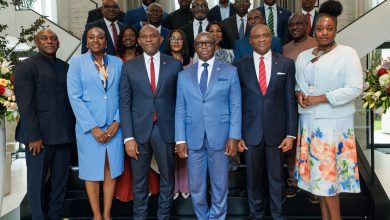
Equity Bank CEO James Mwangi defends sacking of 1,200 employees over fraud
He says they were shocked after audit revealed money changing hands between customers and the bank's workers

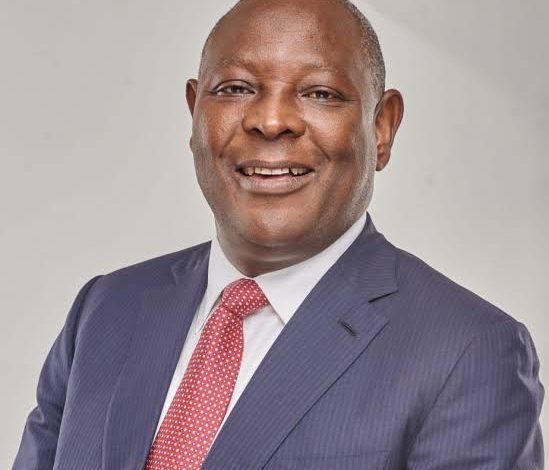
Equity Bank CEO James Mwangi has defended the sacking of about 1,200 employees over fraudulent activities involving its customers.
“The new HR team challenged me and said, ‘James, three years ago in DRC, you lost money. We saw you. You went and managed to get 16 people apprehended, and you got judgment against them.’ We saw the same in Uganda—some loans, agency issues, whatever it was. You went after people and managed to get them jailed. We saw in Kenya, payroll and payment issues. They said, ‘We can help you.’ So I said, ‘Help me.'” he said
“They did a deep dive into conduct—how people carry themselves. Amazingly, they said the easiest way to start is by checking whether there are conflicts of interest with our partners. So, they looked at suppliers and those involved in procurement. They looked at insurance—those who make claims and those who process claims. They looked at loans—those who receive loans and those who give them. Is there a compromised relationship?”
“Fortunately enough—we are a bank. We have access. The law is supportive. We must know our customer. We must confirm, and we were shocked to see money changing hands. We didn’t know whether it was appreciation, a kickback—whatever it was. But it was happening.”
“We said, ‘But you signed this code of conduct. It says you can’t do this.’ So yes, we are going through that process. People are taking responsibility and explaining themselves. I hope I’ve now told you the full story. You probably read about it on the front page of one of the dailies. This is the full picture. It’s a fair process. Because you can’t come here to borrow school fees for your children and then someone asks you, ‘Why don’t you buy me lunch?’ You didn’t come to buy people lunch. You came to borrow school fees,” Mwangi added.
“Micro-enterprises cannot be asked for kickbacks — not in this bank. This is a corruption-free environment. We have become very firm, and we are very excited about what we’ve been able to achieve.”
Mwangi was speaking during the release of the bank’s quarter one results for 2025 which indicated that Equity Group’s total income declined by 4 per cent to Ksh 48.2 billion from Ksh 50.1 billion in Q1 2024.
This decrease was mainly due to a 12 per cemt drop in non-funded income, which fell from Ksh 22.3 billion to Ksh 19.6 billion. Interest income also declined by 3 per cent to Ksh 41.9 billion. However, interest expenses dropped by 12 per cent, leading to a 3 per cent increase in net interest income to Ksh 28.6 billion. On a constant currency basis, total income rose by 7 per cent and net interest income increased by 10 per cent , indicating that currency movements had a significant impact on the reported figures.
Total costs slightly decreased by 1 per cent, from Ksh 29.7 billion in Q1 2024 to Ksh 29.5 billion in Q1 2025. Loan loss provisions dropped significantly by 44 per cent, from Kh 6.1 billion to Ksh 3.4 billion. In contrast, staff costs increased by 11 per cent and other operating expenses also rose by 11 per cent. Under constant currency conditions, total costs increased by 13 per cent, driven mainly by a 33 per cent rise in other operating expenses and a 20 per cent increase in staff costs.
Profit before tax) declined by 8 per cent, from Ksh 20.4 billion to Ksh 18.7 billion. Tax expenses fell by 24 per cent, from Ksh 4.4 billion to Ksh 3.3 billion. As a result, profit after tax declined by 4 per cent, from Ksh 16.0 billion to Ksh 15.4 billion. In constant currency, profit after tax was down by 1 per cent, and PAT increased by 3%.
When excluding the contribution from Equity Bank South Sudan Limited (EBSSL), the Group’s PBT increased by 8%, from KES 17.3 billion in Q1 2024 to KES 18.8 billion in Q1 2025. With EBSSL included, PBT declined by 8%, indicating that EBSSL had a negative effect on overall performance during the period.