Are police cells in Kenya turning into death chambers?
IPOA chairman Issack Hassan recently revealed that they have recorded 20 cases of suspects dying in police custody

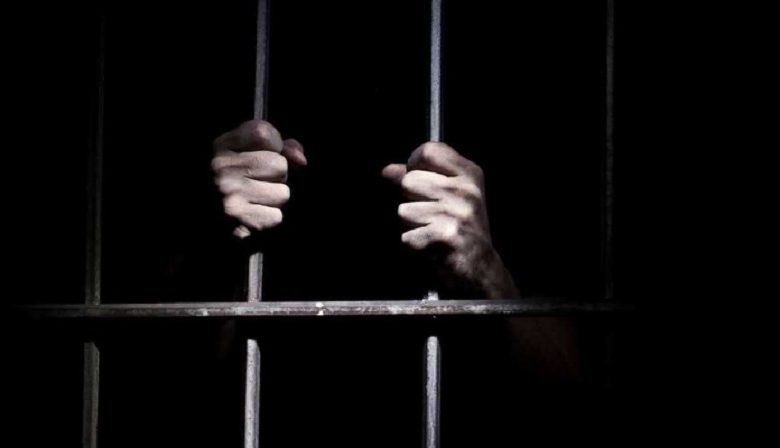
From Albert Omondi Ojwang’s murder at the Nairobi Central Police Station to a woman losing her unborn baby miscarriage happening inside a police post cell in Nyandarua after officers refused to grant her leave to seek medical aid to a stock thief dying in a cell in Kisumu, questions are being raised over whether Kenyan police cells are turning into death chambers?
This is a question that many human rights activists have asked, even as the Independent Policing Oversight Authority (IPOA) probes the recent incidents to unravel the circumstances surrounding the cruelty experienced by Kenyans arrested by the police.
While appearing before the National Assembly Committee on Administration and National Security, IPOA chairman Issack Hassan revealed that they have recorded 20 cases of suspects dying in police custody.
“We have had 20 deaths in police custody in the last four months,” Hassan told MPs.
Ojwang had been arrested after Deputy Inspector General of Kenya Police Eliud Lagat, who has since stepped aside, filed a complaint with the Directorate of Criminal Investigations (DCI) that his name was being tarnished his reputation by linking him to an alleged corruption syndicate in the service.
Chief Inspector Samson Talaam, who was the Officer Commanding Police Station, his deputy Inspector Samuel Ng’ang’a and Police Constable James Mukhwana have since been arraigned in court in connection with Ojwang’s killing.
Gin Ammitou Abwao and Brian Mwaniki Njue, who were in the cells on the day Ojwang was killed were also arrested by IPOA. It is suspected they are the ones who were hired to punish him resulting in his death with reports indicating they were released on free bonds in the morning.
They are facing murder charges alongside the three police officers and another civilian.
On the other hand, Lagat recorded a statement with IPOA on Thursday.
Mukhwana is alleged to have confessed to IPOA that he was instructed by Talaam to bribe suspects in custody to punish Ojwang upon his arrival from Homa Bay where he had been arrested by DCI officers before being brought to Nairobi following instructions from Lagat.
Police initially claimed he died from injuries he suffered after repeatedly hitting his head on the wall and was pronounced death on arrival at Mbagathi Hospital where he was rushed to.
However, an autopsy led by government pathologist Bernard Midia revealed that Ojwang’ died as a result of head injury and neck compression, while there were multiple injuries spread across his body.
“The pattern of injuries spread all over the body of Ojwang points towards assault,” Midia stated.
He added that the specimens from the postmortem results have been shared with the relevant investigating agencies for action.
He explained that if he had done that, the pattern of the injuries on the head would be different.
“When I examined the injuries on Omondi’s head, he did not hit himself on the walls of the police cell. If he had, the patterns would have shown a frontal bleed, but the bleeds on the scalp were partially spread on the front of the head, the back, and the face. When we refer to the other injuries, then this is not self-inflicted injuries,” he explained.
The pathologist added that there were signs of struggle.
“We have found several injuries, and there were signs of struggle well described in the report for further investigations,” he stated.
“The signal by the police Inspector-General was incredible; it was a very poor cover-up attempt to say that Ojwang had hit his head on the wall. The CCTV had been interfered with. The man was tortured and killed,” Hassan said when he appeared before MPs.
Inspector General of Police Douglas Kanja was forced to apologise when he appeared before MPs, saying he was misled by his juniors.
In the case of Katito Police Station Cell in Kisumu, the accused is reported to have committed suicide after using his vest to hang himself on the cell door.
The suspect, who had been arrested for allegedly stealing goats was being held solitary confinement just like Ojwang.
In Siaya County, a suspect held for defilement at Ukwala Police Station also died by suicide on June 12.
The body of Joseph Otieno Oduor alias Sande, 26, was found hanging on a metal rod in the cells’ toilet, police said.
Unlike the other mysterious deaths, however, Oduor’s family acknowledged that the man had suicidal tendencies.
In Nyandarua, the family of Milka Wangari is demanding justice for their kin who miscarried while inside a cell at Rwanyambo Police Post after being arrested for allegedly stealing Sh18,000 from the owner of a bar where she was a bartender.
He sister, only identified as Wangui, stated that she had pleaded with the police to release her as they sought to raise the money, but their pleas fell on deaf ears.
“I pleaded with the police to release my sister as we tried to raise the money on Wednesday, but they declined. I pleaded with them, informing them that my sister had other children waiting at home and we had a sick mother to take care of, but they refused,” she stated.
She shared that it was later discovered that only Sh9,000 was missing, and the family managed to raise Sh6,000, though they did not secure her release.
The family revealed that at around 1 am, the victim called her sister to inform her that she needed assistance since she was bleeding heavily.
However, upon arrival, officers reportedly chased the sister away, denying her access.
Witnesses and family members claim that the woman began experiencing complications but was left unattended for hours, leading to the tragic loss of her pregnancy.
“I came back to the station early in the morning, but I was still denied access to her. But I was still denied access to her, but learned that she had suffered a miscarriage during the night and had remained in the police cell,” the sister narrated.
Police spokesman Muchiri Nyaga said the officer in charge of the station was suspended to allow for investigations by the Internal Affairs Unit in collaboration with IPOA.
“To ensure a swift, impartial, and transparent investigation, the officer in charge of Rwanyambo Police Post has been interdicted with immediate effect,” he said in a statement.
Calls for accountability by the police over rising impunity and decisive action those implicated for either shooting pros testers during peaceful demos as well as torturing or killing suspects extrajudicially have continued to mount and went a notch higher following Ojwang’s killing.
Emurua Dikirr MP Johanna Ng’eno says justice must not be seen to favor only certain regions.
Ng’eno claims some communities and regions have been profiled, yet they suffer from police brutality.
“Selective justice and community profiling are wrong. Police have only concentrated in Nairobi, yet police have killed people in Angata, and no arrests have been made,” he stated.
Opposition leaders and even some in the ruling Kenya Kwanza Coalition have condemned the brutality by the police while both the Senate and the National Assembly have summoned security chiefs and IPOA as they probe Ojwang’s death.
Interior Cabinet Secretary Kipchumba Murkomen is set to face MPs on Wednesday after they rejected his explanations when he appeared before the Administration and National Security Committee alongside Kanja, Hassan and DCI Director Mohammed Amin.
However, there are those who say it is unfair to brand the entire police service as rogue due to wrongdoing of a few elements.
“We cannot use an incident of one policeman to condemn the entire force,” National Assembly Speaker Moses Wetang’ula stated on Friday during a function in Nyamira.
Nyaga took a similar stance, saying there are Standard Operating Procedures that are followed on how to handle those arrested.
He added that those who act unprofessionally shall be charged as per the law.
“The misconduct of a few officers is not a reflection of NPS. We do take misconduct seriously because there are Standard Operating Procedures (SOPs) regarding not only handling prisoners but in regards to matters undertaken by police. Where Police act unprofessionally, they are going to be treated as criminals and charged as per the law,” he told The Informer media Group, Muchiri.
“If anyone steps outside of the SOPs, there are going to be consequences for that. The act of one or two officers should not be looked at as a reflection of the whole service. Such tendencies have to be dealt with appropriately, including charging them in a court of law,” he added.
Nyaga said they are focused on improving the National Police Service (NPS) training as they aim to improve the interactions with the community, too.
“We continue to enhance our training skills and interaction between the officers and the community so that together we can be better people and not just as police officers but as good citizens. We are calling on citizens to say it whenever they see misconduct by the officers,” her explained.
According to security analyst Richard Tuta, every case of police misconduct needs to be investigated independently and not castigate the whole agency.
He adds that people dying in police cells is not new, as some suspects die by suicide while in the cells or from medical complications.
“Every case needs to be investigated on its merit, but we cannot say people dying in cells is something new. It should be investigated to establish that the death was not by failure of someone to do what they are supposed to do or not supposed to do. “It is not NPS doing wrong; those are acts committed by individuals and not the interest of the whole agency,” he explained to The Informer Media Group.
Tuta reiterates that despite all the ongoing brutality by the Police, Kenyans have not lost hope in NPS, as that is the first place they’ll always go to when faced with stuff that needs their help.
He adds that the NPS is a reflection of the community as the people recruited into the service are from the community.
The expert calls for reforms beginning from the community level, which will then change the people recruited to serve in NPS.
“Kenyans have not lost faith with the police because that is the first place they will always go to when they face, for example, criminal attacks by goons. NPS cannot be disbanded to remain with private security. Even though the police have their shortcoming, they are a reflection of the community. If the community is spoiled, the servicemen shall also be that way. Let us look at the people we recruit into service. We cannot use religious standards to measure the police. Let us judge them fairly,” he said.