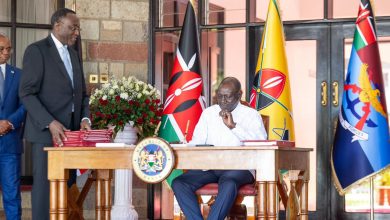
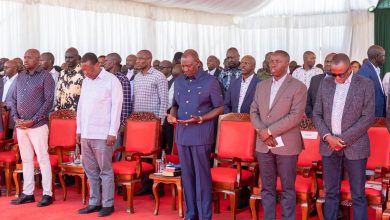
63 years Later, Madaraka Day Finally Comes to Northern Kenya
For decades, despite the inception of devolution in 2013, Northern Kenya has often remained at the margins of development conversations, grappling with neglect largely now attributed to bad local leadership since the beginning of implementation of devolution 13 years ago, insecurity, recurring drought and poor infrastructure. Previously, successive governments have faced criticism over uneven development between other parts of the country and the arid northern counties. Local leaders notably Governors and Members of Parliament (MPs) from the region have been blamed for mismanagement and diversion of taxpayers’ money allocated from the exchequer from local development projects.

For the first time since Kenya attained independence in 1963, tommorrow’s national Madaraka Day celebrations will be held in Wajir County, marking what leaders and residents describe as a historic moment of recognition and inclusion for the long-marginalised North Eastern region.
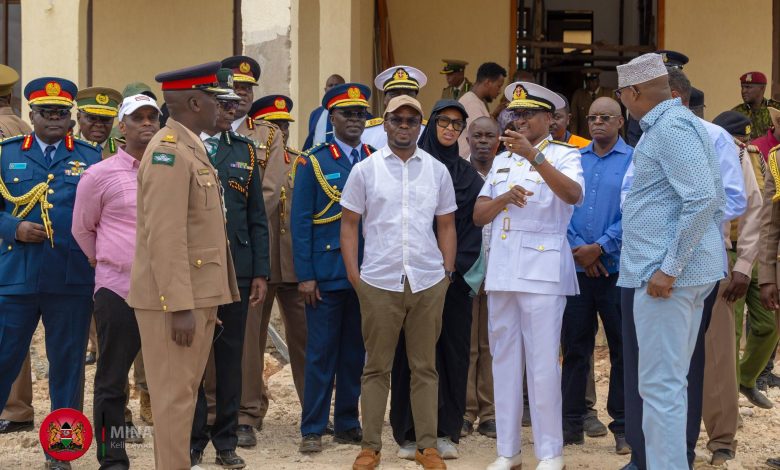
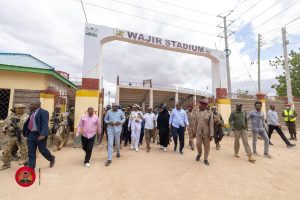
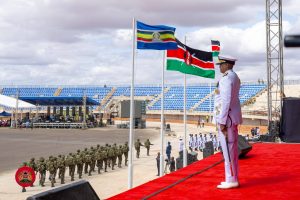
Preparations for the 63rd Madaraka Day fete, scheduled for June 1, 2026, are now in the final stages, with security chiefs, government officials and local leaders conducting inspection tours at the newly constructed Wajir Stadium and related infrastructure projects.
Last week, Chief of the Kenya Defence Forces General Charles Kahariri, Inspector General of Police Douglas Kanja, Interior Ministry officials and Wajir County leaders spearheaded coordinated preparations ahead of the national event.
Interior Principal Secretary Raymond Omollo said the government was focused on ensuring seamless execution of the celebrations.
“In preparation and readiness for the upcoming Madaraka Day celebrations scheduled for June 1, barely a week away, I led the National Celebrations Steering Committee on an inspection visit of Wajir Stadium and related infrastructure in Wajir County. The visit focused on assessing preparedness for the national
event, including stadium readiness, logistical arrangements and supporting facilities to ensure a smooth and dignified celebration,” Omollo said in a social media update dated May 25, 2026.
He noted that rehearsals were already underway, with teams fine-tuning coordination, movement and programme flow.
Among others who accompanied the CDF during the inspection were Wajir Governor Ahmed Abdullahi, Culture, Arts and Heritage Principal Secretary Ummi Bashir, National Government Coordination Principal Secretary Ahmed Abdisalan and Wajir East MP Adan Daud.
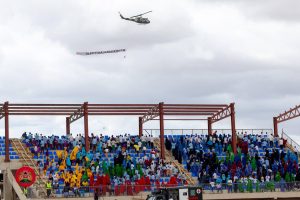
Military jets have been seen hovering above Wajir town as Kenya Defence Forces personnel rehearse under the scorching sun in readiness for the celebrations.
Across the town, signs of rapid transformation are visible. Freshly paved roads, newly installed streetlights and a modern 10,000-seater stadium have become symbols of Wajir’s emergence onto the national stage.
For many residents, however, the celebrations carry deeper emotional and political significance.
For decades, despite the inception of devolution in 2013, Northern Kenya has often remained at the margins of development conversations, grappling with neglect largely now attributed to bad local leadership since the beginning of implementation of devolution 13 years ago, insecurity, recurring drought and poor infrastructure.
Previously, successive governments have faced criticism over uneven development between other parts of the country and the arid northern counties.
Local leaders notably Governors and Members of Parliament from the region have been blamed for mismanagement and diversion of taxpayers money allocated from the exchequer.
Recently, former Deputy President Rigathi Gachagua claimed that counties in the North Eastern region, often grouped to include Garissa, Wajir, Mandera, Marsabit, and Isiolo received Sh1 trillion since the inception of devolution in 2013. However, official treasury records indicate that these five counties actually received Sh505.2 billion over the same period
Leaders from the region say President William Ruto’s decision to host the national fete in Wajir signals a new chapter of inclusion and national cohesion.
Wajir South MP Adow Mohammed described the occasion as a symbolic end to decades of exclusion for the people of North Eastern Kenya.
“For more than 60 years, the people of North Eastern Kenya endured marginalisation, exclusion, underinvestment and suspicion. Many generations grew up feeling distant from the centre of national life, not because they loved Kenya any less, but because Kenya sometimes seemed unsure how fully to embrace them,” he said.
Adow noted that despite the hardships, residents of the region remained resilient and patriotic.
“They built families, businesses, schools, mosques and communities under difficult circumstances. They defended this nation’s borders, contributed to its economy and enriched its culture. Despite every hardship, they never stopped believing that one day they too would be fully seen, fully heard and fully included in the promise of Kenya,” he added.
According to the legislator, the upcoming Madaraka Day celebrations send a strong national message that no region should feel excluded from the Kenyan identity.
“The message from this Madaraka to the entire country is that no region is too remote to matter, no community is too small to be recognised and no Kenyan should ever feel excluded from the national family,” Adow said.
Mandera South MP Abdul Haro also described the celebrations as a manifestation of inclusion, recognition and national unity.
“This event is an affirmation that the people of North Eastern are Kenyans and a valued pillar of Kenyan nationhood,” Haro said.
Yet beneath the celebratory mood lies the painful memory of one of Kenya’s darkest chapters — the 1984 Wagalla massacre.
The increased presence of security personnel and soldiers in Wajir has stirred memories of the massacre that occurred at the Wagalla Airstrip, where hundreds, possibly thousands, of members of the Degodia sub-clan were rounded up, detained and killed by state security forces between February 10 and 14, 1984.
While the government initially stated that only 57 people died, later admissions and independent accounts painted a far grimmer picture. In 2000, then Cabinet minister William Ruto told Parliament that 380 people had died, although survivors and community groups insist the number was much higher.
The massacre left deep scars on the community, devastating families and altering the social fabric of the region for generations.
Italian humanitarian and Catholic lay missionary Annalena Tonelli, who had lived in Wajir for 15 years helping vulnerable communities, was among those who documented the atrocities and advocated for victims.
For many residents, the contrast between the military presence during the Wagalla tragedy and the current preparations for a national celebration in Wajir is profound.
This time, soldiers are in Wajir not for bloodshed, but for celebration — a symbolic shift many hope reflects a broader transformation in the relationship between the Kenyan state and the people of Northern Kenya.