Why Raila was every president’s ‘unwanted’ ally
Even in death, his name remains synonymous with the struggle for democracy, unity, and justice a man every president wanted on their side, and none could afford to ignore

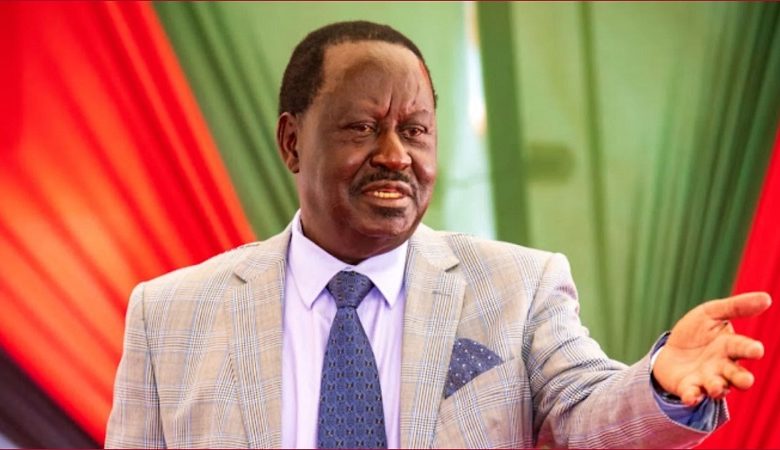
For more than four decades, Raila Amolo Odinga dominated Kenya’s political landscape, becoming a central figure around whom alliances were forged, governments stabilised, and opposition movements defined.
Even in death, his name remains synonymous with the struggle for democracy, unity, and justice a man every president wanted on their side, and none could afford to ignore.
From the second president, the late Daniel arap Moi to the late Mwai Kibaki, Uhuru Kenyatta, and now William Ruto, every Kenyan president in the pre-and-post multiparty era found themselves either clashing with or courting Raila, and more often, both.
His unmatched ability to mobilise masses and influence national discourse made him the most sought-after political rival in the country’s history.
Moi era: From detention to alliance
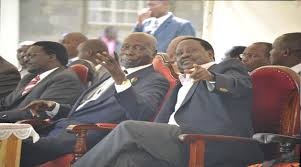
During the Moi regime, Raila was the face of resistance to single-party rule. A key figure in the pro-democracy movement of the 1980s and early 1990s, he endured multiple detentions without trial for his activism. Yet, in a stunning political twist, Raila joined hands with Moi in 2001 through a merger of the National Development Party (NDP) with the ruling KANU.
The move, though controversial, demonstrated Raila’s political pragmatism. Moi sought to neutralize Raila’s influence and broaden his base, while Raila used the alliance to position himself at the heart of government, even if briefly. It marked the first of many post-election political reconciliations that defined his career.
Kibaki era: From betrayal to unity government
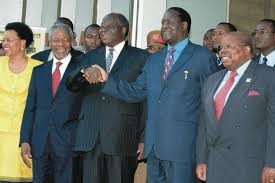
Raila was instrumental in unseating Moi’s regime through the National Rainbow Coalition (NARC) in 2002, which swept Mwai Kibaki to power through his “Kibaki Tosha” rallying call coined alongside the unbwogable tagline that thrust the late Kibaki and his former Vice President the late Kijana Wamalwa to power.
However, the coalition soon fractured amid accusations that Kibaki reneged on a pre-election power-sharing deal.
The fallout led to Raila forming the Orange Democratic Movement (ODM), which became the dominant opposition force. The disputed 2007 election plunged the country into turmoil, but Raila once again played a stabilising role, agreeing to share power with Kibaki under the 2008 Grand Coalition Government, becoming Prime Minister.
For Kibaki, bringing Raila into government was essential for restoring calm; for Raila, it was a chance to steer key reforms, including constitutional change.
Uhuru Kenyatta era: The “Handshake” and political truce
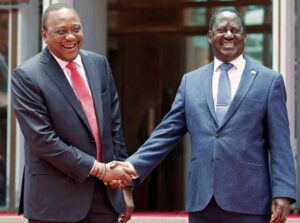
After two fiercely contested elections in 2013 and 2017, Raila’s rivalry with President Uhuru Kenyatta threatened to tear the nation apart. His “People’s President” swearing-in in January 2018 symbolized Kenya’s deepest political divide since independence.
Yet, barely two months later, Raila and Uhuru shocked the nation with their now-famous “Handshake.” The March 9, 2018 accord ended months of protests and international concern over Kenya’s stability.
The truce reshaped Kenya’s political scene calming tensions, paving the way for the Building Bridges Initiative (BBI), and isolating then–Deputy President William Ruto. For Uhuru, it was a bid to stabilize his legacy; for Raila, a chance to push national unity and reform from within.
Ruto era: Courted once again
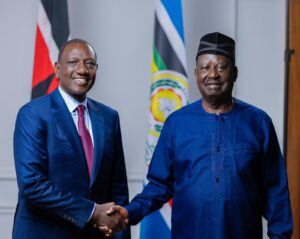
Following his narrow loss to William Ruto in 2022, Raila initially maintained his traditional opposition stance rejecting results and calling for electoral reforms.
However, as Ruto consolidated power, he, too, reached out to the veteran opposition leader.
In 2024–2025, the two found themselves in periodic dialogue over national stability and bipartisan parliamentary talks on constitutional and governance reforms.
Ruto, aware of Raila’s unmatched grassroots influence and his symbolic clout in the Western, Nyanza, and Coast regions, sought to temper opposition pressure through engagement rather than confrontation.
Clash with Gen Zs over handshake with Ruto
Following the youth-led insurrection in June 2024 triggered by anti-Finance Bill 2024 protests that culminated to unprecedented invasion of Parliament where tens of youths were felled by police bullets, in March 2025, Ruto and the former Prime Minister officially signed a political pact to work together.
The Kenya Kwanza-ODM Framework Agreement was signed in an event that was attended by Members of Parliament allied to the two leaders but some accused Raila of betrayal.
However, speaking in Mombasa, Raila denied the claims saying the party did a patriotic thing to unite Kenyans from all walks of life.
” We say our political marriage with the government is not a move to betray Kenyans. We have done an important thing which is not selfish. Kenyans should unite and work (Sisi tunasema hatujaingia kwa harusi hii na serikali ili kusaliti Wakenya, sisi tumefanya kitu ya muhimu kushinda wabinafsi. Wakenya waungane pamoja, wafanye kazi), ” Raila said during the celebration of Mombasa Eid Baraza.
He also said that in the coming general elections, 2027, ODM will also participate in the elections.
Why every president needed Raila
Raila’s longevity and resilience stemmed from three key traits that were synonymous with him notably unparalleled mass appeal, ideological consistency and strategic flexibility.
He represented reform, embodied opposition to authoritarianism, and maintained credibility among Kenya’s marginalised populations.
For presidents, aligning with him, however, briefly, provided legitimacy, national calm, and access to his formidable political base.
For Raila, coalition-building was both survival and strategy a way to stay relevant in an ever-shifting political terrain.
A legacy beyond rivalry
Raila’s legacy towered beyond rivalry and his career symbolised the paradox of Kenyan politics marked fierce contest giving way to reluctant partnership.
His political journey blurred the line between opposition and government, proving that in Kenya’s power calculus, no lasting peace or reform could emerge without Raila’s imprint.