Why Duncan Ojwang declined his nomination by Ruto to become KNCHR Chair
It is likely that the President may now opt to choose either Ms Ogangah or Ms Iseme to meet the gender rule

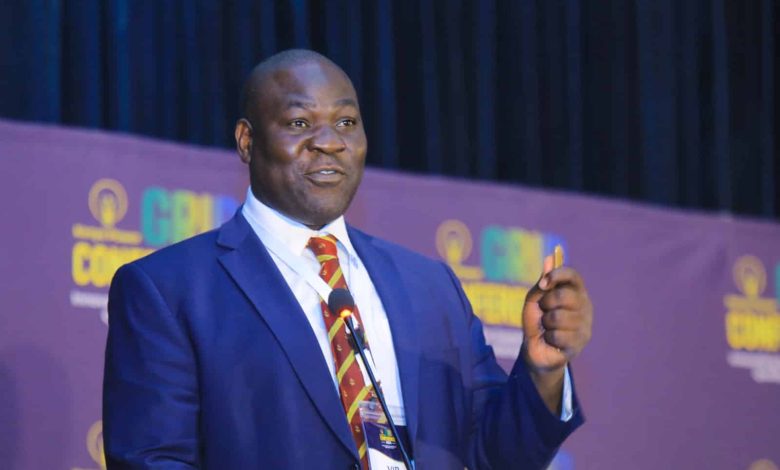
Lawyer Duncan Oburu Ojwang has turned down his nomination by President William Ruto to become the next chairperson of the State-funded Kenya National Commission on Human Rights (KNCHR).
In a letter addressed to National Assembly Speaker Moses Wetang’ula, Dr Ojwang cited possible conflict of interest and personal reasons as the basis of his decision to decline the nomination.
Wetang’ula informed the House during Wednesday’s morning session that he had received a letter from Ojwang declining the nomination
He was set to face the Justice and Legal Affairs Committee for vetting, which has now been suspended, with President Ruto expected to nominate a new candidate.
Wetang’ula also instructed the Clerk of the National Assembly to immediately inform the appointing authority of the development.
In citing conflict of interest as one of the reasons he declined the nomination, Dr Ojwang’, a legal scholar specialising in human rights law, constitutional law, was also alluding to his closeness to President Ruto, which led critics to question whether he would be impartial in discharging his duties.
KNCHR was established by the 2010 Constitution and its broad mandates include acting as a watch-dog over the government in the area of human rights and providing key leadership in moving the country towards a human rights state.
It has been in the forefront in condemning, monitoring and documenting various human rights by State actors, the latest being the use of excessive force by police during protests, abductions, extrajudicial killings and enforced disappearances witnessed since last June’s Gen Z revolt.
He was likely to have found himself conflicted having represented President Ruto either personally or in furtherance of his interests in various cases including at the International Criminal Court (ICC) in The Hague when he faced charged of crimes against humanity relating to the 2007/08 post-election violence where he served as a legal researcher.
He is also a board member at Kenya Power together with another Ruto ally, Joyce Brenda Masinde, who is the chairperson, and both sought to join the Independent Electoral and Boundaries Commission (IEBC) during its recent reconstitution.
In addition, Dr Ojwang was among technical experts seconded by Kenya Kwanza to the National Dialogue Committee (NADCO) talks with Azimio in the aftermath of the protests over high cost of living and grievances attached to the outcome of the 2022 elections when Ruto defeated Raila Odinga to gain tenancy at State House.
At the same time, he was among lawyers who successfully opposed the Building Bridges Initiative (BBI) up to the Supreme Court.
President Ruto nominated Ojwang early this month following a competitive selection process, and forwarded his details to the National Assembly.
He was among six candidates shortlisted in May from an initial pool of 17 applicants.
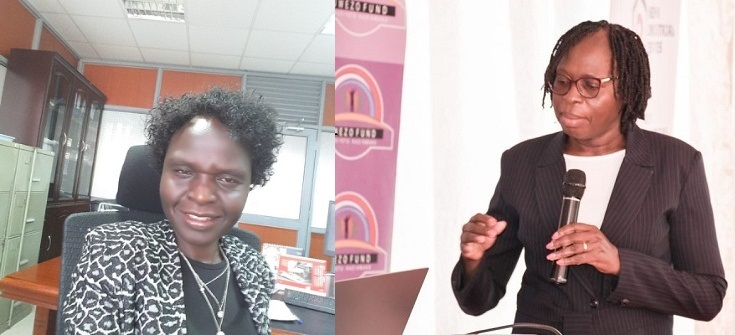
With his withdrawal, Ruto will now pick from the other candidates who were shortlisted by the Selection Panel. They were Victor Okoth Ogwang Lando, Selina Amsugut Iseme, Claris Awour Ogangah, Edward Katama Ngeywa and Michael Peter Otieno Okelloh.
However, Ojwang’s nomination also faced legal opposition from the Katiba Institute and Kenya Human Rights Commission (KHRC), which argued that it breached Article 250(II) of the Constitution, which prohibits appointing a chairperson and vice-chairperson of the same gender in a constitutional commission.
Since the current vice-chairperson, Raymond Nyeris, is male, the petitioners in their suit averred the nomination Of Ojwang was unconstitutional.
The lobby groups accused the Selection Panel, the President and the National Assembly of failing to uphold national values, particularly gender equity, rule of law, integrity and inclusivity.
The petition, which was been filed under Articles 3 (1), 10, 27, 73, 232 and 250 (11) of the Constitution, alleges that the process discriminated against qualified women candidates, unjustifiably limited women’s rights to equality, and disrespected the principles of public service and leadership integrity.
The High Court is scheduled to mention the case on September 17.
It is likely that President Ruto may opt to choose either Ms Ogangah, a human rights specialist at Office of the United Nations High Commissioner for Human Rights, or Ms Iseme, who currently serves as the Director, Legal Affairs in the Office of the Controller of Budget, to meet the gender principle and avert a protracted court battle.