Who gave the order? Raila poses as he calls for speedy and credible closure after Omondi’s death
He says senseless deaths in custody seriously erode the authority and credibility of the police and the state; and that is a significant step towards chaos and collapse

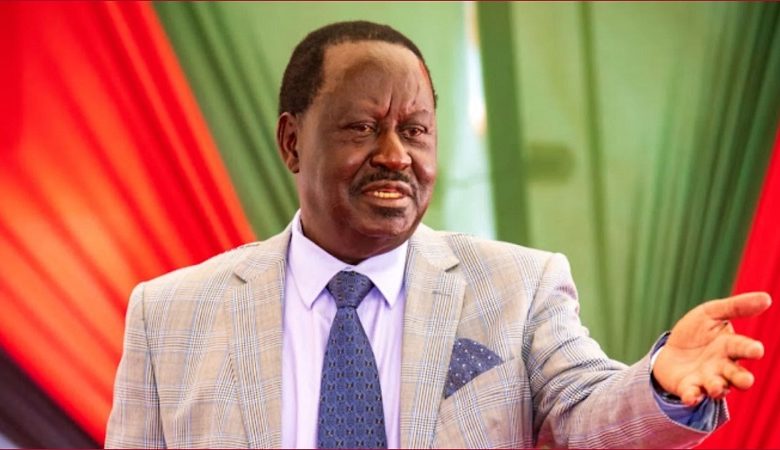
ODM leader Raila Odinga has broken his silence over the death of teacher and blogger Albert Omondi Ojwang who had been arrested on Saturday for allegedly tarnishing the name of Deputy Inspector General (Kenya Police) Eliud Lagat.
In a statement issued from Bangkok, Thailand, Raila said Ojwang’s death joins a horrifying long list of young and defenseless Kenyans whose lives whose lives have been taken too soon, in brutal and senseless circumstances, at the hands of the police.
He noted that so far, no one knows who gave the orders for Ojwang to be arrested in Homa Bay and ferried all the way to Nairobi and yet that person should be answering to Kenyans.
“While all these deaths cause tremendous pain to individuals and their families, they seriously erode the authority and credibility of the police and the state; and that is a significant step towards chaos and collapse. When citizens can no longer tell the difference between the two forms of injustice – police injustice and mob injustice – we are staring at the reality (of) failure as a nation,” Raila warned.
He said a speedy and credible closure to the latest incident of injustice in the hands of police, alongside the many others they have been pursuing since 2023 is not optional.
“The National Police Service must commit to and take concrete actions to hold their own accountable, beginning with this senseless death of Albert Ojwang,” he added.
On Monday, Law Society of Kenya President Faith Odhiambo also called for the disclosure of those involved in transporting him from Homa Bay to Central Police Station in Nairobi, where he was later found dead.
“Why has Kanja not named the particular officers who have been interdicted? What is the need to hide? Let Kenyans know. We want to know who picked Ojwang. Are they part of those who were interdicted? And also, we want to know the names of those interdicted,” the LSK President stated.
According to LSK, the details shared by NPS are insufficient, insisting that accountability must go beyond public relations gestures.
“Without telling Kenyans in plain words who these individuals are, we will be treated to just PR for purposes of calming down the citizens,” she said.
“The treatment of Ojwang’ is a betrayal against him and the people of Kenya. This cannot be wished away as an isolated incident because it is illustrative of deeper, systematic weaknesses within the NPS. Kenya has no room for extra-judicial killings and criminal conduct by the police,” she added.
This is even as calls for the recusal of the Deputy Inspector General of Police Eliud Lagat from the ongoing investigations due to a conflict of interest and singled out Central Police Station as a “poster boy for police brutality,” with Kamukunji Police Station listed as another hotspot of abuse.
On its part, the Kenya National Commission on Human Rights (KNCHR) said it is seriously concerned with the manner in which police are conducting investigations into the death of Omondi.
It strongly condemned the premature police narrative that Omondi died from self-inflicted injuries. These statements by the police were issued even before any independent forensic investigations were carried out, a move that undermines public trust.
In a statement, KNCHR said its officials visited City Mortuary and observed Omondi’s body bore visible injuries to the face, both hands and the back of the head. The head is also swollen with blood on his mouth and nose. Plans are underway for a postmortem.
The Commission said it has since commenced independent investigations into the matter pursuant to its mandate under Article 59 of the Constitution and the Prevention of Torture Act 2017, to find out the truth behind Omondi’s death and to address the serious human rights violations involved.
“The Commission is alarmed by the fact that Omondi died in a police station, a place where suspects should be safe in State custody. This case highlights gross violations of the right to life, freedom from torture, fair administrative action, and human dignity, as enshrined in the Constitution of Kenya. The unexplained death in custody is a reprehensible breach of the State’s duty to protect those in its care and reflects a wider, deeply troubling pattern of deaths and abuses in police custody,” it said.
The KNCHR demanded full cooperation from the National Police Service in providing all relevant evidence, and a transparent, independent investigation by both KNCHR and the Independent Policing Oversight Authority (IPOA). The Commission further called on the Office of the Director of Public Prosecutions and the Judiciary to ensure accountability and justice are delivered without delay.