When fuel prices become a policy choice: The arithmetic Kenya cannot ignore
A substantial share of Kenya's pump price reflects taxes and statutory levies rather than the underlying cost of petroleum. Value Added Tax (VAT), excise duty, the Road Maintenance Levy, Petroleum Development Levy, Railway Development Levy and other statutory charges each serve legitimate fiscal objectives when viewed individually. Collectively, however, they transform fuel from a basic production input into one of the government's most significant revenue instruments.

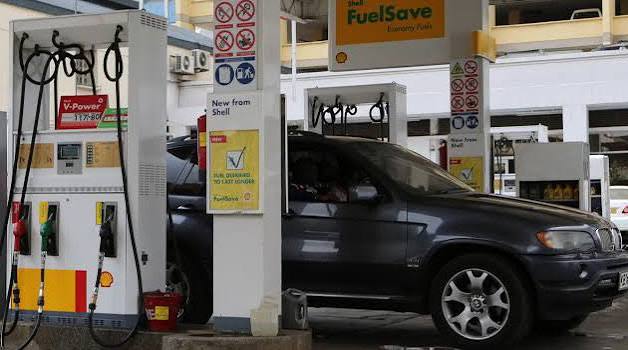
There is a persistent temptation in public discourse to treat rising fuel prices as an external misfortune – an imported crisis driven by distant wars, volatile oil markets and the invisible hand of global demand. It is a convenient narrative. It is also incomplete.
Global forces undoubtedly influence the cost of crude oil. But the price motorists ultimately pay at the pump is shaped just as much by domestic policy. In Kenya today, the arithmetic tells a more uncomfortable story: fuel is no longer merely expensive, but it is becoming structurally unaffordable.
With petrol and diesel now retailing at over Sh200 per litre, Kenya has entered the upper tier of global fuel pricing. On the surface, that may suggest the country is simply paying what much of the world pays. Yet this comparison overlooks the single most important variable: income.
Fuel prices do not exist in isolation; they exist in proportion to earning power. The relevant question is not what a litre costs, but what that litre costs relative to the income of the person buying it.
Judged by that measure, Kenya’s fuel is not merely expensive, rather it is disproportionately so. Kenyans are effectively paying global prices with local wages, creating a mismatch that turns an ordinary commodity into a persistent economic strain.
This is not simply an economic perception. It is a mathematical imbalance.
In higher-income economies, elevated fuel prices are cushioned by stronger wages, broader social protection systems and more efficient public transport networks. In Kenya, the same price point falls upon significantly lower household incomes and a far narrower financial buffer. Consequently, a litre of fuel consumes a much larger share of disposable income, amplifying its effect across households and businesses alike.
What is a manageable expense elsewhere becomes a systemic burden here.
Global oil markets, however, explain only part of the story. Domestic policy explains the rest.
A substantial share of Kenya’s pump price reflects taxes and statutory levies rather than the underlying cost of petroleum. Value Added Tax (VAT), excise duty, the Road Maintenance Levy, Petroleum Development Levy, Railway Development Levy and other statutory charges each serve legitimate fiscal objectives when viewed individually. Collectively, however, they transform fuel from a basic production input into one of the government’s most significant revenue instruments.
The result is a pricing model that occupies an uncomfortable middle ground. Kenya neither shields consumers through extensive fuel subsidies nor offsets high taxation with the comprehensive public transport systems and income support mechanisms found in many advanced economies. Instead, it combines relatively high taxation with comparatively limited economic cushioning.
The consequences become even clearer when viewed through a regional lens.
Across East Africa, Kenya consistently ranks among the countries with the highest fuel prices. While the difference with neighbouring markets may appear modest on a per-litre basis, it compounds rapidly across supply chains. For transporters, manufacturers, farmers and logistics operators, even a Sh20 difference per litre translates into thousands of shillings on a single journey and millions over the course of a financial year.
Those costs do not disappear. They are passed on.
Fuel is not simply another commodity; it is the economy’s most important intermediate input. Nearly every sector depends on it directly or indirectly.
Every increase at the pump ripples through transport fares, food prices, construction costs, manufacturing, electricity generation and the delivery of essential services. Economists describe this as a multiplier effect. For ordinary citizens, it is experienced more simply: when fuel becomes more expensive, almost everything else follows.
This explains why recent adjustments feel less like routine price revisions and more like economy-wide shocks. A sharp increase in diesel prices, in particular, extends far beyond motorists. Diesel powers freight transport, agricultural machinery, construction equipment and industrial production. Rising diesel costs therefore recalibrate the entire cost structure of the economy – from the farm gate to supermarket shelves, from factories to construction sites.
Against this backdrop, suggestions that Kenya should avoid comparisons with neighbouring countries miss an important economic reality. Markets compare, whether policymakers choose to or not. Investors assess operating costs across jurisdictions. Transporters calculate the most economical routes. Manufacturers evaluate production costs. Consumers ultimately bear the consequences through higher prices.
Economic competitiveness is determined not by rhetoric but by relative cost.
The deeper issue is that Kenya’s fuel pricing reflects three structural realities: heavy dependence on imported petroleum, a fiscal model that relies significantly on fuel taxation and a population whose income growth has not kept pace with the rising cost of living. None of these realities is inherently problematic in isolation. Together, however, they produce a system in which fuel increasingly behaves like a luxury good despite remaining an indispensable necessity.
That contradiction is difficult to sustain.
When an essential commodity is priced beyond the realistic reach of those who depend on it, the economy does not simply adjust, it strains. Businesses absorb only so much before passing costs to consumers. Households reduce discretionary spending to accommodate higher transport and energy expenses. Inflationary pressures intensify, purchasing power weakens and economic growth slows under the cumulative weight of rising production costs.
This is the arithmetic Kenya cannot afford to ignore.
Fuel prices are not merely a reflection of international oil markets. They are also the outcome of domestic fiscal choices, taxation policy and structural economic realities. Every levy imposed, every policy adopted and every pricing decision ultimately finds its way onto the figure displayed at the fuel pump.
And that figure influences the price of virtually everything else.
The question, therefore, is no longer whether fuel is expensive. It is whether a pricing model that combines global energy costs with local income constraints can remain economically sustainable without steadily eroding household welfare, business competitiveness and national productivity.
Economics is ultimately governed by arithmetic, not rhetoric. Every additional shilling added to the cost of a litre of fuel reverberates through transport, agriculture, manufacturing, commerce and the household budget. Global oil prices may lie beyond Kenya’s control, but many of the policies that determine the final pump price do not.
In the end, Kenya is paying for more than fuel.
It is paying for the consequences of how that fuel is priced.
The author is a Strategic Management Consultant,
Samuel Mutahi