Big neighbour phobia? Tanzania adds to regional tensions squeezing Kenyan businesses
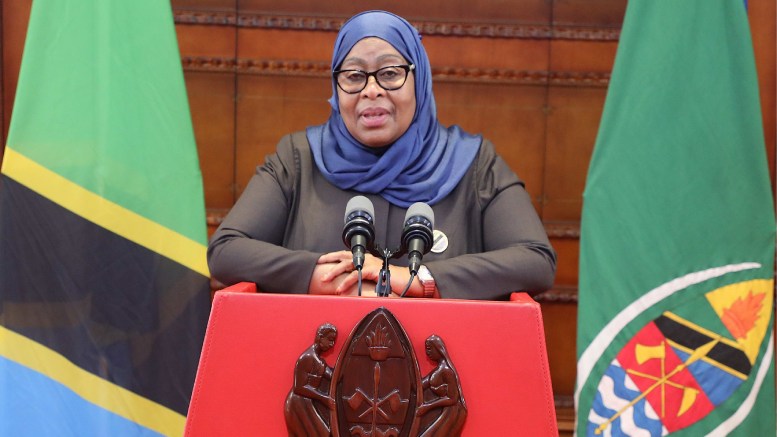
New policy by the Samia Suluhu government signals a firm shift towards economic nationalism, placing tighter controls on the participation of foreign traders in grassroots commerce

In recent years, Kenya has found itself in diplomatic wrangles with its neighbours, leading to them imposing trade bans affecting Kenyan traders by the specific nations involved.
This year alone, Kenyans have been involved in trade and political wars with their Tanzania and Sudan, which have impacted on the value chain as well as individuals and companies involved in intra-commercial activities between the three country
The ban by Sudan on Kenyan imports on March 11 and this week’s move by Tanzania to limit businesses in which foreigners, including Kenyans, can engage in come almost two years after Uganda opted to transport crude oil via Tanzania, blaming Kenya for hiking prices, which nearly torpedoed the Government-to-Government oil import deal Nairobi had entered into with three Gulf companies to stabilise the market, which was being impacted by scarcity of US dollars .
The Informer Media Group delves into the various bans that Kenya has suffered from its neighbours: What it means for Kenya and the impact on businesses.
This week, Tanzania issued an order barring foreigners from operating several small and medium businesses, which is set to disrupt cross-border entrepreneurship and informal trade involving Kenyan nationals.
The Business Licensing (Prohibition of Business Activities for Non-Citizens) Order, 2025 issued by the minister for Industry and Trade Selemani Saidi Jafo bars non-citizens from engaging in sectors traditionally reserved for Tanzanians.
The sectors include retail and wholesale trade (excluding supermarkets and specialised outlets), mobile money services, electronics repairs, salon businesses, and cleaning services.
Also off-limits to foreigners are small-scale mining, parcel delivery, tour guiding, real estate and business brokerage, clearing and forwarding, micro-industry ownership, and operating radio or TV stations.
It imposes hefty penalties including fines of no less than TSh10 million (Sh501, 584), imprisonment for up to six months, and cancellation of visas and residency permits.
In short, foreign nationals will no longer be allowed to run most low-capital businesses within the borders of Tanzania.
Kenyan traders who operate retail businesses in Tanzania are set to be affected by the order, even as statistics indicate that Kenyans have long been active in these indicated sectors in Tanzanian towns like Arusha, Mwanza, and Dar es Salaam, either independently or through informal partnerships.
For many, Tanzania’s expanding market had become an attractive frontier with many Kenyans crossing the border at Namanga in search of greener pastures and lives.
But this new policy by the Samia Suluhu government signals a firm shift towards economic nationalism, placing tighter controls on the participation of foreign traders in grassroots commerce.
The directive presents a significant challenge to the informal business models relied upon by many Kenyan cross-border traders.
In the absence of clear enforcement guidelines or transitional provisions, uncertainty is mounting among the thousands of Kenyans already operating in urban centres across Tanzania.
Ministry of Investments, Trade and Industry Lee Kinyanjui, Tanzania ranks as Kenya’s second-largest East African Community (EAC) trading partner after Uganda, with intra-community transfers of Sh63 billion in 2024.
He warned that imposition of new and discriminatory tax measures by Kenya’s southern neighbour were a threat to regional trade gains.
Kinyanjui said the Business Licensing Order, which seems to be criminalising lawful EAC investments, will hurt both countries’ economies, adding that it was critical, in the spirit of EAC, that bilateral engagements be held to resolve these issues.
According to trade experts, the measure risks straining bilateral relations—particularly if its implementation results in abrupt arrests or business closures.
The ministry of East African Community has, however, since written to the EAC Secretariat to review the Order to ensure full compliance with the EAC Treaty and Community Laws, warning that the move threatens regional economic integration.
“The Order undermines the core objectives of regional economic integration and poses a significant setback to the gains made under the EAC Common Market Protocol,” EAC Principal Secretary Dr Caroline Karugu said in a statement on Thursday
In a statement also released on Thursday, the EAC Secretariat called out unilateral decisions by partner states that undermine the Common Market Protocol, warning that such actions threaten the region’s integration agenda.
“The EAC Secretariat wishes to address recent developments regarding restrictions on the freedoms and rights under the EAC Common Market Protocol. Partner States have committed to fostering regional integration by removing barriers to trade, services, and investment and to refrain from introducing unilateral measures that hinder the free movement and establishment rights of citizens and businesses across the region.”
It would be remembers that rifts between Tanzania and Kenya due to ideological differences between President Jomo Kenyatta, a capitalist, and President Julius Nyerere, as well failure to agree on economic integration led to the collapse of the original EAC in 1977.
Feeling that Kenya was gaining more from regional trade, Tanzania closed its border effectively eliminating all legal trade between the two countries and thus ended the East African Common Market.
Then in June 1977, the three member member countries failed to agree on the General Fund Services budget. Consequently, Kenya refused to commit any funds to finance the 1977/78 budget and announced its withdrawal. After the failure to keep afloat the General Fund Services, the EAC ceased to operate in July 1977
Kenya is also still reeling from the ban on Kenyan imports to Sudan over Nairobi’s perceived support for the paramilitary Rapid Support Forces (RSF), which is engaged in a deadly civil war with the country’s army.
Apart from hosting RSF leadership several times, Sudan also claims Kenya is a conduit for the supply of arms being used by the militia.
Following the March 11 ban, farmers in some parts of the West of the Rift Valley region (Nandi and Kericho) have reported that Sudan’s ban on the export of Kenyan tea has an impact on the price of green leaf.
Robert Kiplangat, a tea farmer in Kericho, has shared that a majority of Private tea factories in his area have cut the amount they are buying tea from farmers from the average Sh25 to Sh17.
Kiplangat shared that the drop in prices after the March ban by Sudan has caught up with almost every private factory, which he says have also reported a reduction in the prices at the weekly auction in Mombasa.
“Private factories have reduced the price of green tea from the average Sh25, which has been since January last year, by Sh8. The Factories told us that the ban by Sudan, where most of the tea in the region is exported to, has greatly impacted even the weekly auction in Mombasa,” he shared.
Kiplangat explains that the reduction comes against the backdrop of increased production, especially with the subsidised fertilizer provided by the government.
“The production of tea has greatly improved, especially after the introduction of subsidized fertilizer last year. We hope that the ban will soon be lifted and business will go back to normal.”
Sudan, which is among the top five buyers of Kenyan tea after Pakistan, Egypt, the UK, the United Arab Emirates, Poland, and Russia, among others, suspended tea imports from Kenya after the government’s affiliation with the Rapid Support Forces, which are involved in Sudan’s ongoing Civil war.
With Uganda opting to import its fuel through Tanzania and the Uganda National Oil Company, which Kenya had frustrated to license until March last year, Energy and Petroleum Cabinet Secretary Opiyo Wandayi recently acknowledged that Uganda disrupted the implementation of the Government-to-Government oil deal.
Wandayi, who spoke while appearing before the National Assembly’s Departmental Committee on Energy, noted that Uganda’s decision to start importing refined petroleum products through the Uganda National Oil Company had affected the regular monthly shipments under the deal as it reduced the number of cargoes being imported into the country, thus impacting the agreed timelines for the importation of the remaining consignment.
Uganda opted to form its fuel importation parastatal in 2023 in a move to cut middlemen, as it also accused Kenya of overcharging them.
Ugandan legislators said some middlemen have been infusing profit margins, which has been making their country incur losses.
They added that the Bill is timely in eliminating dependence on Kenyan brokers who, according to the committee findings, have adversely disadvantaged Ugandans in access to petroleum products, timely and in the required quantities.
Before then, the Ugandan Oil Marketing Companies have been accessing their petroleum products import allocations through their affiliated Kenyan Oil Marketing Companies registered and participating in Kenyan and Tanzanian import structures.
Companies registered and participating in the Kenyan and Tanzanian import structures.
In April 2023, Kenya made changes to the petroleum products import system by replacing the Open Tender System with the G-to-G importation arrangement with the governments of the United Arab Emirates and the Kingdom of Saudi Arabia to manage some of the importation challenges the country was facing.