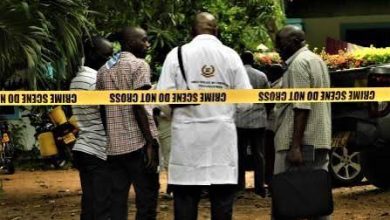
Government must tell the truth about the Nanyuki based American-linked Ebola facility
The government has a responsibility to publicly disclose the circumstances surrounding the reported quarantine operation. Transparency also extends to Parliament and county leadership. Elected representatives have a duty to exercise oversight over decisions that could affect public health and national security.

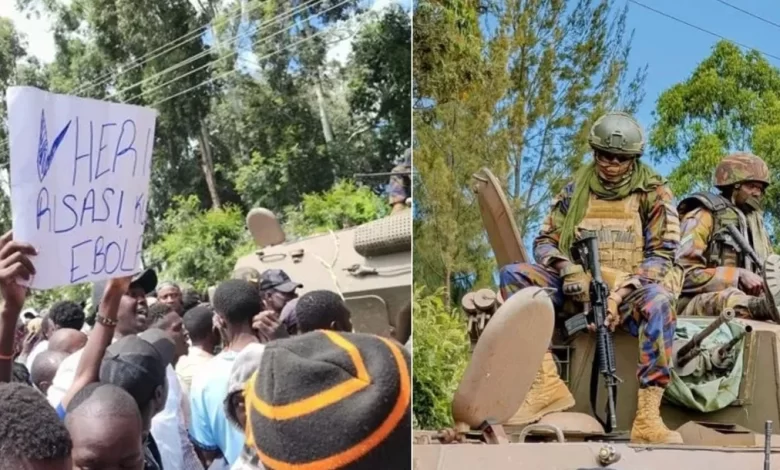
The reported arrival of seven American aid workers exposed to the Ebola outbreak in the Democratic Republic of Congo at the controversial US-funded bio-isolation facility in Laikipia County raises fundamental questions that the Kenyan government can no longer afford to avoid.
This is not simply a diplomatic matter between Nairobi and Washington. It is a matter of national health security, constitutional accountability and public trust.
According to Reuters, the seven aid workers, all affiliated with Samaritan’s Purse, are undergoing a 21-day quarantine in Kenya after the United States introduced new travel rules requiring Americans returning from Ebola-affected regions to spend three weeks in a third country before returning home.
Although the workers are reported to be asymptomatic, the revelation has reignited a debate that many believed had been settled when the government assured Kenyans that work on the Laikipia quarantine facility had been halted following court orders.
The question that now demands an immediate answer is straightforward: Is the facility operational or not?
Only weeks ago, Health Cabinet Secretary Aden Duale personally appeared before the High Court after being found in contempt over activities relating to the construction of the Ebola isolation facility.
During mitigation, he assured the court that the government had halted the project. The court accepted his apology and declined to impose a custodial sentence, while warning against any future disregard of court orders.
If reports that the facility is now housing quarantined individuals are accurate, Kenyans deserve a clear explanation of its legal and operational status.
Silence only fuels suspicion.
Public health emergencies demand transparency, not secrecy. Governments earn public confidence by communicating openly, especially when dealing with highly infectious diseases such as Ebola. The absence of timely official communication creates space for rumours, misinformation and unnecessary panic.
The issue is not whether the seven Americans are symptomatic or whether they currently pose a public health threat. Medical experts have consistently explained that Ebola is transmitted through direct contact with bodily fluids of an infected person or contaminated materials and that asymptomatic individuals are generally not considered infectious. Those scientific facts should remain the foundation of public discussion.
However, public confidence depends not only on scientific assurances but also on trust that proper systems are in place and that the government is being forthright about decisions affecting the country.
Kenya has painful memories of how infectious disease outbreaks can disrupt lives, overwhelm health systems and damage economic activity. The COVID-19 pandemic demonstrated the importance of preparedness, coordinated communication and public cooperation. Those lessons should guide the country’s response to any potential health risk today.
The government therefore has a responsibility to publicly disclose the circumstances surrounding the reported quarantine operation. Kenyans should know whether the Laikipia facility has become operational, under what legal authority it is functioning, which Kenyan institutions are supervising it and what safeguards have been established to protect surrounding communities.
Equally important is clarity on emergency preparedness.
Has the Ministry of Health strengthened surveillance around the facility? Are referral hospitals adequately equipped should an emergency arise? Are county health teams fully briefed? Have first responders received specialised training? Are laboratories, ambulance services and isolation systems ready to respond should any suspected infection occur?
These are legitimate questions in any country hosting individuals who have recently served in an Ebola outbreak zone, regardless of whether they currently show symptoms.
Transparency also extends to Parliament and county leadership. Elected representatives have a duty to exercise oversight over decisions that could affect public health and national security. Local communities surrounding the facility should receive accurate information directly from health authorities instead of relying on unofficial reports circulating through social media or international media outlets.
Kenya has every reason to support international humanitarian efforts to combat deadly diseases. The country’s medical professionals have contributed immensely to regional health responses, and Kenya has long been recognised as an important public health partner in Africa. Responsible international cooperation should not be discouraged.
But international cooperation must never come at the expense of transparency, constitutional compliance or public confidence.
If the facility is operating lawfully, the government should say so and explain the legal basis for its operation. If it is not operational, then reports suggesting otherwise require immediate clarification. Either way, the Kenyan public deserves facts, not speculation.
The government should also publish the contingency measures in place to safeguard national health security. Such measures could include enhanced surveillance, clear reporting protocols, emergency response arrangements, infection prevention procedures, coordination with county governments and regular public updates from health experts. Making these plans public would strengthen confidence and demonstrate preparedness rather than create fear.
Ultimately, openness is not a sign of weakness. It is the cornerstone of effective public health governance.
Kenyans are not asking for confidential medical records or sensitive diplomatic negotiations. They are asking for reassurance that their government remains fully in control, that the law is being respected and that every reasonable precaution has been taken to protect public health.
In matters involving Ebola, trust is as essential as medicine. The surest way to build that trust is through timely, honest and comprehensive disclosure.