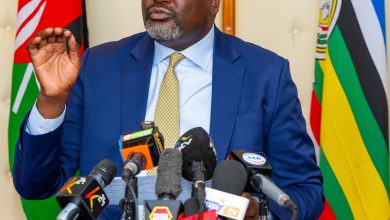
Vision 2060 must rise above politics, Nyong’o says
Vision 2030 Delivery Secretariat Chief Executive Officer Mugo Kibati said Kenya had recorded achievements under all four Medium-Term Plans implemented since Vision 2030 was launched.

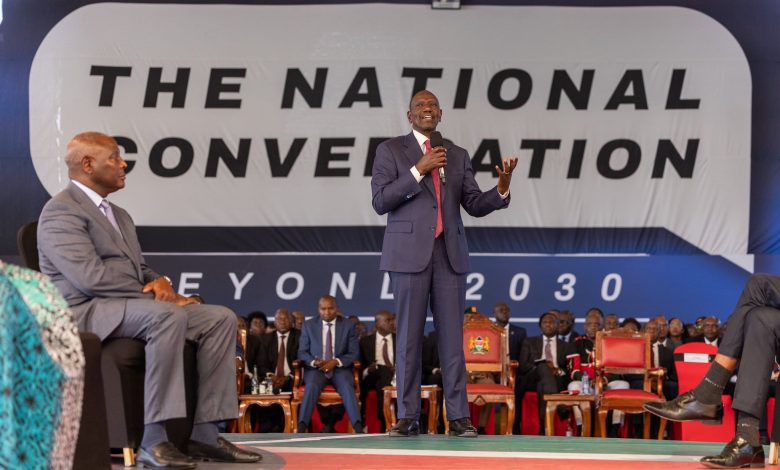
Kenya’s progress under Vision 2030 and the push for a successor long-term development framework took centre stage today, Wednesday, August 12, 2-026 as leaders, policymakers and other stakeholders gathered at the Kenyatta International Convention Centre (KICC) for the national conversation on Beyond Vision 2030.
President William Ruto backed the proposed framework, arguing that Kenya needs a clear development plan beyond 2030 to avoid entering the next decade without a long-term roadmap, particularly as the current medium-term planning cycle extends beyond the lifespan of Vision 2030.
But Kisumu Governor Prof Anyang’ Nyong’o cautioned against allowing the initiative to become entangled with the 2027 General Election, saying Kenya’s long-term development ambitions must transcend electoral politics.
“This conversation is not about the next general elections,” Nyong’o said, urging Kenyans to learn from countries in Asia that achieved rapid socio-economic transformation by maintaining development programmes beyond changes in political leadership.
“One of the lessons that Kenya must learn from the countries that achieved socio-economic transformation in recent history in Asia, for example, is that long-term development goals must not be disrupted by electoral cycles and the political leadership that such elections bring up from time to time,” he said.
Nyong’o also clarified that the team mandated to design the proposed Vision 2060 framework does not yet have a substantive plan, but only guidelines on how the eventual plan should be developed.
The conversation also provided an assessment of Kenya’s performance under Vision 2030, with Founding Chairman of the Kenya Vision 2030 Delivery Board and Equity Group Holdings Chief Executive Officer Dr James Mwangi putting achievement of the targets at between 50 and 80 per cent.
Mwangi said performance differed across sectors, with some areas recording stronger results than others.
He called for a data-driven assessment of the achievements and shortcomings of Vision 2030 before the country embarks on the next long-term development plan.
He said Vision 2060 should consolidate areas where Kenya has performed well while addressing sectors where targets have not been met.
Mwangi cited education and health as areas where the country had made progress, although performance indicators remained below desired levels. He also pointed to major gains in infrastructure.
“Getting 1.2 million children to sit for an exam in one year and graduate the next, that to me is a huge achievement because we have moved from a very low number,” he said.
He urged policymakers to make the next vision people-centred and focused on the needs of future generations.
“This vision is not about our generation. This vision is about our children and our grandchildren,” Mwangi said, identifying education, security, health, neighbourliness and the environment as key areas that should shape the country’s development agenda.
Vision 2030 Delivery Secretariat Chief Executive Officer Mugo Kibati said Kenya had recorded achievements under all four Medium-Term Plans implemented since Vision 2030 was launched.
Kibati noted that the administrations of the late President Mwai Kibaki, former President Uhuru Kenyatta and President Ruto had all implemented the programme through five-year development plans.
“We’re now on the 18th year since the launch of 2030, and on MTP4, the fourth medium-term plan,” said Kibati, who is also Telkom Kenya chief executive.
He cited achievements under the political pillar, including the current Constitution and continued progress under devolution, while highlighting major infrastructure investments in roads, ports and energy.
Kibati said increased electricity access had transformed communities in different parts of the country, while the Isiolo-Moyale Road had opened up northern Kenya and significantly changed economic activity along the corridor.
“The Isiolo-Moyale Road, for instance, didn’t exist. And that not only connected the northern part of the country to the center of the country, but actually changed economic activity tremendously,” he said.
However, Kibati acknowledged that longer-term transformation projects and social programmes had faced challenges, underscoring the need for an honest assessment of both successes and shortcomings as Kenya designs its next development framework.