Universities race to prepare for 2029 CBE cohort

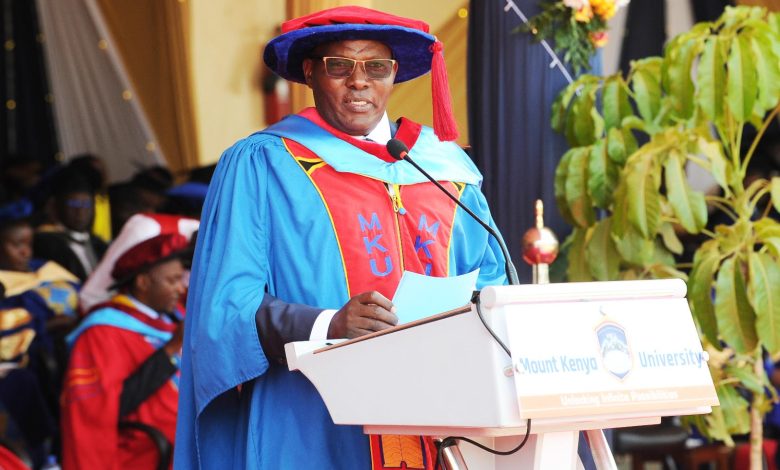
Kenyan universities have been urged to accelerate preparations for the 2029 admission of the first cohort trained under the Competency-Based Education (CBE) system, amid growing recognition that the shift represents a defining moment for higher education.
Speaking during the annual general meeting of the Kenya Association of Private Universities (KAPU) in Mtwapa, Kilifi County, Dr Vincent Gaitho, Secretary General of the National Association of Private Universities in Kenya (NAPUK), warned that institutions risk misalignment if they fail to adapt early.
The CBE system, rooted in the Competency-Based Curriculum introduced in 2017, replaced the 8-4-4 structure with the 2-6-3-3-3 model. Now at Grade 10 level, the system emphasizes learner-centered education, practical skills, creativity and problem-solving over rote memorization.
By 2029, learners molded under this framework will be transitioning to universities with educational experiences markedly different from previous cohorts.
Gaitho described the incoming class as a “generational shift” that could redefine university education in Kenya.
He cautioned that students shaped by competency-based learning will arrive with distinct expectations, skills and learning styles that traditional lecture-heavy, examination-driven models may not adequately support.
“These learners will arrive with different educational experiences and expectations shaped by a curriculum that emphasises competencies, creativity, and practical application of knowledge. Universities must begin preparing now,” he said.
He stressed that curriculum redesign, pedagogical innovation and investment in experiential learning environments will be essential to ensure a smooth transition.
Universities, he noted, must evolve from being centers of instruction to becoming hubs of innovation, service and leadership in an increasingly interconnected and data-driven world.
Gaitho, who also serves as Pro-Chancellor and Chairman of the Mount Kenya University (MKU) Council, underscored the need for infrastructure and policy readiness.
Admission systems, academic pathways and student support structures, he argued, must become more flexible to recognize diverse competencies rather than relying solely on conventional academic scores.
Faculty development will also be critical. Lecturers must be equipped to engage students whose learning styles prioritise collaboration, innovation and real-world application.
Without retraining and retooling academic staff, universities may struggle to bridge the gap between secondary education reforms and higher education expectations.
“Innovation is no longer optional; it is the lifeline,” he told university managers, urging them to rethink strategies to remain visible, relevant and attractive in a demand-driven higher education environment.
The forum brought together KAPU Chairman Rev. Prof Mbugua Ngari, members of the association’s executive committee and vice chancellors from private universities across the country.
Discussions centered on sustainability, policy advocacy and quality assurance within the private university sector.
Reflecting on Kenya’s higher education journey since independence in 1963, Dr Gaitho observed that the sector has expanded dramatically—from a single public university to a vast ecosystem comprising nearly equal numbers of public and private institutions.
While public universities still command larger student populations, private universities have steadily gained visibility and influence.
He attributed the rise of private institutions to relentless demand for advanced qualifications and the limited capacity of public universities. Today, he said, private universities are no longer viewed merely as alternatives but are increasingly becoming preferred destinations for students seeking higher education.
However, he cautioned that enrollment figures alone cannot define success. The true measure of impact lies in the quality and relevance of graduates released into society.
The 21st century student, he noted, seeks more than a degree—they demand exposure, experience and preparation for employment, service and entrepreneurship.
To remain competitive, universities must realign their vision and mission with solutions that address societal needs.
He emphasised that institutions will ultimately be judged not by the size of their campuses or enrollment statistics, but by the lives transformed and communities empowered through their graduates.
Gaitho also urged university leaders to nurture strong alumni relations and strengthen their engagement with the marketplace.
Institutional visibility, he said, is built not only through media presence but through the lived experiences of students—from their first encounter at the campus gate to graduation.