Blowing own trumpet? Ruto yet again parades his PhD, says he is best placed to deliver Kenyans’ dreams
In contrast, he said his predecessors could hide their his underperformance behind age, limited education or lack of experience

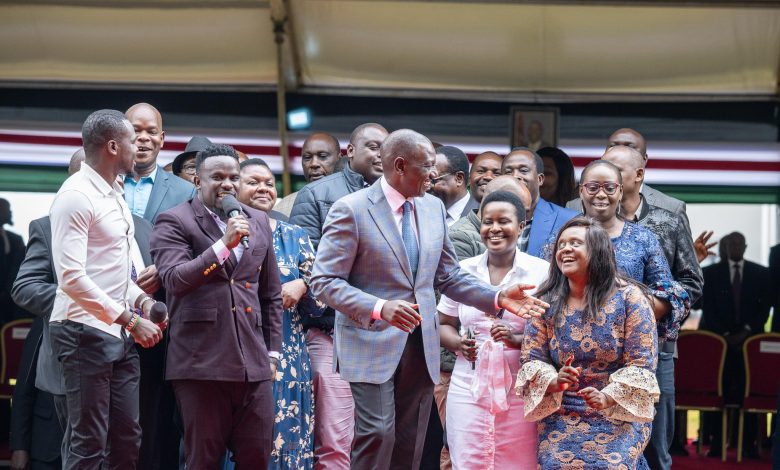
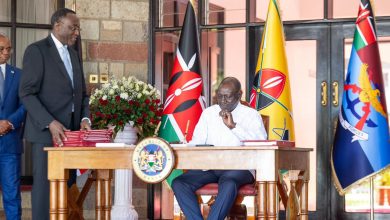
President William Ruto on Friday yet again touted his comparatively young age, impressive academic credentials and long political career as what makes him the best placed leader to deliver the dreams Kenyans have been yearning to realise since independence.
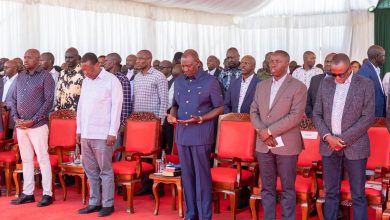
Speaking at State House, Nairobi, when he met a delegation from Kisii and Nyamira counties, Ruto told the gathering that unlike his predecessors, he cannot use age, lack of experience or education as an excuse not to steer the country effectively and deliver on his promises.
“I have a PhD, I have served three terms as a Member of Parliament, and I was Deputy President for 10 years. I cannot use lack of experience or education as an excuse,” he told the gathering.
“I have the energy, I have the skills, and I have the experience. Let me do this job so Kenya can be transformed,” he added.
In contrast, he said his predecessors could hide their underperformance behind age, limited education or lack of experience.
“Jomo (Kenyatta, Kenya’s founding father) could say he was old, having become President in his seventies. Others could say they didn’t have enough education.”
This is not the first time the President is making the assertion amid sharp criticism that he has failed to deliver on the grand programmes contained in Kenya Kwanza’s Bottom-up Economic Transformation Agenda (BETA).
They include universal healthcare though the mandatory Social Health Insurance Fund (SHIF), affordable housing, addressing youth unemployment mainly through the digital and creative economies, lowering the cost of living through initiatives such as subsidised agricultural inputs and fostering good governance.
On August 6, while meeting a delegation from Tharaka Nithi County at the House on the Hill, President Ruto, however, declared that his blend of experience, education, and grassroots background uniquely position him to address Kenya’s most pressing challenges.
“Others before me may have had reasons for inaction – some might blame their education, others their age, or their grasp of the issues facing ordinary Kenyans. But I have no such excuses. I must undertake this difficult job,” the President said.
“I am not too old, I’m well-educated – Kenya’s first PhD holder in office—and I come from the grassroots. I understand the country’s problems firsthand,” he added.
According to Ruto, he has a combination of courage, knowledge, education and vision exhibited by Kenya’s past four presidents, which makes it impossible for him not to deliver.
“I must tackle all the difficult assignments. I have combined all my predecessors. I have the courage of Jomo Kenyatta, the understanding of Daniel Moi, the education of Mwai Kibaki, and I shared in the plan with Uhuru Kenyatta. So, I must deliver,” he declared.
Also in February, when he faced criticism over a massive livestock vaccination drive he was spearheading, the President, who was on a seven-day tour of northeastern Kenya, responded to his detractors thus: “You don’t lecture me on what I should do when you have little education. I have a PhD, and I know what I’m doing!”
But while it is true Ruto is the first Kenyan president with boast of a PhD, among other unique qualities, including the gift of the gab, his predecessors compensated for whatever their lacked with equally unique characteristics.
The President has been under pressure ever since he took over power after defeating ODM leader Raila Odinga in the 2022 contest with critics accusing him of failing to deliver on his lofty campaign pledges, including uplifting the so-called hustlers by growing the economy, addressing youth unemployment and high levels of poverty as well as tackling grand corruption, among others.
His flagship programmes such as the Hustler Fund, SHIF and affordable housing have also been bedeviled by myriad challenges.
His decision to end fuel and maize flour subsidies, introduction of “punitive” taxes, high cost of living and youth unemployment have especially resulted in public discontent culminating in last June’s Gen Z revolt over proposed tax measures in the Finance Bill 2024, which he later abandoned.
This is after protesters defied heavy security and stormed Parliament, a bold that left several of them dead and others injured, before staging countrywide protests demanding he leaves office over failure to address the challenges Kenyans were grappling with.
He further responded by dismissing almost the entire Cabinet and outlined wide-ranging cost cutting measures among other reforms, but many of which critics say are yet to be actualised.
He then, however, formed a broad-based government that brought into Cabinet close allies of Raila, who he appointed to key ministries, terming it a visionary partnership for the radical transformation of Kenya.
The move, which was hailed by its backers as the best way to heal the country, was marred by continued abductions, enforced disappearances and extra-judicial killing of government critics, especially bloggers, resulting even in more discontent as witnessed in recent demonstrations that also resulted in tens of youths were also killed and others injured.
There has also been disaffection from within Raila’s ranks over delay in implementing the 10-point agenda inked between ODM and Ruto’s United Democratic Alliance (UDA) on March 7 with some such as Secretary General Edwin Sifuna severally declaring their relationship dead.
Following ODM demands, Ruto has, however, since acceded to implementing the deal. He recently formed a committee, headed by former Nominated Senator Agnes Zani, to implement its recommendations by March 7 next year with a joint parliamentary group meeting scheduled for Monday to close ranks.
However, the initiative has been dismissed as a non-starter with critics such as former Chief Justice David Maraga, saying it is not likely to result in any meaningful results just last previous ad hoc committees, task forces and commissions.
“No one is blind to the fact that nothing changes because the same sludge of systemic rot that benefits the few stays in place, the same corrupt players pull the strings, and political power-grab remains the core intention. Elite capture of the economy intensifies with all these pata-potea Committees and Handshakes. The formation of these bureaucratic bodies is a deceit that comes at great expense to the taxpayer. This repeated insult against the intelligence of Kenyans will not go unchallenged,” the former CJ, who has declared his interest in the presidency in 2027, said in a statement on August 8.
“What Kenyans want is real systemic change. What they are getting is reckless performative governance by a lazy leadership whose investment is purely in elite bargains. If and when there’s a need for ad hoc committees, they must have the capacity to reset governance to the rule of law, restore the humanity of ordinary Kenyans lost through games of selfish elite power-grabs, and rebuild the institutions that must hold leaders accountable,” he added.
President Ruto also established a mechanism, which his being overseen by Raila confidant Prof Makau Mutua, currently the President’s Senior Advisor on Constitutional Affairs and Human Rights, to manage compensation of protests dating back to 2017 when several people were killed or maimed in Nairobi and other parts of the country following a dispute over the presidential election pitting Uhuru Kenyatta and the ODM leader.
But the move has similarly attracted criticism on account of questions over its legal basis and the criteria and scope of compensation as well as failure to follow it up with accountability mechanisms.
While Raila has said he is ready to support Ruto’s re-election if he delivers on their Memorandum of Agreement and dismissed the Opposition for declaring they will make him a one-term president, it appears Ruto will need more than academic credentials and age, among other qualities he says he possesses; roadside rallies; and hosting delegations at State House, to rally a discontented electorate behind him.
His response to the “Wantam” campaign spearheaded by former Deputy President Rigathi Gachagua has been to challenge them to offer an alternative plan to addressing Kenyans’ challenges.
In turn, the Opposition has challenged his assertions that his government is delivering, dismissing jobs offered through affordable housing, Climateworks as well as giving them chairs, tents, sewing machines, bodaboda and other equipment, among others, as unsuitable for Kenya’s educated and tech savvy youth.