The silent toxins in Kenya’s maize flour and the question no one wants to ask

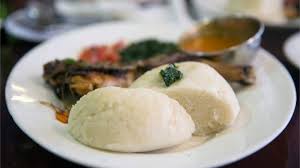
It’s the taste of home. The golden mound that cradles your sukuma wiki, soaks up your stew, and completes your nyama choma. For millions of Kenyans, ugali is more than a meal; it’s a daily
ritual, a comfort, a national symbol.
But what if this trusted staple was betraying us?
A quiet confession in a Nairobi studio has ripped the lid off a crisis simmering in our kitchens. A miller, on the record, stated matter-of-factly that “we add some chemicals to the flour so that the ugali balloons and looks good.”
The statement is shocking not for its novelty, but for its casualness. If one miller says it aloud, how many are doing it in silence? This admission points to a double threat facing every consumer: a cocktail of unregulated chemical additives and a long-documented, invisible killer— aflatoxin.
The supermarket shell game
Walk into any supermarket today. The maize flour aisle is a kaleidoscope of new brands with catchy names and bright packaging, all vying for your shilling. Dozens of new, unknown millers have flooded the market with “budget-friendly” options.
But behind the quirky names lies a dangerous reality. Research consistently shows that flour from small, informal mills is significantly more likely to be contaminated than from large, established ones. One multi-city survey found large-scale mills had a compliance rate of over 92 per cent, while small-scale mills lagged far behind.
The question is stark: if we can’t be sure where this flour comes from, how can we be sure it’s safe?
Aflatoxin: The invisible assassin
To understand the danger, you must know aflatoxin. It is a poison produced by moulds that thrive on poorly stored maize. It is invisible, odourless, and terrifyingly resilient. It survives drying,
milling, and even the heat of your cooking pot.
The numbers tell a horrifying story:
- A 2004 study in Eastern Kenya found 55 per cent of maize products were contaminated above the legal A staggering 7 per cent had levels over 1,000 parts per billion (ppb)—thousands of times the safe limit.
- A more recent study found that while most flour was compliant, samples from Lower Eastern region averaged 7 ppb, far beyond Kenya’s legal limit of 10 ppb.
- Surveillance of over 1,200 samples confirmed that informally milled flour repeatedly recorded the highest contamination.
This isn’t a abstract threat. This is the flour used for your child’s porridge and the family’s daily ugali.
When regulation fails at your doorstep
On paper, Kenya has the rules. The Kenya Bureau of Standards (KEBS) sets limits and occasionally conducts market sweeps, recalling and banning unsafe brands.
In practice, the system is overwhelmed. After a recall in 2020 of 17 brands, reports showed the same flour was still on shelves weeks later. Enforcement is episodic, not continuous. New brands appear faster than regulators can test them, and traceability is often a myth.
The deadly mix
We are no longer facing just a natural threat. The miller’s confession confirms a new axis of risk: deliberate chemical adulteration. Additives to whiten flour, improve texture, or make ugali “balloon” are now in the mix.
Imagine the chain: cheap, damp grain, processed in a second-hand mill, mixed with unknown
chemicals, and packaged under a flashy new brand. The result? A double assault on your health a known carcinogen combined with untested, potentially toxic chemicals.
The cancer question we’re afraid to ask
So, can the flour in your cupboard cause cancer?
The scientific link is clear on one point: the International Agency for Research on Cancer classifies aflatoxin as a Group 1 carcinogen a definitive cause of cancer in humans, specifically liver cancer, especially for those with hepatitis B.
Globally, it is estimated to cause 15,000-25,000 liver cancer cases annually in Africa and Asia.
However, no public study has yet definitively mapped recent Kenyan cancer cases directly to the current flood of contaminated flour. But this is a failure of data, not a proof of safety. We lack the systems to connect the dots between the toxins in our food and the diseases in our hospitals.
As one public health scientist revealed: “Children in Makueni have urine markers of aflatoxin hundreds of times above safe levels. They eat maize every meal. We should be sounding alarms.”
The absence of evidence is not evidence of absence. When our daily bread carries a known carcinogen, waiting for more bodies to count is a profound moral failure.
Reclaiming our plates: A call to action
This is not just a food safety issue; it is a matter of national dignity. We must move from panic to purpose. Here is what must be done, now:
- Weekly public testing: KEBS must conduct random, unannounced tests and publish the results weekly naming and shaming non-compliant brands.
- Full traceability: Every brand must be fully traceable from farm to shelf, with mandatory storage and moisture audits.
- Decentralise labs: County governments must have testing labs, not just
- Link data to disease: We must connect food surveillance data with our cancer registries to see the true cost of contamination.
- Empower consumers: Packaging should have a “Last Tested” date so consumers can make informed choices.
- Support small millers: Help the most vulnerable link in the chain to access proper drying and storage technology.
Fina word:
If we cannot trust the ugali on our own plates the dish that brings family together then we are no longer talking about food. We are talking about a broken covenant.
Food safety is survival. It is equity. It is the fundamental right of every Kenyan to sit at a table without fear.
The ugali bowl should not carry a silent poison. It should carry nourishment, heritage, and hope. Until it does, we must all ask: What are we really feeding our families?