The politics of government sponsored students in private varsities amid Sh1.3billion budget slash
This comes at a time the National Assembly Public Accounts Committee (PAC) is investigating serious irregularities in the disbursement of Sh720million to government-sponsored students in private universities

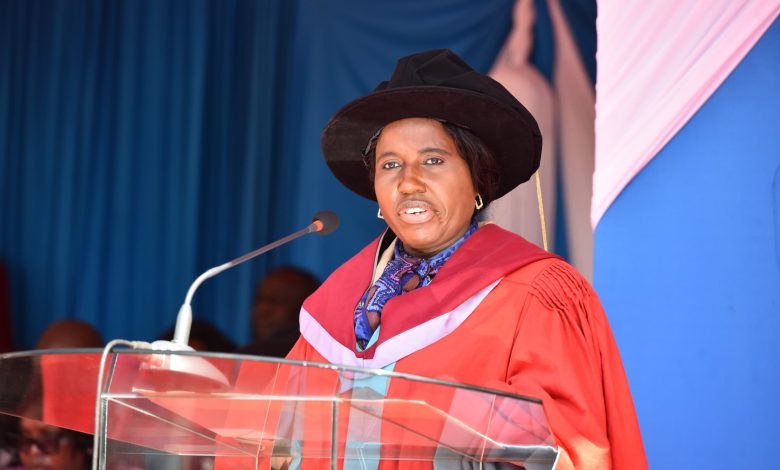
The failure to account for actual number of state-sponsored students in private universities by the State Department for Higher Education headed by Principal Secretary Dr. Beatrice Muganda Inyangala amid concerns of dipped funding of the programme has now brought to the fore the intricacies surrounding the modalities used to place government sponsored students to private varsities.
According to the National Assembly Public Investment Committee on Governance and Education, this has, in turn, disadvantaged State-owned universities, despite the institutions already reeling under a cash crunch that threatens their very existence.
This comes at a time the National Assembly Public Accounts Committee (PAC) is investigating serious irregularities in the disbursement of Sh720million to government-sponsored students in private universities.
It was revealed that some of the money in question was allocated to students who were not placed by the Kenya Universities and Colleges Central Placement Service (KUCCPS), raising serious concerns about financial mismanagement in the education sector.
The damning scandal was exposed when National Assembly’s PAC committee chaired Butere MP Tindi Mwale was grilling Inyangala in March this year after the Auditor General’s report flagged several discrepancies.
Among the flagged issues was Sh201.6million disbursed to 15 universities for 4,521 students who were not placed by KUCCPS.
Another Sh412.7million was paid for 9,489 students who had exceeded the duration of their courses, while Sh17.7 million was lost through double payments.
Further, Sh354.19million was allocated to students who had already graduated, and Sh53.59million was paid for students who had deferred their studies or were on long academic leave.
Legislators expressed outrage over these revelations, questioning why public funds were used to support private universities instead of strengthening public institutions.
Mwale, along with MPs Nabii Nabwera, Joseph Emathe, Otiende Amollo, Naisula Lesuuda, and Edwin Gichuki, raised concerns over the misallocation of resources.
Currently, in the proposed budget for the 2025/2026 fiscal year, university education for government-sponsored students in private universities has suffered reductions of Sh1.3billion due to a lack of information from the State Department for Higher Education on the number of government-sponsored students enrolled in the institutions.
At the same time, the National Assembly Committee on Education chaired by Tinderet Member of Parliament Julius Melly has noted that the allocation to student-centred areas, capitation, loans and scholarships- are not adequately funded.
Melly told the Budget and Appropriations Committee chaired by Samuel Atandi during the presentation of its submissions on budget estimates that there is a need for the money to be available to ensure that learners continue to be in campus.
Last year, the official number of state-sponsored students stood at 68,966.
In February this year, the National Association of Private Universities in Kenya (NAPUK) submitted a proposal to Education Cabinet Secretary Julius Ogamba seeking overhaul the new funding model.
NAPUK proposal recommends that the government continue providing loans and scholarships, a replica of the new funding model adopted in 2023 but with a key adjustment of prioritising courses deemed to be of national importance.
NAPUK proposed alternatives include partnerships with local and international entities, education bonds, and tapping into unclaimed financial assets. The association also advocates for the creation of the National Students Financial Aid Corporation (NSFAC) to oversee student loans and grants.
“The triple advantage of such a system is that it helps in projecting financial requirements (thus supporting budgeting), determining an individual’s level of need as accurately as possible, and tracking beneficiaries for loan recovery… The current approach, where a student’s level of need is determined upon application, may not be reliable as it fails to provide an accurate historical profile of the applicant. It also hinders future planning, as it is difficult to anticipate financial requirements,” the proposal by NAPUK Chairman Professor Simon Gicharu, who also doubles as Mount Kenya University Chairman and Founder, reads in part.
Currently, the government uses eight parameters; household income, geographical location, poverty probability index, special circumstances (such as orphanhood or disability), number of dependents, programme costs, educational expenditure, and gender.
In November 2024, the National Assembly endorsed a proposal by Melly’s committee to reject a Bill that sought to stop the government from funding private universities, ensuring that the institutions will continue to receive taxpayers’ money.
The proposal was part of two Bills seeking amendments to the Universities Act, Cap 210, which were sponsored by Bumula MP Wambani Wamboka and Khwisero MP Christopher Aseka.
The Melly-led committee recommended that the House approve the Bills with amendments, allowing for continued state funding for private universities.
The Universities (Amendment) Bill, 2023, which aimed to provide a framework for exclusively placing government-sponsored students in public universities had been sponsored by Wamboka.
The Bill also sought to remove private universities’ representation on the board of the Kenya Universities and Colleges Central Placement Service (KUCCPS) in an attempt to safeguard the Universities Fund, in line with public finance principles.
“The implication is to remove the two vice-chancellors representing private membership on the board of KUCCPS,” Melly explained in the committee’s report.
As a result, the committee recommended the deletion of key clauses in Wamboka’s Bill and approval of the revised version, ensuring that the private universities remain included in the KUCCPS framework.
On the other hand, Aseka proposed had to amend the Universities Act No. 42, aiming to abolish public funding for private universities and prevent KUCCPS from placing students in these institutions.
Aseka’s Bill also sought to safeguard public funds from being misused by private entities which are not under the government’s regulatory framework.
However, the committee rejected this proposal, with the Education committee noting that government grants to private universities support research and development initiatives that benefit the public.
“Consequently, these grants should be maintained to continue fostering advancement that serves the public good,” he stated.
As a result, the committee has proposed that Clause 2 and Clause 3 of Aseka’s Bill, which sought to cut funding and halt student placements in private universities, be deleted.
However, through a letter dated February 21, 2024, the Kenya Association of Private Universities (KAPU) wrote to the then Education Cabinet Secretary Ezekiel Machogu decrying Sh31billion in arrears that were yet to be released to them and warned that the future of the government-sponsored students hangs in the balance over dipped funding criteria.
During a meeting with Vice-Chancellors of private universities in July last year, Public Investment Committee questioned alleged misuse of public funds meant for Government-Sponsored Students (GSS) placed in private universities.
Wamboka-led committee cited variance in students’ enrolment, discrepancy in received funds from universities for students not enrolled, duplication in capitation disbursements, students not placed by KUCCPS and payment for students who have been with the university for periods longer than their expected durations of the programmes undertaken as some of the ways the monies had been lost.

The committee grilled Vice Chancellors from Zetech University, Mount Kenya University and Uzima University.
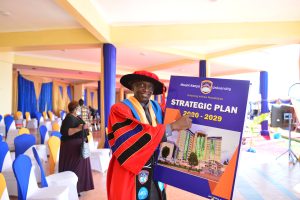
Zetech University was represented by Vice Chancellor Prof. Njenga Munene, Dr. Cosmas Rhagot (Uzima University) while Vice Chancellor Prof. Deogratius Jaganyi appeared on behalf of MKU.
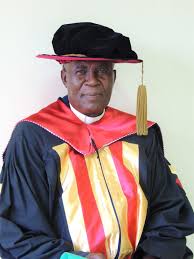
Munene appeared before the committee over the placement of 9,621 students by KUCCPS out of which 7,372 students enrolled, resulting in a variance of 2,249 students.
The lawmaker inquired from the VC if the university had declared its capacity before receiving a placement from KUCCPS.
They also sought to know how the declared capacity aligned with the actual placement and the basis used to make the placement if no capacity was declared by the university.
Members also inquired if Zetech University had received funds for the students who were not enrolled.
It was established that a sum of Sh967, 532 had been granted to 19 students who had been with the university for periods longer than their expected durations of the programs undertaken. They pointed out that this could be an indication of lack of control measures to track the students’ progress.
Additionally, the committee learnt that duplication of registration of 34 students had led to an overpayment of Sh1, 996,666 in capitation to Uzima University.
Rhagot failed to explain how the duplication had occurred since each student has a unique registration number. Members sought to know if the university made a refund for the overpayment.
On the other hand, Mount Kenya University Vice Chancellor (VC) was asked to explain the placement of 27,164 students by KUCCPS over the seven-year period out of which, 24,075 students enrolled, resulting in a variance of 3,089 students.
Further, the university did not provide evidence of the capacity declarations made to KUCCPS for the years the students were placed in these universities.
According to the disbursement records, 41 students had not been placed by KUCCPS but had been declared as GSSs. Further, an amount of Sh1, 675,263 was disbursed to the university for the students who are not under the GSS program.
The Special Audit also established that a total of Sh12,080,950 had been disbursed on account of 291 students who had graduated from the university for the period under review. A further Sh7,810,917 had been granted to 200 students in the university who had either deferred or had been on long academic leave.
Prof. Jaganyi in his response stated that most universities run on a two-term semester but MKU runs on trimesters, hence the continuation of payment after graduation.
Wamboka cautioned the Vice Chancellor that if the reports showed a contrary position to the evidence provided before his Committee, they would be held liable.
The Education Ministry began the placement of students in private universities in 2016 after a directive by the then Head of State, retired President Uhuru Kenyatta.
In the six years, the government sent about 88,000 state-sponsored students to private universities, a document presented in Parliament shows.
In 2016, the institutions admitted 10,984 students, (17,363) in 2017, (12,656) in 2018, (17,511) in 2019, and (27,756) in 2020, and 12,000 in 2021.
The Informer Media Group has established that the number of State-sponsored students in private universities has since declined to 68,966 students.