Sweden backs Sh349 million programme to green Kenya’s trade
The KETEI programme aligns with TradeMark Africa’s broader strategy of fostering sustainable and resilient trade

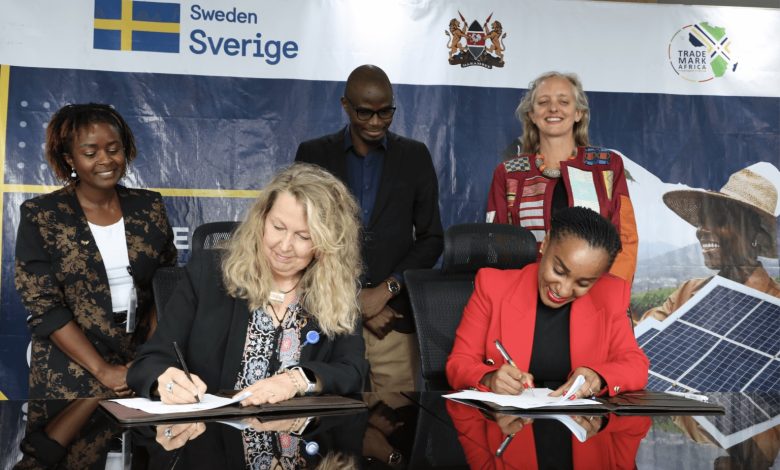
Sweden has signed a Ksh 348.9 million (US$2.7 million) agreement with TradeMark Africa to bolster sustainable and inclusive trade in Kenya. This two-year Kenya Enhanced Trade Environment and Inclusion (KETEI) programme will help Kenya achieve its national trade ambitions within various frameworks, such as the African Continental Free Trade Area (AfCFTA).
The programme will do this by boosting port efficiency, enhancing the green trade infrastructure and policy landscape, and strengthening the resilience of women- and youth-owned SMEs participating in trade.
“Globally, we are seeing growing demand for goods that are produced sustainably. With the EU Deforestation Regulation (EUDR) set to take effect in 2026, we are pleased to support Kenya’s small holder producers in meeting these requirements and securing continuous access global markets and particularly in the European Union. At the same time, we remain strong supporters of AfCFTA, which we view as a strategic step towards strengthening cross-border trade across the continent,” Marie Ottosson, Kenya’s Head of Development Cooperation Section, said.
On her part, Trademark East Africa Kenya Country Director Lillian Mwai-Ndegwa said: “Sweden’s support enables us to address structural inefficiencies in how goods move and how SMEs are supported, both regionally and globally. In addition to expanding and diversifying our markets, we ensure that growth is inclusive, climate-resilient and future-proof. By strengthening trade systems and placing women and young people at the centre of the process, we are not only fulfilling the promise of the AfCFTA but also safeguarding Kenya’s competitiveness in an increasingly dynamic global world.”
The KETEI programme aligns with TradeMark Africa’s broader strategy of fostering sustainable and resilient trade. It’s anticipated that supported MSMEs (60 per cent women-led, 40 per cent youth-led) will see a US$3 million increase in export value, along with specialised support on climate-linked export regulations and standards. Furthermore, the programme expects to leverage at least US$5 million in private investment towards green logistics infrastructure.
In 2023, Kenya exported coffee worth approximately US$252.12 million, with the European Union (EU) accounting for 55 per cent of this value. That same year, the EU Parliament passed the EUDR, aimed at reducing deforestation and forest degradation. The EUDR mandates that certain commodities, including coffee, linked to deforestation must not be placed on or exported to the EU market after December 30, 2025 for medium and large companies, and June 30, 2026 for small and micro businesses. This makes compliance with these regulations crucial for the success of Kenya’s coffee subsector, which heavily relies on the EU market.
In 2022, Kenya launched its AfCFTA strategy, which aims to expand the country’s trade and investment within Africa, support structural transformation, and foster economic growth and sustainable development. This strategy is built on three core objectives: enhancing secure and efficient export trade through improved customs processes and infrastructure; promoting inclusivity in international trade by integrating MSMEs, women, and youth; and achieving these aims in ways that contribute to environmental sustainability, including the promotion of green trade practices.