Crime WatchMain StoryNational NewsNews
Study reveals there are now 46 organised criminal gangs in Kenya
In October 2010, the Prevention of Organised Crime Act was enacted and subsequently a Gazette Notice banning 33 organised criminal groups on October 18, 2010 issued

There exists a total 46 organised criminal gangs that are known by the public, according to findings of a new study by the National Crime Research Centre (NCRC).
This shows that 13 more organised criminal gangs have been formed over the last 15 years when there existed 33 such groups.
The study further reveals that most Kenyans (55.2 percent) were aware of the existence of an organised criminal gang in the area where they live or elsewhere. Again, 38.9 per cent knew the organised criminal gangs by name.
However, 59.0 per cent were too afraid to mention the organised criminal gang by name for fear of reprisals.
In October 2010, the Prevention of Organised Crime Act was enacted and subsequently a Gazette Notice banning 33 organised criminal groups on October 18, 2010 issued.
The selected case studies by NCRC were part of the 33 criminal gangs banned by the Kenya government.
Some of the new groups named in the report include 42 Brothers and 40 Brothers (Emuhaya, Ebukamasi and Luanda Maseno), Shigololi (Emuhaya), Munyipi (Mathare), Funga File (Mombasa), Tia Nazi (Kilifi), Sri Lanka (Kisii, Kisumu), Nuyuki (Mombasa), Charo Sutu (Malindi), Kimya (Mombasa) and Bad Squad (Kisii, Mombasa, Kisauni.
Notorious militia such as Mungiki, Sungu Sungu, Mombasa Republican Council, Jeshi la Embakasi , Al Shabaab, Taliiban and Angola Msumbiji, which have been associated with criminal and political violence for many years are also on the list.
In terms of government commitment to fight organised crime 58.0 of the respondents were of the view that the government was not doing enough because many members of such gangs are known to the public, but they are not arrested.
“There is also alleged collusion by some government officers with members of organised criminal gangs and that police frequently release them even when there is overwhelming evidence,” the report says.
There is a clear gender division of labour in organised criminal gangs between male and female members.
While men undertake execution of tasks, women provide support services including sex, identification of
clients/victims, food, spying and storing stolen property.
“Children play an active spying role as well as opening doors while the elderly specialise in oathing, recruitment, resolution of disputes, spying, and so on,” the report says.
In order to survive, 39.7 per cent of respondents indicated that organized criminal gangs obtain support of its ethnic group and that ethnic support is crucial for their survival.
The support of the ethnic group is either voluntary (23.3 per cent) or involuntary (21.1 per cent), according to the public. Ethnic members were said to conceal the identity of the members.
Intra-gang support exists in form of financial, advisory, protection and shelter, bailing out of court, payment of cash court fines, hiring of lawyers and so on.
In terms of law enforcement, 49.1percent of the respondents were not aware of any arrests of members of organized criminal gangs in the previous three years even when serious crimes had been committed by them.
Corruption of the police, judiciary, political influence, lack of police cooperation, difficulties in identifying the members, delayed arrival of police, fear of reporting were identified as factors that energise organised criminal gangs.
The use of violence by members of organised criminal gangs against their targets was confirmed by 68.3 per cent of the respondents but intra-group violence does occur against its members too.
A total of 30.7 per cent reported that there is inter-group conflict usually over control or sharing of booty or lucrative business.
Organised criminal gangs have infiltrated legitimate formal and informal business especially public transport, car wash, motorcycle, rental houses, exhibition shops and scrap metal.
Extortion from the public (34.3 per cent) and theft (19.4 per cent) and politicians were the main sources of funds for their operations. Illicit drug trafficking, counterfeiting, armed robbery, vehicle theft, kidnap for ransom, extortion, livestock theft and firearms smuggling were identified as the other sources of funds for organised criminal gangs.
According to 29.6 per cent of the respondent’s, business people support and benefit from organised criminal gangs in terms of protection.
A total of 25.8 per cent strongly agreed, 21.7 per cent agreed and 36.1 per cent disagreed to the allegation that politicians channel funds to members of organized criminal gangs for support and campaign.
In this regard, 14.3 per cent strongly agreed, 20.8 per cent agreed and 48.3 per cent disagreed to the claim that supporters of organised criminal gangs had been elected to parliament during the 2007 parliamentary elections.
Organised criminal gangs in Kenya are more focused on crimes that do not require technological applications, the study further revealed.
Regarding the effect of organised crime in society, 75.1 per cent of the respondents expressed more fear than before, 76.1 per cent do not feel secure, 66.9 per cent are more restless and 18.2 per cent reported a close relative or another close person known to them had been murdered by members of organized criminal gangs and up to 16.8 per cent indicated they had been forced to change residence and 36.0 per cent now carry a weapon for self-defence at all times than before.
There is also observed change in behaviour patterns, for example, consumers of alcohol stop drinking much earlier than before, for business people they close much earlier.
A total of 43.9 per cent of the respondents were forced to change or review their travel patterns and 49.1 per cent no longer go to certain places they frequented before.
To business people the cost of doing business has increased and ordinary people have been forced to install security apparatus/services that were not necessary before.
All the organised criminal gangs in this study had a clear organisational/command structure across the areas they operate including specialisation of tasks.
Idleness occasioned by lack of employment after school was a principal factor in the ease with which recruitment of new members is done.
The study recommended that the policy makers in public and private sector need to devise ways that create employment to the youth to lower their vulnerability to join organised criminal gangs.
“The government at national and county levels need to channel enough resources to the police to be effective in crime prevention; since there is alleged or suspected collusion between some police and members of organised criminal gangs. There is need for verification of such claims and those found punished,” the report recommends.
It also maintained that the media needs to play an active role by highlighting arrests and convictions of members of organised criminal gangs while the public needs to play a more active role by providing information to relevant government authorities for action.
“At community level, there is need for institutions including educational and religious to educate the youth to live positively. In conclusion the increase in number of organized criminal gangs has serious implications for national security,” the report points out.
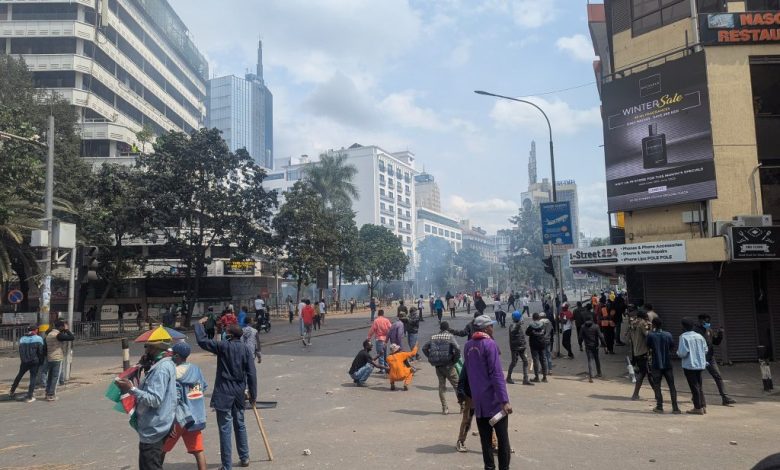
The release of the report comes at a time there is growing concern over the re-emergence of gangs, believed to be hired by politicians, ahead of the 2027 elections, as witnessed during recent protests in Nairobi.