Government must not cede security to goons as 2027 nears


Kenya is once again edging toward a politically charged season, and with it comes the recurring spectre of criminal gangs expanding their grip on communities.
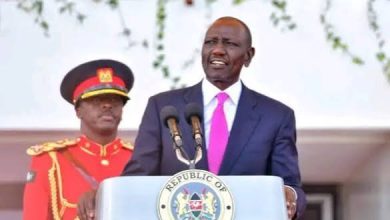
The latest Jukwaa la Usalama report which Interior Cabinet Secretary Kipchumba Murkomen handed over to President William Ruto at State House this week paints an alarming picture of over 130 organised criminal gangs operate in Nairobi alone, with dozens more entrenched across counties including Kakamega, Busia, Bungoma, Vihiga, Kisii, Homa Bay, Kisumu, Tana River, Trans Nzoia, Mombasa, Murang’a and Machakos.
This proliferation of gangs, some political, others purely criminal signals a dangerous drift where non-state actors increasingly dictate security dynamics.
As the 2027 general elections approach, the government must not allow the protection of people and property to slip into the hands of such groups.
At the heart of this concern is the gradual normalisation of gang presence in political mobilisation in either political divide, government allied or the opposition.
Already, early indicators suggest that some politicians are quietly reactivating youth gangs for intimidation, crowd control, and territorial influence ahead of party primaries. When criminal groups are tolerated, even informally, the state unintentionally creates parallel power structures ones that thrive on fear and coercion. This erodes public confidence in security agencies and undermines the very foundation of democratic participation free, fair, and secure elections.
The danger, however, extends beyond electoral violence. Criminal gangs are deeply embedded in extortion, land grabbing, drug trafficking, boda boda racketeering, and protection cartels. In informal settlements, some of these groups act as alternative systems of “justice,” filling gaps left by weak policing and slow courts.
While their presence may appear to offer short-term solutions, the long-term cost is devastating ranging from weakened rule of law, compromised governance, and heightened vulnerability among citizens.
To reclaim control, the state must adopt a multi-layered security strategy.
To begin with, policing must be intelligence-led, consistent, and insulated from political interference.
The National Police Service headed by Inspector General of Police Douglas Kanja must map hotspots, track gang recruitment patterns, and disrupt financing channels many of which stem from politicians, rogue business interests, and proceeds of crime.
To add impetus to these efforts, the Directorate of Criminal Investigations and Office of the Director of Public Prosecutions (ODPP) should fast-track prosecution of known gang leaders and enablers, some of whom are publicly known. Impunity has long emboldened these groups; breaking the cycle requires visible, high-impact convictions.
However, the fight cannot rely solely on enforcement. Many young people join gangs due to unemployment, lack of social support, and absence of economic alternatives.
To address this challenge, county governments, in partnership with national authorities, must expand youth empowerment programs, vocational training, and community policing initiatives that rebuild trust between residents and the security apparatus.
As the countdown to 2027 accelerates, Kenya must draw lessons from past elections where violence erupted because the state hesitated to confront criminal networks early enough.
More importantly, there has been growing claims that some criminal gangs are receiving training in certain forests. The government cannot afford to remain mum.
Needless to say, security cannot be outsourced or surrendered formally or informally to groups whose existence contradicts the constitution, the supreme law of the land. The government must assert its authority, dismantle these gangs, and restore public trust in lawful institutions.
If left unchecked, these criminal organisations will not only shape political competition but also Kenya’s social and economic stability. The time to act is now before the gangs, not the government, dictate the security landscape of 2027.
By Kinyuru Munuhe
The author is the Executive Director, Governance and Diplomacy Associates. He is also a specialist in Diplomacy, Statecraft & Strategic Communications.