Sh30million ship simulator puts Malindi at the heart of Kenya’s maritime future

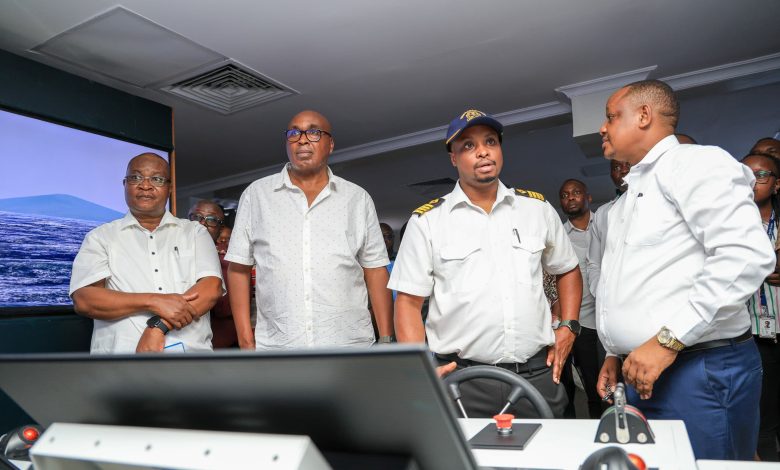
Kenya’s push into the Blue Economy has received a major boost after Mount Kenya University (MKU) commissioned a state-of-the-art ship bridge simulator worth Sh30million at its Malindi Maritime Academy an investment set to redefine maritime training and position the coastal town as a regional hub for seafaring skills.
The high-tech facility, powered by globally acclaimed Wärtsilä navigational simulators, brings real-world ship operations into the classroom, allowing trainees to experience the realities of modern maritime navigation without ever leaving shore.
From vessel handling and collision avoidance to emergency response under extreme weather conditions, the simulator mirrors the complexities of life at sea with striking realism.
“This facility marks a turning point for maritime education in Kenya,” said John Njenga Muhia, Centre Director of the Malindi Maritime Academy.
“We are moving from theory-heavy instruction to immersive, competency-based training that produces graduates who are ready for both local deployment and international shipping lanes, ” Muhia added.
Training for a digital, global maritime industry
As the global maritime industry rapidly digitises, the demand for highly skilled, tech-savvy seafarers has surged. The Wärtsilä simulators installed at Malindi represent the cutting edge of maritime simulation technology, offering authentic equipment replicas, advanced scenario modelling and flexible learning environments—from conventional bridge simulations to immersive virtual reality experiences.
The facility enables instructors to expose cadets to a wide range of maritime situations, including congested ports, open-ocean navigation, system failures and crisis management—skills that are increasingly demanded by international employers.
Commissioning the simulator, Kenya Institute of Curriculum Development (KICD) Chief Executive Officer Dr Charles Ong’ondo hailed the investment as a practical embodiment of the country’s shift towards skills-based education.
“Facilities like this are essential for delivering competency-based learning,” Ong’ondo said.
“They ensure learners graduate with hands-on skills that meet real industry needs. We encourage more institutions to invest in such infrastructure to strengthen the quality and relevance of training in Kenya,” he added.
Cutting costs, expanding opportunity
Beyond innovation, the simulator addresses a long-standing challenge in maritime training: the high cost of overseas certification. By offering internationally aligned training locally, MKU is significantly reducing the financial burden on Kenyan cadets while expanding access to global maritime careers.
Mr Muhia said the university is now pursuing formal recognition of the Sh30 million simulator by relevant regulatory and accreditation bodies to allow it to be fully integrated into certified maritime programmes.
“Our goal is clear—to have this simulator recognised as a standard training facility so our cadets can train locally and compete globally. This investment demonstrates MKU’s commitment to the Blue Economy and to producing world-class maritime professionals,” he said.
Global partnerships, local impact
The Malindi Maritime Academy’s transformation is further anchored in international collaboration. In November last year, MKU signed a landmark Memorandum of Understanding with the Abu Dhabi Maritime Academy, a move that significantly strengthens Kenya’s maritime training ecosystem.
The MoU was signed by MKU Founder and Chairman Prof Simon Gicharu and Dr Yasser Al Wahedi, President of Abu Dhabi Maritime Academy. The partnership will facilitate curriculum development, faculty exchange, joint research, internships and advanced training programmes.
“This collaboration underscores our commitment to world-class maritime education and to positioning Kenya as a leader in the Blue Economy,” Prof Gicharu said. “By working with Abu Dhabi Maritime Academy, we are equipping our students with the skills and global exposure required to thrive in the international maritime industry.”
Malindi’s strategic rise
Kenya’s strategic location along the Indian Ocean makes maritime skills a critical national asset. The Malindi Maritime Academy is uniquely positioned to serve both local and international students, supporting national priorities in shipping, port services and marine logistics while responding to a global shortage of qualified maritime professionals.
Through innovation-driven investments and global partnerships, MKU is not only training seafarers but shaping the future of Kenya’s maritime workforce. Since its inception, the academy has steadily expanded its offerings—from Basic STCW courses to advanced, competitive maritime programmes—cementing its role as a key player in skills development.
As Kenya looks seaward for economic growth, the Sh30million ship simulator stands as a powerful symbol of what is possible when innovation, education and vision converge.