Ruto’s fee directive highlights deep flaws in Kenya’s Senior Secondary School transition

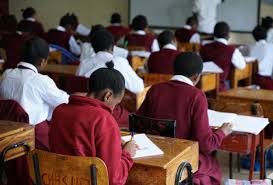
President William Ruto’s recent directive allowing Grade 10 learners to report to school with or without paying school fees is a welcome intervention, but it comes across as a reactive measure, addressing a crisis already underway rather than preventing it.
The announcement, though politically popular, underscores a series of structural and logistical failures in Kenya’s inaugural transition of Grade 9 learners into Senior Secondary School (SSS), which began in January 2026.
The introduction of the 2-6-3-3-3 Competency-Based Curriculum (CBC) reform, culminating in the first cohort of Grade 10 learners, was always going to be ambitious.
It involved a complete overhaul of Kenya’s secondary education, with new school structures, curriculum frameworks, staffing requirements, and financing mechanisms. Yet, as the transition unfolds, it is clear that the system was not fully prepared to handle the logistical complexities of moving tens of thousands of students into newly designated SSS institutions.
Despite extending the reporting deadline to January 21, 2026, reports indicate that between 15 per cent and 25 per cent of learners had not reported to their assigned schools.
The reasons are multifaceted. They include delays in disbursing school fees allowances, unclear communication about student placements, inadequate transport arrangements in rural areas, and insufficient infrastructure in host schools.
For many families, the cost of school fees, uniforms, and ancillary expenses remains prohibitive, forcing students to stay home or seek informal alternatives. In some cases, learners report confusion over which subjects and streams they should join, given the new SSS structure.
The president’s directive effectively removes the financial barrier, at least temporarily, allowing learners to access education irrespective of their ability to pay. While this is commendable, it is largely a stopgap measure.
The move does not address the systemic shortcomings that caused the disruption in the first place: delayed funding for schools, inadequate teacher deployment, under-equipped classrooms and laboratories, and a lack of clarity in student placement processes. If these issues are not resolved promptly, students may face substandard learning conditions that could compromise their academic outcomes and dampen public confidence in the new system.
Moreover, the directive raises questions about policy foresight. Senior Secondary School education has significant implications for Kenya’s broader education goals, including preparing learners for the job market, universities, and technical training institutes.
Allowing students to report without fees without a corresponding mechanism for funding schools could strain institutional resources, leaving administrators struggling to provide basic learning materials and services. It is crucial that this financial flexibility is accompanied by timely disbursement of government subsidies to schools, ensuring that no learner’s access to education compromises quality.
Beyond financial barriers, other issues require urgent attention. Teacher shortages remain acute in specialized subjects such as mathematics, sciences, and technical courses.
Host schools face challenges in accommodating large numbers of students in dormitories and classrooms designed for smaller cohorts. Transport and boarding logistics, particularly for students coming from remote areas, remain poorly coordinated. Without strategic interventions, these issues risk perpetuating inequalities, where students in well-resourced urban schools continue to thrive while rural learners are left behind.
The conflicting 15 per cent to 25 per cent non-reporting rate by the Ministry of Education and that of Interior also highlights the importance of parental and community engagement. Many parents remain uncertain about the implications of SSS, particularly regarding subject combinations, career guidance, and future opportunities. The government must invest in a comprehensive sensitization campaign, ensuring that parents and learners understand the structure, benefits, and expectations of the new curriculum.
Through the president’s fee decree is a necessary and compassionate response to immediate challenges facing Grade 10 learners, it is, however, a reactive measure that exposes deeper systemic weaknesses in the rollout of Senior Secondary Schools.
To ensure the success of this historic transition, policymakers must urgently address funding gaps, infrastructure deficits, teacher shortages, and communication failures. Without such systemic solutions, temporary measures will do little to secure equitable access to quality education.
The success of Kenya’s SSS transition is not just about getting students into classrooms, rather, it is about creating a sustainable system where every learner can thrive, irrespective of socio-economic background.
The government now faces a critical test: transforming a knee-jerk intervention into a well-planned, long-term strategy that strengthens the foundation of Kenya’s education system for generations to come.