Ruto fires 2027 starting gun: UDA, ODM ‘must win’
The declaration transforms the Naivasha meeting from a routine parliamentary retreat into a major political staging ground for the 2027 battle, with Ruto openly challenging the broad-based government to turn its parliamentary numbers into an electoral machine.

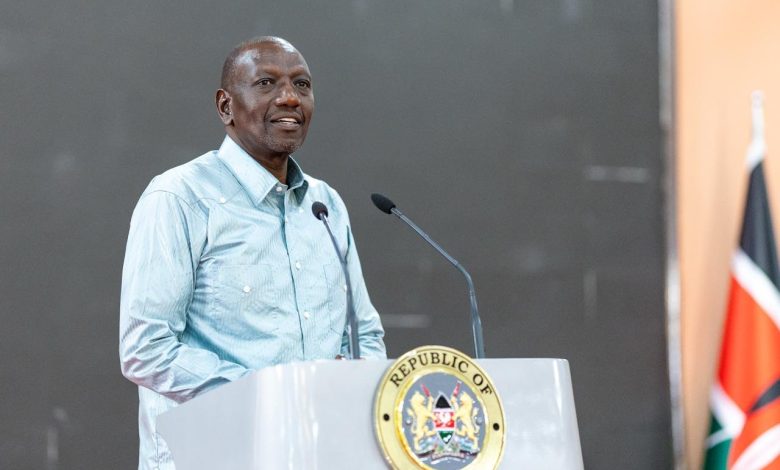
Exactly one year to the next presidential polls, yesterday, President William Ruto has effectively fired the starting gun on the 2027 election, ordering his broad-based political machine to unite, fight and win — warning that defeat could hand Kenya to leaders he said have neither a plan nor a vision.
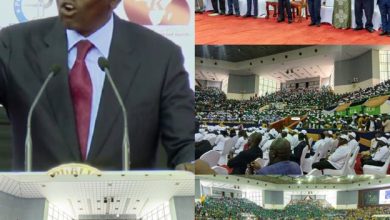
In an unusually blunt political message, Ruto told more than 250 Members of Parliament (MPs) drawn from his United Democratic Alliance (UDA), the Orange Democratic Movement (ODM) and allied formations that victory in the next General Election was not negotiable.
“By God’s grace, we must win the next election. Inshallah, we must win the next election, not for your sake, for the sake of Kenya,” Ruto told the leaders.
Then came the warning that set the tone for the three-day parliamentary retreat in Naivasha that kicked off yesterday.
“We have no choice, friends, because the alternative is difficult to fathom,” Ruto said.
The declaration transforms the Naivasha meeting from a routine parliamentary retreat into a major political staging ground for the 2027 battle, with Ruto openly challenging the broad-based government to turn its parliamentary numbers into an electoral machine.
The president appeared to be addressing two audiences at once — his political allies inside the broad-based government and voters outside it — as he sought to portray the coming election as a choice between his administration and an opposition he accused of lacking direction.
“A group of people who have no plan, no agenda, no policy, no vision is too dangerous for Kenya,” he said.
Ruto’s remarks expose the central political calculation now facing the broad-based government on whether the uneasy alliance that brought UDA and ODM together can survive the competing ambitions, rivalries and succession politics that will intensify as 2027 approaches.
The president told the gathering that they had assumed an enormous responsibility by coming together, saying the broad-based arrangement was the largest political coalition in the country since the Grand Coalition Government.
“This broad-based family is only second to the Grand Coalition Government. Therefore, where you are seated today, understand the consequence of your being here,” he said.
Ruto said the sheer size of the parliamentary grouping was itself a political statement.
“Our nation, Kenya, today depends to a very large extent on this team that is seated here. It is not easy to put together 250-plus members of the National Assembly,” he said.
But behind the language of national responsibility was Ruto’s an unmistakable electoral demand that they must stay together and deliver victory in 2027.
The president told the politicians majority of them MPs, Senators, Governors and some of their deputies that the decisions made at the retreat would determine the country’s future, effectively placing the political survival of the broad-based government alongside the wider question of national direction.
“The future of our nation is dependent on the decisions that we make in this meeting,” he said.
The Naivasha gathering comes at a critical moment for the Ruto administration, which is seeking to consolidate the political realignment that followed his post-2022 election engagement with the late ODM leader Raila Odinga.
The president used the retreat to revisit that political rapprochement, insisting that his outreach to Odinga began immediately after the 2022 election and was intended to cool political tensions.
“I did engage the Honourable Raila Odinga immediately after the election, with a view of minimising the differences, the rough edges, because ultimately we are citizens of one nation, irrespective of our political situations,” Ruto said.
Ruto sought to present the alliance as a product of national reconciliation rather than a short-term political bargain.
He acknowledged that political parties would continue to compete and disagree, but argued that those differences should not prevent leaders from pursuing common national interests.
“Yes, we must compete. Yes, we must have different points of view. But bottom line is that we belong to one nation,” he said.
Yet the political reality confronting the alliance is considerably more complicated.
UDA and ODM entered the broad-based government from dramatically different political positions. Their cooperation has altered the balance of power in Parliament and given Ruto access to a wider political network, while ODM has gained a role in government after years of opposition politics.
But translating cooperation in government into a common presidential election strategy will be a far more difficult undertaking.
The 2027 contest is expected to trigger intense competition over nominations, parliamentary seats, governorships and the eventual presidential succession question. Individual politicians and parties within the broad-based arrangement will have to reconcile their own ambitions with the coalition’s demand for unity.
Political pundits contend that Ruto’s “must win” message carries considerable weight.
They say that the president is not merely asking his allies to work together in Parliament but also demanding that they defend the administration’s record, sell its agenda to voters and prevent a fragmented opposition from exploiting divisions within the ruling camp.