President Ruto signs emergency law reducing fuel tax amid price crisis

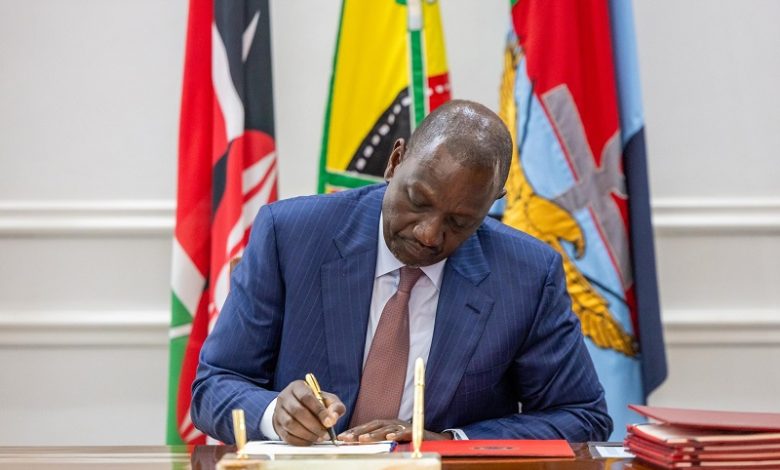
President William Ruto yes yesterday morning signed into law the Value Added Tax (VAT) (Amendment) Act 2026, temporarily cutting Value Added Tax on petroleum products from 16 per cent to 8 per cent for 90 days in a move aimed at easing pressure on consumers and stabilising fuel prices.
The law, assented to at State House, Nairobi, follows weeks of public concern over sharp increases in fuel prices driven by global supply disruptions linked to ongoing conflict in the Middle East.
The amendment, sponsored by National Assembly Majority Leader Kimani Ichung’wah, was fast-tracked through Parliament on April 16, 2026, after being introduced as an urgent Executive request to cushion households and businesses affected by rising fuel costs.
Lawmakers debated and passed the Bill without amendments, underscoring the urgency of stabilising fuel prices. The reduction goes beyond the standard limits in the VAT framework, temporarily expanding the Treasury’s flexibility to intervene in exceptional circumstances.
Under the new law, the 8 per cent VAT rate will apply for an initial 90-day period, with a provision allowing the Treasury Cabinet Secretary to extend the relief for a further 90 days if necessary, depending on global oil market conditions.
The reduction has also been backdated to April 15, 2026, ensuring immediate application in the current fuel pricing cycle. The government says the measure is intended to offer short-term relief to motorists, transport operators, and businesses heavily reliant on petroleum products.
While signing the Bill, President Ruto reiterated that the government remains committed to stabilising fuel prices through a combination of tax adjustments, targeted subsidies, and ongoing reforms in petroleum procurement and distribution systems.
The temporary tax cut is expected to ease pressure on transport costs, potentially slowing the rise in commodity prices if savings are passed along the supply chain.
Stakeholders in the logistics and public transport sectors have already signalled cautious optimism, noting that fuel costs remain a key driver of inflation.