Opposition claims ‘Sh2.5billion fuel scam’ behind price hike

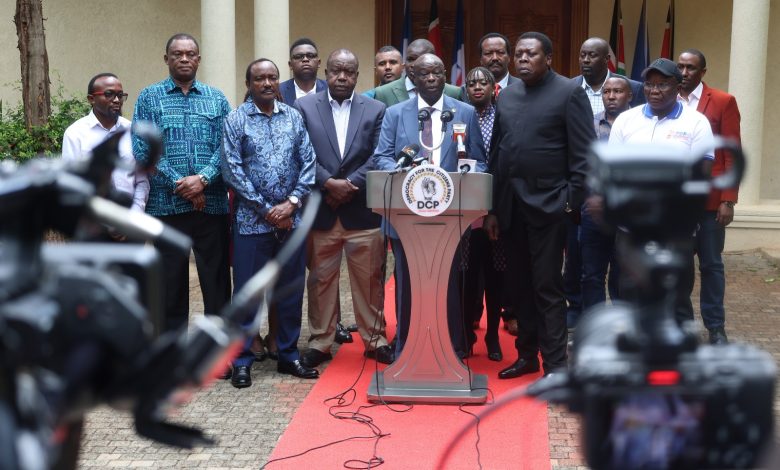
Former Deputy President and DCP party leader Rigathi Gachagua has accused the Kenya Kwanza administration of orchestrating what he described as one of the largest fuel scandals in the country’s history, linking recent pump price increases to alleged irregularities in the petroleum importation framework.
Speaking on behalf of the United Alternative Government (UAG), Gachagua claimed the surge in fuel prices was not driven solely by global market forces, but by a coordinated scheme benefiting powerful individuals within government.
He named President William Ruto as a central figure in the alleged arrangement, alongside Head of Public Service Felix Koskei, Energy and Petroleum Cabinet Secretary Opiyo Wandayi, and Senate Energy Committee Chairperson Oburu Odinga.
In a joint statement, opposition leaders—including Kalonzo Musyoka, Fred Matiang’i, Eugene Wamalwa and Justin Muturi—alleged that the government-to-government (G-to-G) fuel importation framework had been manipulated to enrich a select network at the expense of consumers.
Separately, Kiharu MP Ndindi Nyoro criticised the government over the latest price adjustments, terming them “unacceptable” and insensitive to struggling Kenyans.
In a statement, Nyoro said the administration had failed to address an “imminent crisis” that had been building since February.
He warned that lack of transparency in fuel pricing could trigger hoarding by dealers uncertain about cost structures.
Nyoro proposed a raft of measures to lower pump prices, including releasing at least Sh10 billion from the Fuel Stabilisation Fund, scrapping the Sh7 fuel levy introduced in 2024, and reducing VAT on fuel. He argued that the interventions could lower prices by up to Sh27 per litre.
He also questioned why Kenyans are paying higher prices despite global crude oil prices being lower than in 2022, when pump prices were comparatively cheaper.
The leaders claimed that disruptions in global oil supply linked to tensions in the Middle East triggered a delivery default under the G-to-G framework, prompting emergency procurement measures.
While authorities moved to secure fuel supplies ahead of the Easter period, the opposition alleges that politically connected entities were irregularly introduced into the supply chain after the tendering process had concluded.
They specifically pointed to the role of Gulf Energy, alleging that the firm—linked to the President—was brought into the arrangement through political intervention, leading to a renegotiation of pricing terms.
According to the coalition, the revised pricing took effect on April 14, pushing petrol prices up by Sh28.69 per litre and diesel by Sh40.30 per litre.
Gachagua warned that the increases could generate profits of up to KSh2.5 billion for entities within the supply chain, while placing a heavy burden on households through higher transport and production costs.
The coalition further questioned why fuel prices in Kenya remain higher than in neighbouring countries such as Uganda, despite fuel transiting through Kenyan infrastructure.
They called for a special parliamentary sitting within seven days to review the G-to-G framework, suspend select fuel levies and institute accountability measures, including the resignation and prosecution of CS Wandayi and Trade Cabinet Secretary Lee Kinyanjui.