ODPP under fire as Raila, EACC voice frustrations over stalled graft cases
He compared the office with the description made in a special rapporteur by the United Nations in 2009, who described the Office of the Attorney General as the enabler of impunity at that time

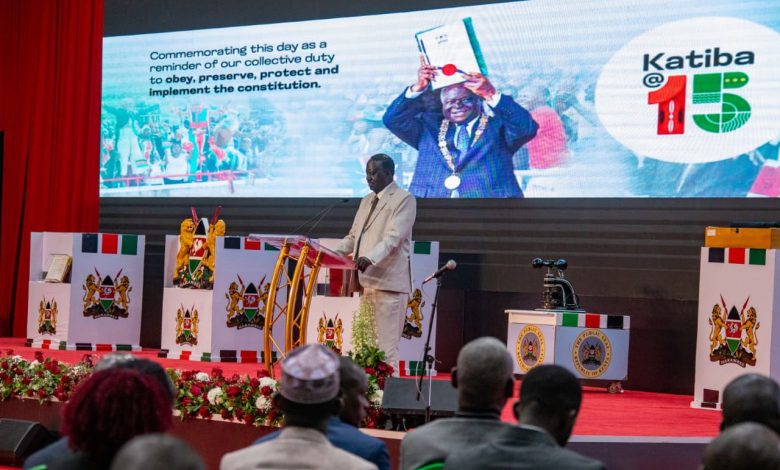
Former Prime Minister Raila Odinga has accused the Office of the Director of Public Prosecutions (ODPP) of failing to meet the expectations of Kenyans 15 years since the promulgation of the 2010 Constitution.
Speaking on Wednesday during Katiba Day celebrations, Raila termed the ODPP, which was created in the new Constitution, as the ‘embodiment of impunity’ in the country.
He compared the ODPP with the description made in a special rapporteur by the United Nations in 2009, who described the Office of the Attorney General as the enabler of impunity at that time.
“The ODPP was created in the new Constitution, but it has largely failed to deliver the high expectations of Kenyans. One year before the promulgation of the constitution, the Attorney General of Kenya OG) was described by a special rapporteur of the United Nations as the embodiment in Kenya for the phenomenon of impunity, and the description remains descriptive of the Office of the Public Prosecution in Kenya today,” Raila stated.
This was echoed by a source at the Ethics and Anti-Corruption Commission (EACC), who sought anonymity after files of their investigations on Marsabit Governor Mohamed Mohamud Ali and the Kiambu Governor Kimani Wamatangi, were returned to them by Director of Public Prosecution (DPP) Renson Ingonga for further investigations.
“EACC does its investigations well before submitting the files to the ODPP as soon as we get all the required evidence and recommend charges. But the return of files frustrates our work and admission of justice slurring the recovery of assets and public funds lost or stolen,” the source stated.
The remarks come after the DPP confirmed that his office received a file on Governor Ali and his County Executive Committee Member for Finance and Economic Planning, Malicha Boru Wario, over the involvement of tenders valued at Sh728.8 million awarded to companies linked to him and close associates, and alleged conflict of interest in tenders worth Sh309.6 million, respectively, but returned to the EACC for further investigations.
“The inquiry into Governor Mohamed Ali raises serious questions of conflict of interest and conspiracy to commit corruption. However, I have directed that the file be resubmitted to the EACC for further investigations to strengthen the evidentiary foundation. I have identified critical evidentiary gaps that need to be covered by way of further investigations. I have therefore directed that the inquiry file be re-submitted to the EACC,” he said.
Similarly, in Kiambu, an inquiry into a Sh230 million tender for an Enterprise Resource Planning (ERP) system awarded to Filtronic International Ltd, and another involving Governor Wamatangi over an alleged conflict of interest during his tenure as chair of the Senate Roads and Transportation Committee, were also sent back to the EACC.
Ingonga, however, agreed with EACC’s recommendation to prosecute Bomet Governor Hillary Barchok and former Bungoma Governor Wycliffe Wangamati and others.
In an address to the press this week, EACC Chief Executive Officer Abdi Mohamud acknowledged the frustration of Kenyans, especially the youths, about corruption in the country, Mohamud has assured the country that the Commission will upscale both its preventive and enforcement mandates geared towards effectively combating corruption.
“There is a continued feeling by Kenyans, especially the youthful population that the level of corruption in the country is on the increase. I assure everyone that EACC will upscale both its preventive and enforcement mandates geared towards effectively combating corruption in the country,” the CEO stated.
“I commend all those championing and demanding greater accountability in both public and private sectors. I express the Commission’s willingness and Commitment to work with every one of you to weed out corruption in our country,” he added.
Recent legislative reforms, including the enactment of the Conflict of Interest Act, 2025, the Anti-Corruption Laws (Amendment) Bill, and the Whistleblower Protection Bill, have been part of the commitment in the fight against corruption.