ODM faces crisis as Sifuna signals exit amid party leadership split

The Orange Democratic Movement (ODM) is embroiled in a deepening leadership crisis following the death of its long-time leader, the late former Prime Minister Raila Odinga, last October.
The crisis has been marked by parallel party conventions, internal factionalism, and public declarations of discontent from senior officials, raising questions over the party’s unity and future relevance in Kenyan politics.

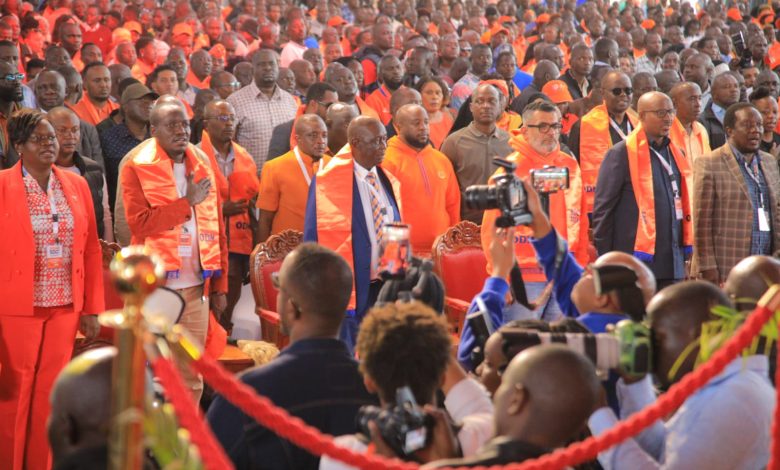
Yesterday, Nairobi Senator and ODM Secretary General Edwin Sifuna appeared to signal his potential exit from the party’s top administrative position during a highly charged address at the so-called ‘People’s’ National Delegates Convention (NDC) held by the Linda Mwananchi faction at Ufungamano House.
Speaking to party supporters, Sifuna described the current leadership environment as “mediocrity” and questioned whether he could continue in a role he once held under Raila Odinga’s leadership.
“It has been the honour of my life to be the Secretary General of probably the greatest politician this country will ever see, Raila Amollo Odinga. But I will not be the SG of mediocrity,” Sifuna said, taking a direct swipe at the new leadership under Oburu Oginga. He stressed that leadership positions should not be permanent and emphasized adherence to the party constitution in any succession process, hinting at his readiness to step aside if necessary.
The statements come amid a bitter power struggle between the Linda Mwananchi faction, aligned with Sifuna, and the Oburu-led faction, which also held its own parallel Special Delegates Convention (SDC) at Jamhuri Grounds.
EALA MP Winnie Odinga has urged the party’s newly confirmed leadership to broaden the participation of young members as ODM navigates a period of transition and internal differences.
Speaking at the ODM Special Delegates Convention (SDC) at Jamhuri Grounds, where she acknowledged her uncle Oburu Odinga as the party leader, Winnie appealed for reforms that grant the youth a stronger voice within the party’s structures.
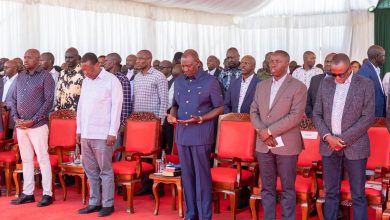
The SDC ratified Oburu Oginga as party leader and appointed Simba Arati and Abdulswamad Sheriff Nassir as new deputy leaders, while removing Vihiga Senator Godfrey Osotsi from the deputy leadership position over procedural irregularities.
At the parallel Ufungamano forum, Linda Mwananchi leaders Babu Owino and Edwin Sifuna dismissed Oburu’s leadership, maintaining that they do not recognise him as party leader despite his confirmation by the Jamhuri delegates.
“We will respect Oburu as our elder and not a leader. Wewe ndugu yako amekufa na unamridhi hata kabla hajazikwa. That’s not the spirit of a true leader,” Owino said.
Those aligned with the Jamhuri meeting, however, backed Oburu, maintaining that the party is moving forward under his leadership.
Abdulswamad Nassir, who was endorsed as Deputy Party Leader alongside Simba Arati, pledged support for Oburu and emphasised the need to strengthen cohesion within the party.
The split has been exacerbated by procedural disputes and competing visions for ODM’s political direction.
Sifuna dismissed the Jamhuri convention as illegitimate, accusing the Oburu faction of betraying the founding principles of the party.
“The resolutions do not reflect the will of the people,” he said.
The divisions also have a generational dimension, with leaders such as James Orengo urging young Kenyans to defend democratic gains and engage in safeguarding the party’s ideological space.
Orengo praised delegates who circumvented police blockades to attend the Ufungamano House gathering, framing their actions as a continuation of Kenya’s historic struggle for political freedom.
The parallel conventions underscore the increasing influence of the government-aligned faction, as the Oburu-led group has shown willingness to align more closely with the ruling United Democratic Alliance (UDA) Party.
Observers note that this may signal a strategic political realignment, potentially diluting ODM’s historical identity as a formidable opposition force.
Security tensions were also evident, with visible deployment of state and private security at both venues to prevent supporters from either faction from interfering with proceedings.
Despite this, the Linda Mwananchi faction successfully accessed Ufungamano House, signaling its determination to assert its political relevance.
Political analysts warn that the continued factionalism could have long-term consequences for ODM’s cohesion and electoral performance.
“ODM risks eroding its legacy if it cannot resolve internal disputes and present a unified front,” said a political analyst based in Nairobi.
“The real challenge now is whether the party can maintain its grassroots support while navigating competing leadership claims.”
As Sifuna signals potential resignation and Oburu consolidates leadership, the future of Kenya’s 21-year-old opposition party remains uncertain. The current standoff highlights the fragile balance between party legacy, internal democracy, and strategic alliances in Kenya’s evolving political landscape.