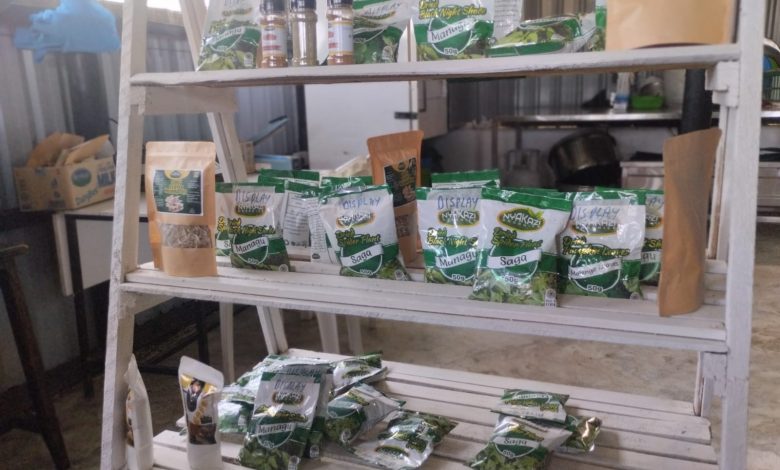
Youths in Baringo and Nakuru counties are among the beneficiaries of the Seed Savers Network incubation programme, which focuses on value addition for locally produced organic foods.
Set up in Elementaita, Gilgil, Nakuru County, Nyakazi Organics provides a ready market for 150 farmers who produce African indigenous vegetables and mushrooms, supplying them every week.
Speaking during a tour at the Nyakazi Centre, Kelvin Njenga, who is among the first beneficiaries of the incubation programme by Seed Savers, stated that they aim to solve unemployment among the youths as they also solve post-harvest loss by farmers who seek a market for their harvested vegetables.
“Nyakazi tries to solve post-harvest loss because organic farmers experience that a lot. Many youths are unemployed, and Nyakazi is trying its best to employ them here. The idea is to ensure the utilisation of the foods through value addition,” Njenga explained.
He adds that most of their customers are people traveling abroad and want to have a taste of homemade products while out there, as he reveals that at least five to 10 people are employed by Nyakazi.
Given is immense potential, Nyakazi is seeking certification by the Kenya Plant Health Inspectorate Service (KEPHIS), which will see it make exports and even supply in various retail shops across the country.
“Nyakazi has a big potential because many people who travel abroad will always want to carry a test of their home. They shall be exporting soon after certification by KEPHIS. Many young men and women are employed,” he told The Informer Media Group during the tour.
Njenga says their target also entails people living in urban areas who are health conscious but have no time to go to the market and look for the indigenous vegetables.
He reveals that since inception, they have made over half a million sales.
“Our target market also entails those people living in the urban setup who are health-conscious and do not have time to go to the markets and get fresh vegetables. We have over half a million sales in the last two years since inception, which is a milestone for us,” he stated.
Once brought to the centre, the vegetables are dehydrated and packaged as their shelf life is increased, and later supplied to people in the market, mainly through the connections of seed savers. The vegetables have up to 15 months’ shelf life.
Farmers in Nakuru say Nyakazi has helped to make farming easier as they do not incur losses of their vegetables going bad due to a lack of market.
Beatrice Ndungu adds that it has cut middlemen who benefit from a farmer’s hard work.
“There are no middlemen here because once our vegetables are ready, we just call to inform them together with my group of other farmers then the produce is picked,” she stated.
“At Nyakazi, there are no middlemen, and the profit is good because the middlemen in the Kenyan commercial markets do not care about the hard work by farmers. They cheaply buy the vegetables and go to sell them, making huge profits. Nyakazi has solved all that,” she added.
Apart from Nyakazi, Seed Savers Network has also supported Sunny Bites Organic in Baringo County which is a social enterprise dealing with fruits.
Similar to the indigenous vegetables, the fruits are also dried and value-added before they are supplied to the market.
The two are part of the incubation programme by the national grassroots organisation, which is now targeting more counties, even as they welcome youths with such ideas.