New US report puts Kenya on the spot over impunity against citizens in 2024
It says some groups alleged authorities significantly underestimated the number of unlawful killings by security forces, including due to underreporting of such killings in informal settlements in dense urban areas

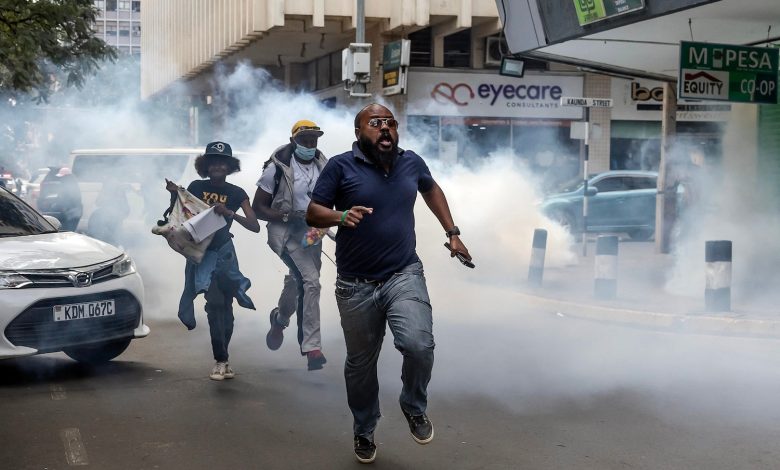
A new report by the United States Department of State has indicted the government for impunity committed last year, especially during the nationwide protests in June and July by Gen Zs, noting that authorities reportedly committed numerous abuses, including unlawful killings, physical violence, and arbitrary arrests and detentions.
The 2024 Country Reports on Human Rights Practices says significant human rights issues included credible reports of arbitrary or unlawful killings; disappearances; torture or cruel, inhuman, or degrading treatment or punishment; arbitrary arrest or detention; transnational repression against individuals in another country; serious restrictions on freedom of expression and media freedom, including violence or threats of violence against journalists and censorship; and significant presence of any of the worst forms of child labour.
“The government took steps to identify and punish officials who committed human rights abuses, but impunity was a problem at all levels of government,” it adds.
During the protests sparked by proposed tax measures contained in the Finance Bill 2024 that forced President William Ruto to decline to assent to the Bill but which later evolved into protests over youth unemployment, high cost of living and opulence among State officials and MPs, the report noted that nongovernmental organisations (NGOs) such as Human Rights Watch and Amnesty International alleged excessive and unlawful police action led to the deaths of protesters through suffocation from tear gas, police-inflicted injuries, and shootings.
“The government-mandated Kenya National Commission on Human Rights (KNCHR) recorded 60 deaths during
the protests. In September, the Interior Ministry’s cabinet secretary told a parliamentary committee that 42 persons lost their lives during the protests,” it adds.
It also notes that the Independent Policing Oversight Authority (IPOA), a government entity, announced investigations into police conduct during the Gen Z protests that IPOA claimed led to 50 deaths and 199 injuries.
“IPOA criticised unconventional policing tactics used during the demonstrations, including deploying hooded and masked officers in civilian clothing, concealing rank badges and name tags, and using unmarked vehicles. IPOA released a monitoring report in early September but at year’s end had not yet released an official report on its investigations. A November Human Rights Watch report alleged a multiagency team was responsible for extrajudicial operations.”
It further says that some groups alleged authorities significantly underestimated the number of unlawful killings by security forces, including due to underreporting of such killings in informal settlements in dense urban areas.
“During the Gen Z demonstrations, media alleged police and medical practitioners who treated injured protesters received orders not to report deaths resulting from the crackdown,” the report says.
At the same time, the report notes that Al-Shabaab terrorists conducted deadly attacks in areas close to the border with Somalia, targeting both security forces and civilians. In August, the Interior Ministry reported suspected al-Shabaab terrorists detonated a bomb placed on a donkey cart, killing five persons in El Wak Town in
Mandera County.
“Mob violence and vigilante action were common in areas where the populace lacked confidence in the criminal justice system. For example, in July, 10 residents of Gachocho Village in Murang’a County raided a police
station, forcing officers to flee before dragging a murder suspect out of his cell and killing him.”
The report also cited violations of press freedom during the protests with the Media Council of Kenya reporting at least 24 instances of violence and harassment against journalists by police and government-aligned groups, including detention and targeting with tear gas and other nonlethal weapons.
It references the Nakuru County incident where MediaMax Network reporter Catherine Kariuki sustained serious injuries when a police officer shot her three times in the leg with nonlethal pellets while she was reporting on the protests.
In Nairobi, police fired tear gas canisters in the direction of CNN Africa correspondent Larry Madowo while he was broadcasting live. Both Kariuki and Madowo were wearing clearly visible press vests during their respective incidents. In addition, media houses and NGOs reported at least seven other journalists from domestic outlets and international wire services were detained or assaulted by police during the protests.
The report also notes that while mainstream media were generally independent, but government officials
publicly and privately attempted to restrict media coverage of the protests that began with President William Ruto calling on media to report responsibly during the protests, claiming several media houses “glorified anarchy” by providing selective live coverage of the demonstrations.
“Several media houses reported receiving communication from government officials threatening to shut off their broadcast signals during the protests, but the government did not act on the threats. Most media houses reduced subsequent coverage of the Gen Z protests, with mainstream outlets opting to cut back on live broadcasts of the protests, a move many journalists interpreted as self-censorship by their organisations.”