Nakuru Hindu temple unveils 20-foot Lord Hanuman statue, tallest in East Africa
In Hindu tradition, Hanuman is celebrated as a devoted follower of Lord Rama and is associated with courage, loyalty, and selfless service

By Suleiman Mbatiah
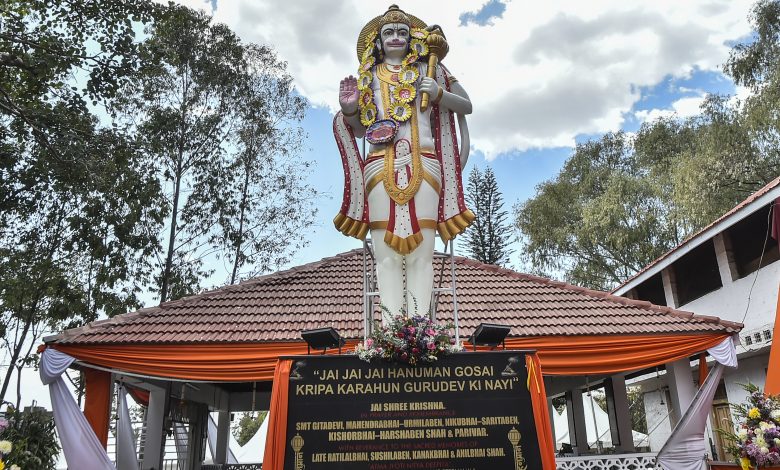
The Hindu community in Nakuru has unveiled a 20-foot statue of Lord Hanuman at the 110-year-old Shri Krishna Temple at Section 58, in what leaders say is the tallest statue of the deity in East Africa.
The stone statue, carved by local artisans in Nakuru using material sourced from quarries in Kisii County, is second in height on the continent only to a similar monument in Chatsworth, Durban, South Africa.
Temple chairman, Shailesh Sheth said the project took 10 months to complete and involved complex logistical and technical challenges, including transporting the massive stone, detailing the sculpture, and erecting it at the temple grounds.
“It is fantastic work. It took time, but the finished murthi (statue) is comparable to what one would bring from India,” Sheth said, thanking the artisans involved.
Sheth described the unveiling as a milestone for the Hindu community in Nakuru. He said Lord Hanuman is revered as a symbol of strength, wisdom, and devotion, with Tuesdays and Saturdays traditionally dedicated to prayers in his honour.
In Hindu tradition, Hanuman is celebrated as a devoted follower of Lord Rama and is associated with courage, loyalty, and selfless service.
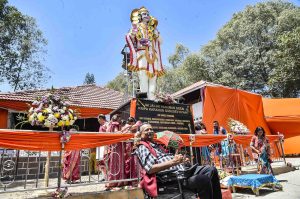
The consecration ceremony followed three days of cultural programmes. On the final day, devotees held a procession through major roads in Nakuru City, chanting and dancing as part of the celebrations.
The project was fully funded by the Nikubhai Shah family, with support from the families of Shailesh Sheth and Ilyas Patel. Niku Shah of Ruby Hardware, speaking on behalf of the family, said the initiative faced delays and moments of difficulty but was driven by faith and commitment.
“The statue is not only placed in this temple but also in the hearts of the devotees,” Shah said. He added that the offering was made in memory of their late father, Ratilal Shah, and in honour of family elders whose values continue to guide them.
More than 100 Kenyan devotees of African heritage, who have converted to the Krishna movement, travelled from Nairobi, Kisumu, Eldoret, Nanyuki, and Mombasa to join the procession, chanting Krishna mantras during the ceremony.
Sheth said the temple expects the statue to boost religious tourism in Nakuru, attracting devotees and visitors from across Kenya and beyond. He added that the temple has begun installing benches, a water fountain, and shaded areas for visitors, with plans to support annual religious processions in the city.
India’s Deputy High Commissioner to Kenya, Sushil Prasad, who was the chief guest at the ceremony, described the unveiling as a significant moment for the Indian diaspora in the region.
He noted that Indians have been part of Kenya’s social and economic development since the late 19th century and commended the community for preserving its traditions. Prasad also announced plans by the High Commission to hold a consular camp in March to provide passport, visa, and related services to Indian nationals in the region.
The national chairperson of the Hindu Council of Kenya, Sujata Kotamraju, said the installation was a proud moment for the Hindu community. She noted that temples in Naivasha, Nakuru, Machakos, and Kitengela now offer a wide range of Hindu religious services, reducing the need for devotees to travel abroad for pilgrimage.
“Our temples now provide what many devotees seek spiritually, right here in Kenya,” she said, noting that the growing network of temples has strengthened religious life locally and allowed worshippers to observe rituals, festivals, and traditions with ease.