Muhoozi death threat to Bobi Wine deepens Uganda post-poll crisis
At the core of the crisis is the role of the military in a political contest

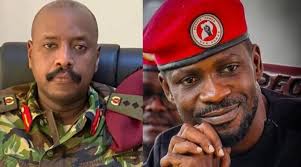
Uganda’s post-election tensions have entered a dangerous phase, marked not merely by contested results but by the unprecedented rhetoric emanating from the very apex of the country’s military establishment.
General Muhoozi Kainerugaba’s public threats against opposition leader Bobi Wine represent a profound escalation that blurs the line between state authority and personal vendetta, raising serious questions about civil–military relations, rule of law, and the future stability of Uganda.
At the core of the crisis is the role of the military in a political contest.
In most constitutional democracies, the armed forces are expected to remain politically neutral and subordinate to civilian authority.
Kainerugaba’s statements, claiming responsibility for killings and openly wishing death upon a leading opposition figure, directly contradict this principle.
Even if framed as personal social media posts, his position as Chief of Defence Forces means his words carry the weight of state power.
This erodes any remaining distinction between lawful security operations and political repression, reinforcing long-standing accusations that Uganda’s security apparatus functions as an extension of the ruling regime rather than as a national institution.
The threats also underscore the personalisation of power within Uganda’s political system. Kainerugaba is not just a military chief; he is the president’s son and widely perceived heir apparent.
His remarks therefore cannot be dismissed as rogue outbursts.
They reflect a deeper anxiety within the ruling elite about regime survival in the face of a youthful, urban-based opposition represented by Bobi Wine and the National Unity Platform.
By framing NUP supporters as “terrorists,” the regime legitimises lethal force against political dissent, a tactic historically used to justify crackdowns while avoiding accountability.
The police’s attempt to distance itself from Kainerugaba’s ultimatum further exposes institutional fractures.
While the police spokesperson denied that Bobi Wine was being sought, the contradiction between civilian law enforcement and the military chief fuels uncertainty and fear.
In such an environment, citizens cannot reasonably rely on formal assurances of safety, especially when past elections have been accompanied by documented abuses.
This institutional incoherence increases the risk of arbitrary violence, as security actors operate without clear, unified command grounded in law.
Regionally, Uganda’s situation has implications beyond its borders. East Africa has witnessed a shrinking democratic space, with recent elections in neighbouring countries marred by repression and post-election violence.
Kainerugaba’s rhetoric signals a troubling normalization of militarised politics in the region, where leaders increasingly rely on force rather than legitimacy to manage dissent.
His past threats against neighbouring states, including Kenya, reinforce concerns that impulsive, personalised decision-making could destabilise regional relations.
For Uganda’s opposition and civil society, the immediate impact is chilling. Bobi Wine’s flight into hiding underscores the real threat posed by the statements, while supporters face intimidation and violence that suppress political participation.
In the longer term, such actions risk radicalising segments of the population who feel locked out of peaceful political change, thereby creating a self-fulfilling cycle of instability that the state then claims to be combating.
Political pundits hold that direct and direct threats by senior military officials targeting political opponents and boast of killings signals a state drifting from authoritarianism toward overt militarised rule.
Human rights lobbyists and governance experts from the region are now calling for a meaningful domestic accountability and sustained international pressure, such rhetoric may translate into further violence, deepening Uganda’s political crisis and undermining prospects for a peaceful, democratic transition.