Mijikenda crown Mwakwere as Coast power broker

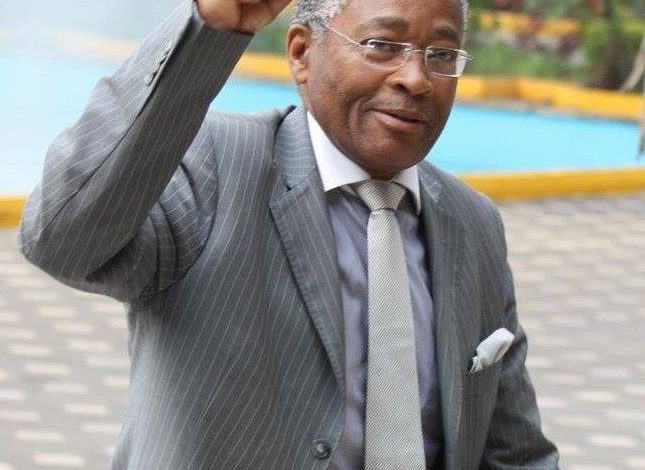
Politics at the Kenyan Coast is entering a new and potentially transformative phase following the elevation of former Cabinet Minister and long-serving ex-Member of Parliament (MP) Chirau Ali Mwakwere as the political spokesperson and kingpin of the Mijikenda community.
The move, endorsed by elders and key opinion leaders, signals a deliberate attempt by the region’s largest indigenous bloc to reassert its political agency ahead of the 2027 general elections.
The Mijikenda comprising nine closely related sub-groups including the; Digo, Duruma, Giriama, Rabai, Chonyi, Kauma, Kambe, Jibana and Ribe—have historically formed a numerical majority along the Coast but have remained politically fragmented and marginalised. Their decision to rally behind Mwakwere represents a departure from decades of disjointed leadership and external political domination. For many, it is a long-overdue effort to unify the community under a single voice capable of negotiating power at both regional and national levels.
Mwakwere’s elevation comes against the backdrop of deep-seated grievances that have shaped Coast politics for generations. Central among these is the land question.
Large-scale land alienation dating back to the colonial era left many Mijikenda families landless or living as squatters on their ancestral soil.
Vast tracts of prime land remain in the hands of absentee landlords, many from Arab and Asian communities, while indigenous residents struggle with poverty and insecurity. This historical injustice has fuelled a sense of exclusion and resentment that continues to define the community’s political outlook.
However, a section of Kaya Fungo elders opposed the installation of Mwakwere as the Mijikenda spokesperson.
The elders, drawn from Kaya Fungo, say they were not consulted and insist the installation did not follow Mijikenda traditional processes.
Led by Tsuma Nzai, the elders have issued a 14-day ultimatum to Mwakwere and those involved in his installation to apologise to the Mijikenda community.
“Why are they not involving all the elected in the affairs of Mijikenda leadership? Kuna njama fiche na tulijua sio maswala ya kisiasa na wamekuja na mbinu mpya ya kuuza Mijikenda,” said Nguma Charo, a Kaya Youth Representative.
Despite their numbers, the Mijikenda have often failed to translate demographic strength into political power. Well-funded politicians backed by wealthy landowners and business interests have traditionally dominated Coast politics, advancing elite economic interests while sidelining grassroots concerns. This imbalance has entrenched the perception that Coast leadership serves powerful external forces rather than the indigenous majority.
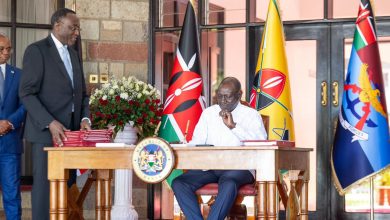
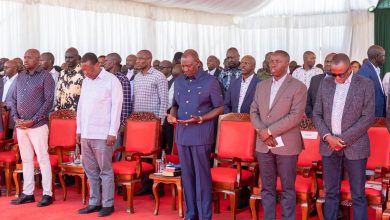
The ceremony installing Mwakwere underscored the significance of the moment. It drew senior political figures such as former Cabinet ministers Noah Katana Ngala and Morris Dzoro, as well as former KNUT chairman Mudzo Nzili. Their presence highlighted the broader political implications of the Mijikenda’s decision and the seriousness with which the community is approaching its political reorganisation.
For many Mijikenda, Mwakwere offers familiarity, experience and credibility. A former MP for Matuga and previously a spokesperson for the Digo community, he is viewed as a leader who understands both grassroots struggles and national politics. Supporters see him as a unifying figure capable of articulating long-standing grievances particularly land rights, economic exclusion and political marginalization while negotiating strategic alliances beyond the Coast.
His rise also reflects growing dissatisfaction with the current political direction of Coast leadership. The alignment of prominent Coast politicians such as Hassan Joho, Salim Mvurya and Mombasa Governor Abdulswamad Shariff with President William Ruto’s Kenya Kwanza coalition has stirred unease among many Mijikenda. Critics argue that these alliances were forged without adequate consultation and have failed to prioritise unresolved land disputes and indigenous rights.
Mwakwere’s appointment, backed by the Mijikenda Council of Elders, is widely interpreted as a counterweight to this trend. It signals the community’s determination to reclaim decision-making power and resist what they see as political capture by external economic and political interests. His emerging strategy focuses on ensuring that Mijikenda concerns are firmly represented in regional negotiations and national political alignments ahead of 2027.
Historically, the Mijikenda have leaned toward opposition politics in search of redress. From backing Mwai Kibaki’s NARC in the early 2000s to supporting Raila Odinga’s ODM in subsequent elections, the community has consistently voted for change. However, shifting political realities have prompted introspection about whether the opposition, as currently constituted, can still deliver on long-standing promises.
Mwakwere’s political background positions him as a potential bridge between the Mijikenda and the opposition. His 2022 bid for the Kwale governorship on a Wiper ticket has renewed interest in Wiper leader Kalonzo Musyoka, who is increasingly viewed by some Coast leaders as a steady and reliable partner. Kalonzo’s national stature and history of coalition politics appeal to a community seeking influence without domination.
Another central ambition shaping this realignment is the desire to produce a Mijikenda governor for Mombasa. Many believe that indigenous leadership at the county level would be better placed to confront the sensitive issue of absentee land ownership and restore economic justice. The legacy of the late Karissa Maitha—a respected Mijikenda leader and former Cabinet minister continues to inspire this aspiration. His death left a leadership vacuum that the community now hopes Mwakwere can help fill.
Concerns over the growing influence of wealthy Arab and Asian business elites further reinforce the push for indigenous unity. These groups dominate key sectors such as real estate, tourism and shipping, and are seen as bankrolling politicians who do not prioritise Mijikenda interests. The belief that “he who pays the piper calls the tune” has strengthened resolve among community leaders to distance themselves from elite patronage and reclaim political independence.
As Kenya heads toward the 2027 elections, the Mijikenda are positioning themselves as a decisive political force at the Coast.
By consolidating leadership under Mwakwere, reassessing alliances and advocating for indigenous representation particularly in Mombasa, the community aims to shift from the margins to the centre of power.