Mbadi unveils Sh4.84 trillion budget as opposition presents alternative spending plan
Meanwhile, opposition leaders led by Kalonzo Musyoka unveiled what they termed the "People's Budget", proposing an alternative expenditure framework of Sh4.32 trillion and a fiscal deficit of Sh593.5 billion, equivalent to 2.8 per cent of Gross Domestic Product, significantly lower than the government's projected 5.3 per cent.

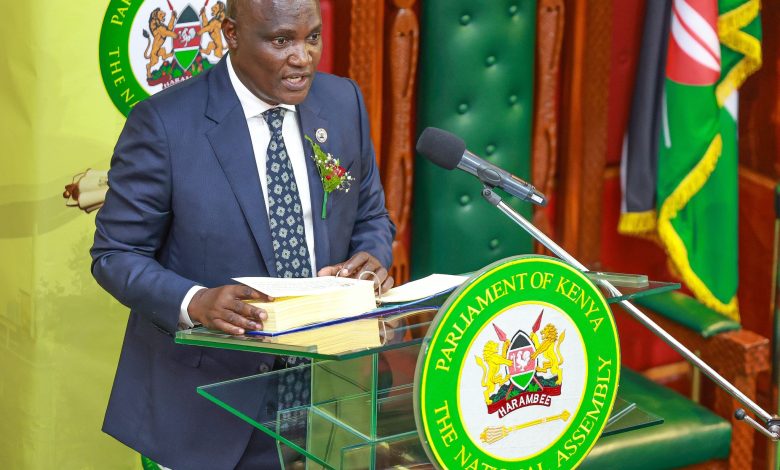
National Treasury Cabinet Secretary John Mbadi is today, Thursday, June 11, 2026 expected to unveil a record Sh4.84 trillion budget for the 2026/27 financial year, outlining the government’s strategy to stimulate economic growth, create jobs and strengthen public services amid persistent concerns over the high cost of living and Kenya’s growing public debt.
The highly anticipated budget comes at a time when millions of Kenyans continue to grapple with rising prices of basic commodities, unemployment and shrinking household incomes despite easing inflation.
Mbadi’s spending plan seeks to boost key sectors of the economy while maintaining essential government services.
Treasury projections indicate that the government expects to raise Sh3.67 trillion in revenue, including Sh2.9 trillion from ordinary revenue collections, Sh644 billion from Appropriations in Aid and Sh44 billion in grants.
However, the budget leaves a financing gap of approximately Sh1.2 trillion, which will be covered through domestic and external borrowing.
According to Treasury estimates, domestic borrowing will account for nearly Sh1 trillion of the deficit financing, while external borrowing is projected at Sh148 billion.
A major highlight of the budget is its focus on employment creation and public service delivery.
Teachers emerged among the biggest beneficiaries after the government allocated Sh4.9 billion to absorb 20,000 intern teachers into permanent and pensionable terms.
The budget also provides resources for the promotion of at least 30,000 teachers and the implementation of the second phase of the 2025-2029 Collective Bargaining Agreement.
The security sector also received a significant boost, with additional funding approved for the recruitment of 10,000 police officers to address personnel shortages and strengthen security operations across the country.
Village elders, who have long sought formal recognition from the government, secured a major breakthrough after the budget allocated funds to provide them with monthly stipends of Sh3,000. Legislators supporting the measure said the elders play a crucial role in grassroots administration and conflict resolution.
The budget further sets aside Sh68.9 million for the Labour Migration and Export Programme aimed at facilitating overseas employment opportunities for Kenyans while safeguarding the welfare of workers abroad. The government has also retained funding for the NYOTA programme, allocating Sh4.7 billion to youth employment and economic empowerment initiatives.
In a move expected to boost business activity, the government plans to settle pending bills estimated at Sh83 billion to improve liquidity in the economy.
Meanwhile, opposition leaders led by Kalonzo Musyoka unveiled what they termed the “People’s Budget”, proposing an alternative expenditure framework of Sh4.32 trillion and a fiscal deficit of Sh593.5 billion, equivalent to 2.8 per cent of Gross Domestic Product, significantly lower than the government’s projected 5.3 per cent.
Speaking during the launch, Kalonzo criticised Kenya’s growing debt burden, describing it as “generational slavery” that would force future generations to repay loans they had no role in acquiring.
The opposition also questioned the government’s allocation of Sh1.5 trillion towards debt servicing and pensions, arguing that more resources should be directed toward social and economic programmes.
Among the coalition’s proposals are increased funding for education and healthcare, restoration of the Linda Mama and Edu Afya programmes, creation of an Sh80 billion youth employment fund, abolition of the Affordable Housing Levy and removal of taxes on mobile money transactions and mobile phones.
The opposition also wants spending at State House and the National Intelligence Service reduced, with the savings redirected to irrigation projects to enhance food security.
As Mbadi presented the budget in Parliament, he faced the challenge of convincing Kenyans that President William Ruto’s administration has a realistic plan to lower the cost of living, create jobs, support businesses and manage the country’s debt burden without imposing additional hardship on citizens.
The budget presentation coincides with similar fiscal announcements in neighbouring Uganda and Tanzania, where governments are also outlining strategies to shield their economies from global economic uncertainties and rising geopolitical tensions.