Kenyatta’s and Odinga’s inseparable bond
As the two matriarchs clasped hands in Bondo, the image became a powerful metaphor for Kenya’s enduring story one where rivalry gives way to respect, and the past continues to shape the nation’s moral compass

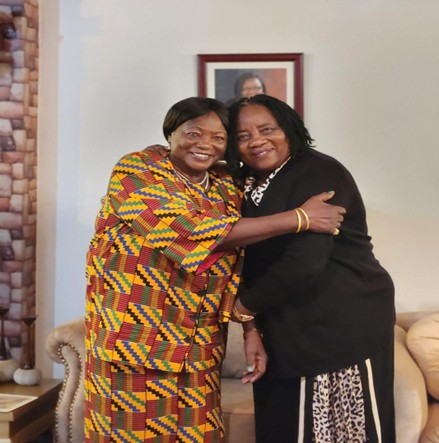
When the former First Lady Mama Ngina Kenyatta quietly arrived at the Odinga family home in Bondo, Siaya County, on Thursday, October 30, 2025, to console Mama Ida Odinga after the death of her husband, the Former Prime Minister Raila Amolo Odinga, the gesture was more than a condolence visit, it was a moment loaded with history, symbolism, and continuity between Kenya’s two most influential political dynasties.
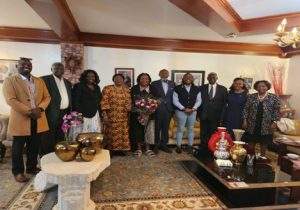
Mama Ngina, accompanied by members of the Kenyatta family, including Muhoho Kenyatta, was received by Ida and her children, among them Winnie Odinga, at the family’s Opoda Farm residence.
Their emotional exchange, marked by tears and prayers, captured a rare show of empathy that transcended decades of political rivalry and alliance between the Kenyatta and Odinga families, a visit beyond politics.
In a message of gratitude shared later by the Odinga family, they described Mama Ngina’s visit as “a deeply comforting gesture of friendship, respect, and shared national heritage.”
“Thank you, Former First Lady, H.E. Mama Ngina Kenyatta and your family for joining the nation in mourning and coming home to commiserate with H.E. Mama Ida Odinga and the family of the late Prime Minister, Rt. Hon. Raila Amolo Odinga, CGH,” the statement said.
During Raila’s burial ceremony, Ida singled out retired President Uhuru Kenyatta describing him as “a true friend,” she said.
For many Kenyans, the image of Mama Ngina and Ida Odinga together symbolised the power of personal bonds that have outlasted the political battles which defined much of Kenya’s post-independence history.
However, their relationship is rooted in history. The bond between the Kenyattas and the Odingas traces back to the struggle for Kenya’s independence. Jaramogi Oginga Odinga, Raila’s father and Kenya’s first Vice President, played a pivotal role in demanding the release of Mzee Jomo Kenyatta from colonial detention, famously declaring that “Kenyatta is the man to lead us to freedom.”
That endorsement laid the foundation for Jomo Kenyatta’s rise as Kenya’s first Prime Minister and later its first President. But the two men’s relationship soured soon after independence over ideological and governance differences Jaramogi resigned as Vice President in 1966, accusing Kenyatta’s administration of betraying the ideals of the liberation struggle.
Yet, despite their political split, a thread of mutual respect and historical interconnectedness endured. Their children Uhuru and Raila would decades later rekindle this connection.
In March 2018, the political landscape shifted dramatically when the then President Kenyatta and Raila shook hands on the steps of Harambee House, ending years of acrimony following the disputed 2017 elections, a handshake that is touted as having healed the old wounds.
The “Handshake” not only stabilised the nation but also rekindled the relationship between the two founding families. It reflected an understanding that, for Kenya to heal, its leaders must transcend political bitterness and embrace unity—a message that resonated deeply in the years that followed.
Mama Ngina’s latest visit to Bondo, coming after Raila’s passing, is viewed by many as a continuation of that spirit of reconciliation and unity.
Mama Ngina’s journey to Siaya carried strong symbolic undertones. It represented a closing of a generational circle a reaffirmation that the Kenyatta–Odinga bond is not merely political but woven into Kenya’s historical fabric.
The visit also demonstrated that even in the face of profound political polarization, personal decency and shared history can bridge divides. In the eyes of ordinary Kenyans, it stood as a moral lesson: political competition need not erase humanity and respect.
Observers note that the visit also sends a quiet message about the need for national cohesion in the wake of Raila’s death a moment that has left the political landscape uncertain and fragmented. By paying her respects in person, Mama Ngina reminded the nation that Kenya’s political story is one of continuity, shaped by generations who must find ways to coexist beyond their differences.
Political analyst Prof. Peter Kagwanja notes, “The relationship between the Odingas and Kenyattas mirrors Kenya’s own journey filled with struggle, betrayal, reconciliation, and hope. Mama Ngina’s visit signals that the ideals of unity and mutual respect are not lost.”
For Mama Ngina, the visit was also deeply personal. She knew Raila Odinga as more than a political figure he was the son of a man who once stood shoulder to shoulder with her late husband in the fight for Kenya’s freedom. For Ida Odinga, the comfort of an old friend at a time of grief was a poignant reminder that history, however turbulent, still binds the families of Kenya’s founding generation.
As the two matriarchs clasped hands in Bondo, the image became a powerful metaphor for Kenya’s enduring story one where rivalry gives way to respect, and the past continues to shape the nation’s moral compass.