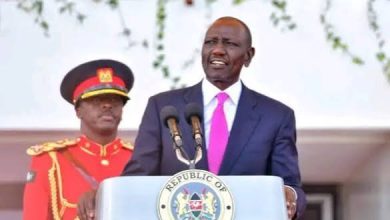
ODM’s uphill task in entangling itself from Ruto
According to pundits, by identifying key regional point men, Ruto will ensure he stays ahead of his challengers who are keen to make him a one-term president

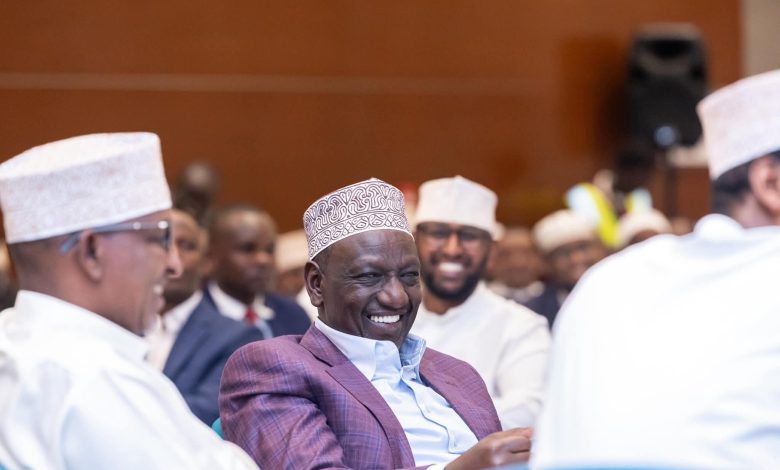
The decision by the Orange Democratic Movement (ODM) to stay in the broad-based government is likely to work for or against President William Ruto’s hand as he seeks to win re-election in 2027.
Analysts say ODM is unlikely to cover enough ground to position itself to field a winning candidate against Ruto as continuing to respect the agreement between the President and its former leader Raila Odinga to close ranks after June last year’s Gen Zs led insurrection is likely to reconfigure the political chess board given that the youths defied the March 2025 political pact between Ruto and Raila.
According to a poll survey report released in September 2025 by TIFA, a research firm, it showed a majority of Kenyans are increasingly rejecting the concept of a broad-based government with 64 per cent of Kenyans opposed to the broad-based government, more than double the 29 per cent who support it.
TIFA said findings raise questions about the legitimacy and political future of the informal coalition between President William Ruto and opposition leader Raila Odinga.
According to Ken Mutua, a London-trained political economist, it is unlikely that ODM will pull out of government in time to galvanise its support bases to secure victory as it currently does not have a man or woman who can fit in Raila’s shoes.
“Raila had created a movement and only he would have rallied millions of his supporters to follow him to whenever he wanted to take them at any time. There is no one who possesses his magnetism and charisma and, perhaps, the reason ODM chose to play safe and stay in government in the hope that Ruto will deliver on the 10-point agenda agreed with Raila and also preserve itself for future election battles,” he told The Informer Media Group.
While ODM made it clear during its Central Committee meeting on October 28 that it will honour the deal between the party and United Democratic Alliance (UDA) until 2027 when it will have the option of going it alone, there are those who say it is more likely it will enter into a post-election agreement with Ruto with an eye on 2032 than field a candidate, who will only end up being vanquished at the ballot.
The outright support he has received from Cabinet Secretaries Hassan Joho, John Mbadi and Opiyo Wandayi, who were former senior ODM officials, is likely to see them play central and regional roles in campaigning for Ruto.
Mbadi (National Treasury CS) and Wandayi (Energy CS) as well as Homa Bay Governor Gladys Wanga, who is the party’s national chairperson, are expected to secure Ruto backing in his Luo Nyanza backyard, while Joho (Mining CS) and Sports Cabinet Secretary Salim Mvurya will rally the Coast.
In Western, there is Cooperatives and MSMEs Development CS Wycliffe Oparanya to coordinate pro-Ruto forces.
In northern Kenya, Health Cabinet Secretary Aden Duale will be the leading force in the campaigns.
With Ruto keen on making inroads in ODM strongholds especially through implementation of projects as he seeks to compensate on his loss in Mt Kenya, Duale now says there is nothing that stops CSs from campaigning for a political party, including the recently-enacted Conflict of Interest Act.
“I have read the law. Cabinet Secretaries, by law, we are politicians and we shall politick. Read the Conflict of Interest Act, which amended the Leadership (and Integrity) Act. Anybody else in the public service cannot do politics but for CSs, the law allows it,” he said on October 29.
According to Duale, Section 25 provides that “an appointed public officer, other than a Cabinet Secretary, shall not in the performance of his duties act as an agent or further the political interests of a political party or candidate; manifest support or opposition for any political interests of a political party or candidate; or engage in political activity that may compromise the neutrality of the office he holds.”
“From the foregoing section, differently put, the provision on political neutrality as stipulated in the Conflict of Interest Act does not apply to Cabinet Secretaries,” he wrote on X.
In seeking to further strengthen his re-election plan, which is facing stiff opposition from a coalition of party leaders under the banner of the “United Opposition” who are seeking to field a single candidate, Ruto is expected to reconfigure his Cabinet to bring on board former Baringo Senator Gideon Moi’s Kanu, a move that there is no strong opposition against him in his Rift Valley base.
According to pundits, by identifying key regional point men, Ruto will ensure he stays ahead of his challengers who are keen to make him a one-term president.
However, there are those who say the fact that former President Uhuru Kenyatta retains popularity in many parts of the country will be a key factor in the State House contest depending on whether his Jubilee Party stays in the opposition or fields its own candidate for the presidency.